Credit Report 2026: Disputing Errors Effectively

Anúncios
Anúncios
In the rapidly evolving financial landscape of 2026, understanding and maintaining the accuracy of your credit report is more critical than ever. Your credit report serves as a detailed financial resume, influencing everything from loan approvals and interest rates to housing applications and even employment opportunities. Unfortunately, these vital documents are not immune to errors. Credit report errors can significantly impact your financial standing, leading to denied credit, higher interest rates, and unnecessary stress. This comprehensive guide will equip you with the knowledge and strategies to navigate your credit report in 2026, identify inaccuracies, and effectively dispute them to protect your financial future.
Understanding Your Credit Report in 2026: A Practical Guide to Disputing Errors
The year 2026 brings with it advancements in data collection and reporting, but also new complexities. Staying informed about your credit report and being proactive in correcting any discrepancies is paramount. An accurate credit report is the cornerstone of good financial health.
What is a Credit Report and Why is it So Important in 2026?
A credit report is a detailed summary of your credit history, compiled by credit bureaus (Experian, Equifax, and TransUnion). It includes personal identification information, credit accounts (credit cards, loans, mortgages), public records (bankruptcies, tax liens), and inquiries made into your credit history. In 2026, with increased digitalization and algorithmic lending, the data within your credit report is scrutinized with even greater precision. Lenders, landlords, insurers, and even some employers use these reports to assess your financial responsibility and risk. Even small credit report errors can have amplified consequences.
Your credit score, a three-digit number derived from the information in your credit report, is a direct reflection of its contents. A higher score signifies lower risk to lenders, translating into better terms and access to financial products. Conversely, a lower score, often influenced by credit report errors, can close doors and cost you thousands of dollars in higher interest over your lifetime. Therefore, understanding and monitoring your credit report for accuracy is not just a recommendation; it’s a financial imperative.
Anúncios
Common Types of Credit Report Errors to Watch For
Despite sophisticated data management systems, mistakes happen. Knowing what types of credit report errors are common can help you identify them quickly. Here are some of the most frequent inaccuracies:
- Identity Theft or Mixed Files: Accounts that don’t belong to you, incorrect personal information (wrong name, address, Social Security number), or a combination of your file with someone else’s. This is a particularly insidious type of credit report error.
- Incorrect Account Information: This category is broad and includes a variety of issues such as:
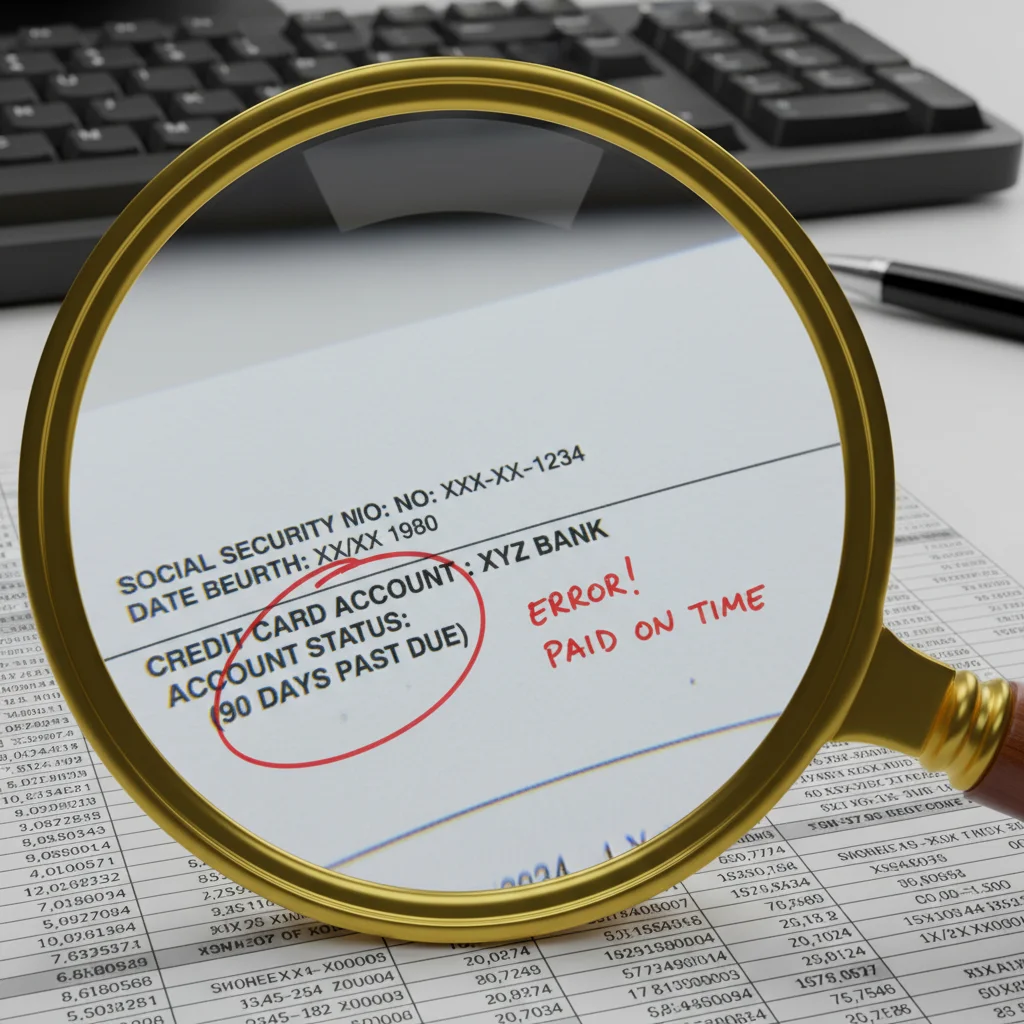
- Incorrect Payment Status: Accounts incorrectly reported as late or delinquent when they were paid on time, or vice versa.
- Wrong Account Balances: Balances that are higher or lower than what you actually owe.
- Duplicate Accounts: The same account listed multiple times, which can artificially inflate your debt or lower your credit score.
- Closed Accounts Reported as Open: Accounts you closed that still appear as active, potentially impacting your debt-to-income ratio.
- Accounts Listed with Incorrect Dates: Incorrect opening or closing dates, or dates of last activity.
- Public Record Errors: Incorrect or outdated information regarding bankruptcies, civil judgments, or tax liens. While some of these may have been removed from credit reports in previous years, inaccuracies can still arise.
- Fraudulent Accounts: Accounts opened in your name without your knowledge or authorization, often a sign of identity theft. This is a severe form of credit report error.
- Incorrect Inquiries: Hard inquiries that you did not authorize or recognize. Too many hard inquiries can negatively affect your score.
Regularly checking your credit report is the only way to catch these credit report errors before they cause significant damage.
How to Obtain Your Credit Report in 2026
The good news is that obtaining your credit reports is straightforward and, by law, free. The Fair Credit Reporting Act (FCRA) entitles you to a free copy of your credit report from each of the three major credit bureaus (Experian, Equifax, and TransUnion) once every 12 months. In 2026, the primary method remains:
- AnnualCreditReport.com: This is the only authorized website for obtaining your free annual credit reports. Be wary of other sites that claim to offer free reports, as they may be scams or attempt to sign you up for paid services.
Many credit card companies and financial institutions also offer free access to one of your credit scores or reports as a perk. While useful for monitoring, these often provide a simplified view and may not be as comprehensive as the official reports from AnnualCreditReport.com. For thorough error checking, always rely on the full reports.
The Step-by-Step Process for Disputing Credit Report Errors
Once you’ve identified credit report errors, taking prompt action is crucial. The dispute process is standardized, but attention to detail can significantly improve your chances of a swift resolution.
Step 1: Review Your Credit Reports Thoroughly
Don’t just skim. Download and print all three reports from AnnualCreditReport.com. Go through each section line by line. Look for anything that seems unfamiliar, inaccurate, or outdated. Compare information across all three reports, as an error on one might not appear on another. Highlight or circle any potential credit report errors you find.
Step 2: Gather Supporting Documentation
Before initiating a dispute, collect all relevant documents that prove the information on your credit report is incorrect. This might include:
- Bank statements showing on-time payments.
- Canceled checks or payment confirmations.
- Correspondence with creditors.
- Police reports for identity theft.
- Court documents (if disputing public records).
- Copies of your original credit agreements.
- Any other evidence that supports your claim that a credit report error exists.
The more evidence you provide, the stronger your case will be.
Step 3: Initiate the Dispute with the Credit Bureau
You have the right to dispute credit report errors directly with the credit bureau(s) reporting the inaccurate information. You can do this online, by mail, or by phone, though written disputes (online or mail) are generally recommended as they provide a clear paper trail.
Online Dispute:
Each credit bureau has an online dispute portal:
- Experian Dispute Center
- Equifax Dispute a Report
- TransUnion Dispute Your Credit
Online disputes are often the quickest method. You can typically upload supporting documents directly through these portals.
Mail Dispute (Recommended for Complex Cases):
If your credit report error is complex or you prefer a physical record, send a dispute letter via certified mail with a return receipt requested. This provides proof that the bureau received your dispute. Your letter should include:
- Your full name, address, and Social Security number.
- A clear statement that you are disputing information on your credit report.
- Identify each inaccurate item by account number, creditor name, and specific error.
- Explain why you believe the information is incorrect.
- Request that the item be corrected or removed.
- Enclose copies (NEVER originals) of your supporting documentation.
Keep copies of everything you send.
Step 4: Notify the Creditor Directly (Optional but Recommended)
While the credit bureau is legally obligated to investigate your dispute, it’s often beneficial to also contact the creditor (the company that reported the information) directly. This can sometimes expedite the process or provide additional context. Send a similar letter to the creditor, explaining the credit report error and providing documentation. They also have a responsibility to investigate and correct inaccurate information they’ve reported.
Step 5: Follow Up and Understand the Investigation Process
Once you file a dispute, the credit bureau has 30 days (in some cases, 45 days if you provide additional information during the investigation period) to investigate the credit report error. They will contact the creditor or data furnisher to verify the information. During this time:
- Monitor your mail and email: The credit bureau will send you a letter acknowledging your dispute and later, the results of their investigation.
- Check your credit reports again: After 30-45 days, obtain updated copies of your credit reports to ensure the error has been corrected or removed.
If the investigation finds that the information is inaccurate, the bureau must correct or delete it. They must also notify you of the results and send you a free updated copy of your report. If the credit report error was removed, the bureau must inform all other credit bureaus that received the erroneous information.
What Happens if Your Dispute is Denied?
If the credit bureau verifies the disputed information as accurate, or if they deny your dispute for other reasons, you still have options:
- Re-dispute with New Information: If you have additional evidence or a clearer way to present your case, you can re-dispute the credit report error.
- Add a Statement of Dispute: You have the right to add a brief statement (usually 100 words or less) to your credit file explaining your side of the story regarding the disputed item. This statement will be included whenever your credit report is accessed.
- Contact Regulatory Agencies: If you believe the credit bureau or creditor has violated your rights under the FCRA, you can file a complaint with the Consumer Financial Protection Bureau (CFPB) or your state’s Attorney General.
- Seek Legal Counsel: For persistent or complex credit report errors, especially those related to identity theft or significant financial impact, consulting with a consumer law attorney specializing in credit reporting can be beneficial.
Preventing Future Credit Report Errors
While you can’t prevent all credit report errors, you can significantly reduce their likelihood and catch them early by adopting proactive habits:
- Regularly Monitor Your Credit Reports: Make it a habit to check your credit reports from all three bureaus at least once a year, or more frequently if you’re actively seeking credit. Staggering your requests (e.g., one every four months) allows for continuous monitoring.
- Review Financial Statements: Carefully examine your bank and credit card statements each month. Discrepancies here can be early indicators of potential credit report errors or fraudulent activity.
- Protect Your Personal Information: Be vigilant against identity theft. Use strong, unique passwords, be cautious about sharing personal information online, and shred sensitive documents before discarding them.
- Keep Good Records: Maintain organized files of all your financial documents, including loan agreements, payment confirmations, and correspondence with creditors. This documentation is invaluable if you need to dispute credit report errors.
- Be Mindful of New Accounts: When opening new lines of credit, ensure your personal information is correctly entered.
- Utilize Credit Monitoring Services: Many services offer alerts for changes to your credit report, which can help you detect potential credit report errors or fraudulent activity quickly. While some are paid, many banks and credit card companies offer free versions.

The Impact of Correcting Credit Report Errors
Successfully disputing and removing credit report errors can have a profound positive impact on your financial well-being. Here’s how:
- Improved Credit Score: Removing negative, inaccurate information can lead to a significant boost in your credit score, sometimes by dozens of points.
- Access to Better Financial Products: A higher credit score opens the door to lower interest rates on mortgages, auto loans, and credit cards, saving you thousands over the life of these loans.
- Easier Loan Approvals: Lenders are more likely to approve your applications when your credit report is clean and accurate.
- Lower Insurance Premiums: In many states, your credit score can affect your insurance rates. Correcting errors might lead to lower premiums.
- Better Housing Opportunities: Landlords often check credit reports. A clean report can make it easier to rent an apartment or house.
- Peace of Mind: Knowing your financial information is accurate provides significant peace of mind and reduces financial stress.
The effort invested in understanding and correcting credit report errors is an investment in your financial future. It empowers you to take control of your financial narrative and ensures that you are judged fairly by lenders and other entities.
Advanced Considerations for 2026 and Beyond
As we move further into 2026, the landscape of credit reporting continues to evolve. Keep these advanced considerations in mind:
- AI and Machine Learning in Credit Decisions: Lenders are increasingly using AI and machine learning algorithms to assess creditworthiness. While these technologies aim for efficiency, they can also perpetuate or amplify the impact of credit report errors if not properly calibrated. An accurate report is crucial for positive algorithmic evaluation.
- Alternative Data Sources: Some lenders are exploring alternative data (like utility payments, rent payments, and streaming service subscriptions) to assess creditworthiness, especially for those with thin credit files. While these can be beneficial, ensure any such data reported to credit bureaus is also accurate.
- Data Security and Privacy: With heightened concerns around data breaches, understanding how credit bureaus and creditors protect your information is important. Be aware of your rights concerning data privacy and reporting.
- The Role of Fintech: Financial technology (fintech) companies are innovating rapidly. Some offer tools that can help you monitor your credit more effectively or even facilitate the dispute process. Research reputable fintech solutions that align with your needs.
Conclusion: Your Proactive Approach to Credit Health in 2026
Your credit report is a dynamic document that requires ongoing attention. In 2026, understanding its components, diligently monitoring for credit report errors, and knowing how to dispute them effectively are fundamental skills for financial literacy. Don’t let inaccuracies dictate your financial opportunities. By taking a proactive approach, you can ensure your credit report accurately reflects your financial responsibility, leading to a stronger credit score and a more secure financial future. Regularly checking your reports, gathering documentation, and following the dispute process rigorously are your best defenses against the detrimental effects of credit report errors. Empower yourself with knowledge and action, and take control of your credit narrative today.