2026 Housing Market Forecast: Trends & Economic Indicators
Anúncios
Anúncios
Analyzing the 2026 Housing Market: Recent Trends and Forecasts from Key Economic Indicators
The housing market is a dynamic and multifaceted entity, constantly influenced by a myriad of economic, social, and political factors. As we look ahead to the 2026 Housing Market, understanding these underlying currents becomes paramount for homeowners, prospective buyers, investors, and policymakers alike. The trajectory of the real estate sector is not merely about property values; it reflects the broader economic health of a nation, consumer confidence, and demographic shifts that reshape communities. Predicting its future involves a careful analysis of current trends and a robust understanding of the key economic indicators that serve as its foundation.
The past few years have been a rollercoaster for the housing market. We’ve witnessed unprecedented demand, historically low interest rates fueling a buying frenzy, followed by a period of correction marked by rising rates and cooling demand. These fluctuations have left many wondering what stability, or indeed, what new challenges, the future holds. This comprehensive article aims to dissect the current state of affairs and project potential scenarios for the 2026 Housing Market by scrutinizing the most influential economic indicators.
Our journey into the future of housing will cover critical areas such as interest rate predictions, the evolution of housing supply and demand, the impact of inflation and economic growth, and the crucial role of demographic shifts. By weaving together these threads, we hope to provide a clear and actionable forecast, helping you navigate the complexities of the real estate landscape in the years to come. Whether you’re planning to buy, sell, or simply stay informed, a deep dive into the 2026 Housing Market is essential for strategic decision-making.
Anúncios
Understanding the Current Landscape: Precursors to the 2026 Housing Market
Before we project forward, it’s vital to acknowledge the immediate past and present conditions that will inevitably shape the 2026 Housing Market. The period from 2020 to 2022 saw an extraordinary surge in housing prices, driven by a confluence of factors: remote work enabling geographic flexibility, a desire for more space, and historically low mortgage rates orchestrated by central banks to stimulate the economy during the pandemic. This created an environment where bidding wars were common, and homes often sold above asking price, leading to significant equity gains for existing homeowners.
However, 2022 and 2023 introduced a different narrative. Aggressive interest rate hikes by the Federal Reserve and other central banks, aimed at taming persistent inflation, significantly increased the cost of borrowing. This cooled buyer demand, leading to a deceleration in price growth, increased inventory in some areas, and a general recalibration of market expectations. The affordability crisis, exacerbated by high prices and rising rates, became a dominant theme. Many potential first-time homebuyers found themselves priced out, while existing homeowners with low fixed-rate mortgages became reluctant to sell, contributing to a ‘lock-in effect’ that constrained supply.
The current landscape is thus characterized by a delicate balance: resilient demand in certain segments, constrained supply due to the lock-in effect, and an ongoing battle against inflation influencing monetary policy. These elements form the bedrock upon which the 2026 Housing Market will be built, making a detailed examination of each indicator all the more critical.
Key Economic Indicators Shaping the 2026 Housing Market
Forecasting the 2026 Housing Market requires a careful examination of several pivotal economic indicators. These metrics provide insights into the health of the broader economy and, consequently, the real estate sector. Understanding their interplay is crucial for an accurate prediction.
Interest Rates and Monetary Policy
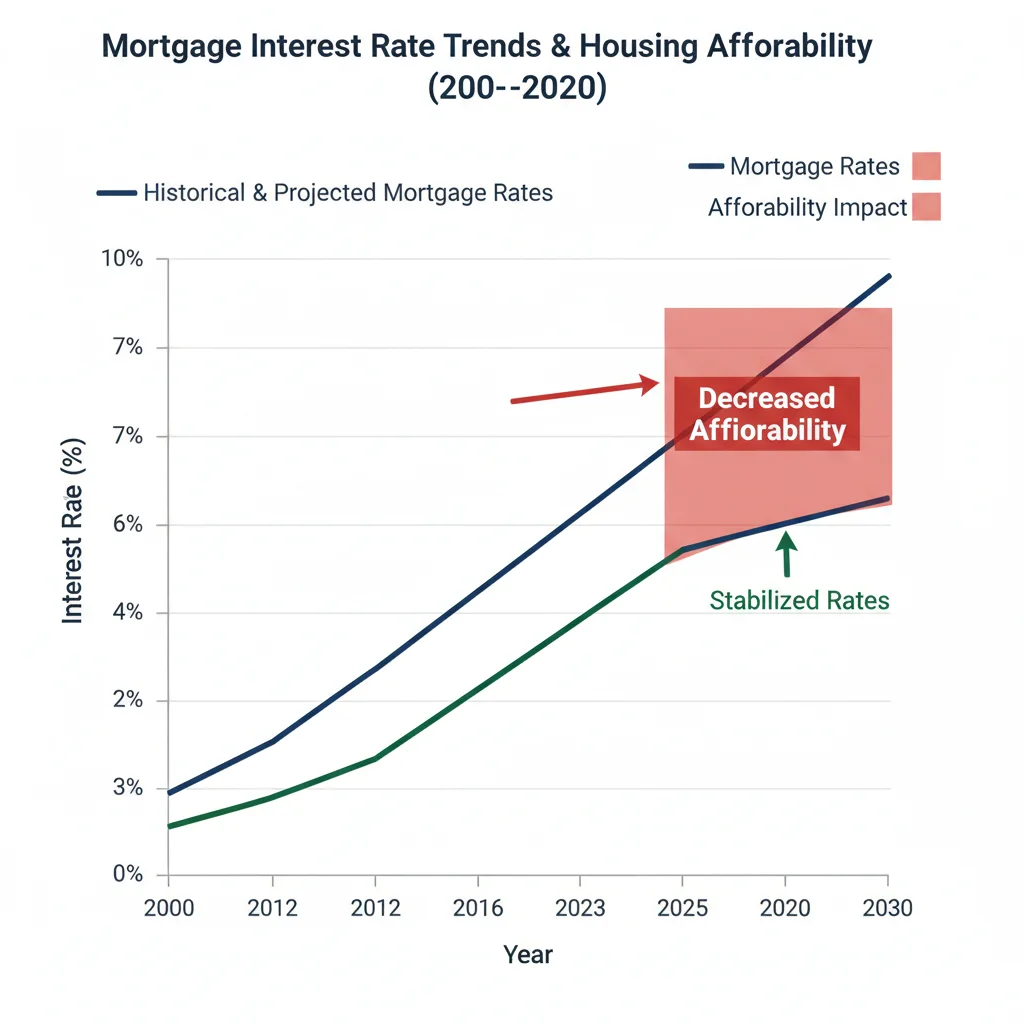
Perhaps the single most influential factor affecting the housing market is interest rates, particularly mortgage rates. Central banks, like the Federal Reserve, use monetary policy tools to manage inflation and economic growth. When inflation is high, they tend to raise interest rates to cool down the economy. Conversely, during economic downturns, they lower rates to stimulate activity.
For the 2026 Housing Market, the trajectory of interest rates will be paramount. If inflation continues to moderate, central banks might begin to ease their monetary policy, potentially leading to lower mortgage rates. A reduction in rates would improve affordability, attracting more buyers back into the market and potentially stimulating demand. However, if inflation proves stickier than anticipated, rates could remain elevated or even increase further, continuing to suppress buyer activity and keeping the market subdued. The consensus among many economists is a gradual stabilization, and perhaps a slight decline, in interest rates by 2026, assuming inflation is brought under control. This would provide a much-needed boost to the 2026 Housing Market.
Inflation and Economic Growth
Inflation directly impacts the purchasing power of consumers and the cost of construction materials, indirectly influencing housing prices. High inflation can erode savings and make it harder for individuals to afford down payments and monthly mortgage payments, even if wages are increasing. Furthermore, persistent inflation can prompt central banks to maintain higher interest rates, as discussed above, further dampening the 2026 Housing Market.
Economic growth, typically measured by GDP, is another critical indicator. A robust economy generally translates to job creation, wage growth, and increased consumer confidence, all of which are favorable for the housing market. When people feel secure in their jobs and see their incomes rising, they are more likely to invest in real estate. Conversely, an economic slowdown or recession can lead to job losses, reduced income, and a decline in housing demand. For the 2026 Housing Market, a scenario of moderate, stable economic growth with controlled inflation would be ideal, fostering a more balanced and sustainable environment.
Housing Supply and Inventory Levels
The fundamental economic principle of supply and demand heavily dictates housing prices. For much of the recent past, particularly post-pandemic, the housing market has been characterized by a significant supply shortage. This lack of available homes for sale has been a primary driver of price appreciation. Several factors contribute to this shortage: underbuilding for over a decade following the 2008 financial crisis, the ‘lock-in effect’ where homeowners with low mortgage rates are reluctant to sell, and ongoing challenges in new construction due to labor shortages, supply chain issues, and rising material costs.
Looking at the 2026 Housing Market, the evolution of housing supply will be crucial. If new construction can accelerate and existing homeowners become more willing to sell (perhaps due to life changes or lower interest rates making new purchases more palatable), inventory levels could improve. An increase in supply would help to moderate price growth and improve affordability. However, if supply remains constrained, the upward pressure on prices will persist, even if demand cools slightly. Analyzing regional differences in supply will also be key, as some areas may experience more acute shortages than others.
Demographic Shifts and Buyer Behavior
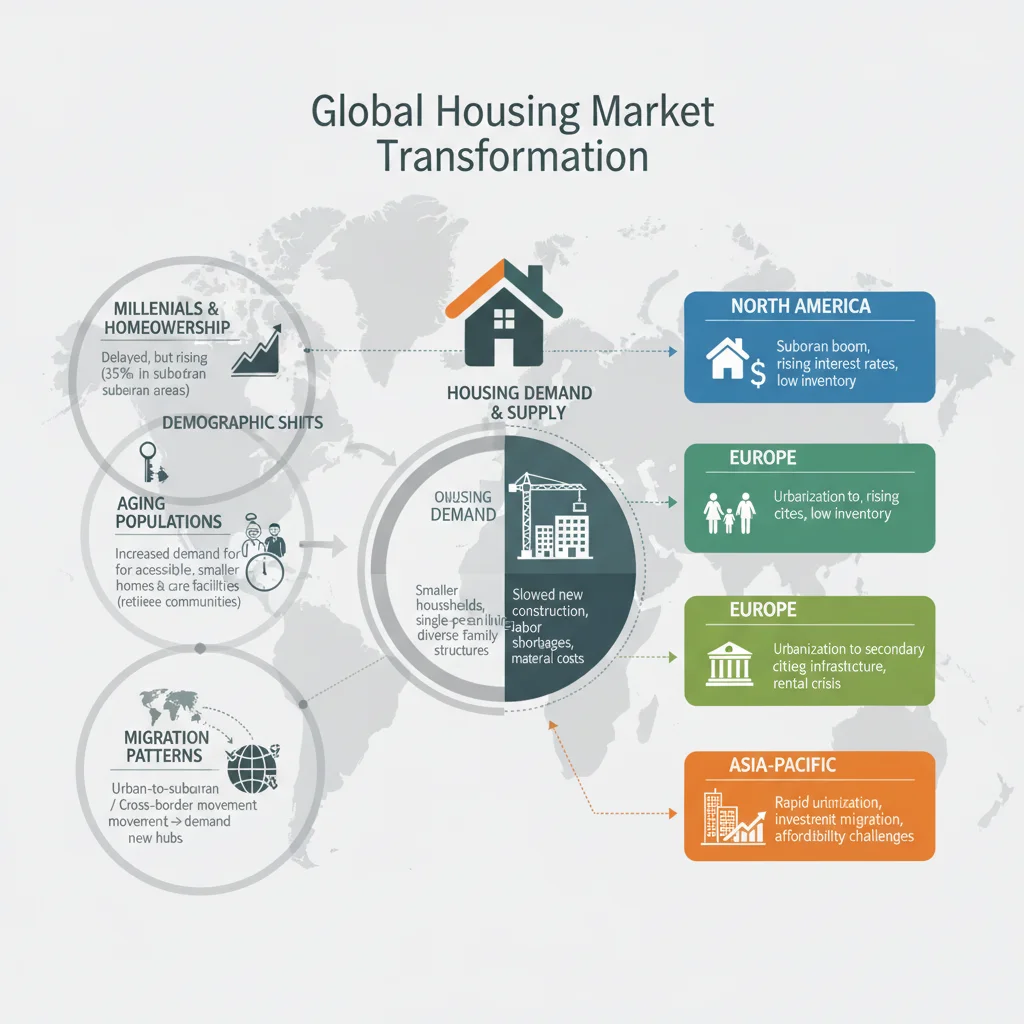
Demographics play a long-term, foundational role in shaping the housing market. The sheer size and preferences of different generations entering various stages of homeownership significantly influence demand. Millennials, now the largest generation, are increasingly entering their prime home-buying years, creating a substantial underlying demand. Their preferences for location, home size, and amenities will continue to influence market trends.
Additionally, the aging Baby Boomer generation, some of whom may choose to downsize or relocate, will contribute to supply in certain segments. Migration patterns, influenced by remote work opportunities and affordability, also impact regional housing markets. Cities and states experiencing an influx of residents will likely see stronger demand and price appreciation, while those with outward migration might face softer markets. The 2026 Housing Market will undoubtedly be shaped by these generational shifts and evolving preferences, with a continued focus on suburban and exurban areas that offer a balance of space and affordability, as well as the increasing demand for sustainable and technologically integrated homes.
Regional Variations in the 2026 Housing Market
It’s a common misconception that the housing market operates as a single, monolithic entity. In reality, real estate is hyper-local. While national trends provide a broad overview for the 2026 Housing Market, the actual experience of buying or selling a home will vary dramatically from one region to another, and even from one neighborhood to the next within the same city. These regional disparities are driven by local economic conditions, population growth, housing policies, and unique supply-demand dynamics.
Sun Belt Continues to Attract
Regions within the Sun Belt, particularly states like Florida, Texas, Arizona, and parts of the Carolinas, have experienced robust population growth over the past decade. This trend is expected to continue into the 2026 Housing Market, fueled by job opportunities, lower costs of living compared to coastal metros, and appealing climates. While these areas have seen significant price appreciation, sustained demand may keep their markets relatively strong, albeit with a more moderate growth rate than the peak years. The challenge in these areas will be for new construction to keep pace with the influx of residents.
Northeast and West Coast: Affordability Challenges Persist
Conversely, established, high-cost metropolitan areas on the Northeast and West Coast, such as New York, Boston, San Francisco, and Los Angeles, are likely to continue grappling with severe affordability challenges. While these markets boast strong economies and high-paying jobs, the scarcity of land, restrictive zoning regulations, and high construction costs contribute to persistent supply shortages. The 2026 Housing Market in these regions may see continued out-migration to more affordable areas, particularly if remote work remains prevalent. Price growth here might be more subdued, or even experience slight declines in certain segments, as buyers seek value elsewhere.
Midwest: Steady Growth and Value
The Midwest often presents a more stable, albeit less spectacular, housing market. With generally lower home prices and a more balanced supply-demand dynamic, many Midwestern cities offer relative affordability and a good quality of life. The 2026 Housing Market in these areas could see steady, sustainable growth, attracting buyers looking for better value and a less frenetic pace. Economic diversification and investments in technology and manufacturing could bolster these markets further.
Impact of Remote Work on Regional Dynamics
The lasting impact of remote and hybrid work models cannot be overstated when considering regional variations for the 2026 Housing Market. This shift has empowered many individuals to live further from traditional job centers, prioritizing space, affordability, and lifestyle over proximity to the office. This has fueled demand in secondary and tertiary markets, leading to unexpected price surges in previously overlooked towns. This trend is likely to continue evolving, with some companies mandating a return to office, while others embrace permanent flexibility, creating ongoing shifts in where people choose to live and, consequently, where housing demand concentrates.
Emerging Trends and Their Influence on the 2026 Housing Market
Beyond the fundamental economic indicators and regional variations, several emerging trends are set to play a significant role in shaping the 2026 Housing Market. These trends reflect evolving societal values, technological advancements, and responses to environmental concerns.
Sustainability and Green Building
As environmental awareness grows and energy costs fluctuate, the demand for sustainable and energy-efficient homes is on the rise. Buyers in the 2026 Housing Market will increasingly prioritize properties with features like solar panels, smart home technology for energy management, efficient insulation, and water-saving systems. Builders who incorporate green building practices will find a growing market for their products. This trend also extends to urban planning, with a greater emphasis on walkable communities, public transport, and green spaces.
Technological Integration and Smart Homes
The proliferation of smart home technology will continue to influence buyer expectations. From advanced security systems and automated climate control to integrated entertainment and smart appliances, technology is becoming an integral part of the modern home. The 2026 Housing Market will see smart home features move from luxury amenities to expected standards, influencing both new construction and renovation projects aimed at enhancing resale value. Virtual reality (VR) and augmented reality (AR) tours will also become more sophisticated and commonplace, revolutionizing how properties are viewed and marketed.
Affordable Housing Initiatives
The ongoing affordability crisis is prompting increased attention from policymakers at local, state, and federal levels. Expect to see more initiatives aimed at addressing the housing shortage and making homeownership more accessible. These could include relaxed zoning regulations to encourage denser development, incentives for building affordable housing units, down payment assistance programs, and innovative financing solutions. The success of these initiatives will be critical in shaping the accessibility and equity of the 2026 Housing Market.
The Role of Institutional Investors
Institutional investors, including large investment firms and hedge funds, have played an increasingly prominent role in the housing market, particularly in the single-family rental sector. Their presence has been a point of contention, with some arguing that they exacerbate affordability issues by outbidding individual homebuyers. The extent of their involvement in the 2026 Housing Market will depend on regulatory scrutiny, interest rates (which affect their cost of capital), and the overall attractiveness of real estate as an investment class. Any significant shift in their strategy could have a noticeable impact on local market dynamics and home prices.
Forecast for the 2026 Housing Market: A Balanced Outlook
Synthesizing all these factors, the 2026 Housing Market is likely to present a more balanced, albeit complex, picture compared to the extreme volatility of recent years. It’s improbable that we will see a return to the frenetic pace and rapid price appreciation of 2020-2021, nor a dramatic collapse akin to 2008. Instead, a period of moderation and recalibration seems most plausible.
Price Growth Moderation
National home price growth is expected to continue moderating. While some high-demand, low-supply areas may still see modest appreciation, overall, the market will likely be characterized by single-digit percentage gains, closer to historical averages. In some overvalued markets, minor corrections or flat growth could occur, particularly if economic conditions deteriorate or interest rates remain stubbornly high. The emphasis for the 2026 Housing Market will be on sustainable growth rather than speculative bubbles.
Improved Affordability (Gradual)
A combination of moderating prices, potential slight declines in interest rates, and hopefully, some wage growth could lead to a gradual improvement in housing affordability. However, the affordability crisis is deep-seated and will not be resolved quickly. First-time homebuyers may find slightly more opportunities, but challenges will persist, particularly in high-cost-of-living areas. Government and private sector initiatives will be crucial in chipping away at this issue for the 2026 Housing Market.
Increased Transaction Volume
As interest rates potentially stabilize or slightly decrease, and sellers adjust their expectations, we could see an increase in transaction volume compared to the more subdued activity of 2023-2024. The ‘lock-in effect’ might begin to wane as homeowners’ life circumstances necessitate moves, even if their new mortgage rate is higher than their old one. This increased liquidity would be a healthy sign for the 2026 Housing Market.
Continued Regional Divergence
The theme of regional divergence will remain prominent. Investors and homebuyers will need to conduct thorough local market research, as national averages will mask significant variations. Growth opportunities and challenges will be highly localized, making granular analysis indispensable for anyone engaging with the 2026 Housing Market.
Advice for Buyers and Sellers in the 2026 Housing Market
Navigating the 2026 Housing Market will require a strategic and informed approach for both buyers and sellers.
For Buyers: Patience and Preparation are Key
Prospective homebuyers should continue to prioritize financial preparation. This means strengthening credit scores, saving for a substantial down payment, and getting pre-approved for a mortgage to understand your budget. While competition might ease slightly, desirable properties will still move quickly. Be patient, but be ready to act decisively when the right opportunity arises. Consider working with an experienced real estate agent who has deep knowledge of your target local market. Explore various financing options and look into first-time homebuyer programs that might be available. The 2026 Housing Market might offer more balanced conditions, but diligence remains crucial.
For Sellers: Realistic Expectations and Strategic Pricing
Sellers, especially those who purchased during the peak, will need to adjust their expectations. The days of multiple, over-asking-price offers might be less common. Strategic pricing, based on comparable sales and current market conditions, will be essential to attract buyers. Focus on home improvements that offer the best return on investment, such as minor cosmetic updates, energy-efficient upgrades, and ensuring your home is in excellent condition. Highlighting smart home features and sustainable aspects can also be a strong selling point in the 2026 Housing Market. Work with a skilled agent to market your property effectively and negotiate confidently.
Conclusion: A Maturing 2026 Housing Market
The 2026 Housing Market is poised to be one of maturation and adjustment, moving away from the extremes witnessed in recent years. While challenges such as affordability will persist, particularly in certain regions, the overall outlook suggests a more balanced environment. Interest rates are expected to stabilize, inflation should be more contained, and supply-demand dynamics will continue their gradual rebalancing act.
For all participants, staying informed about economic indicators, understanding regional nuances, and adapting to emerging trends like sustainability and technological integration will be vital. The real estate market is a foundational pillar of the economy, and its evolution in 2026 will reflect broader societal and economic shifts. By carefully analyzing these factors, individuals and investors can make well-informed decisions, positioning themselves for success in the evolving landscape of the 2026 Housing Market.
Ultimately, while no forecast is absolute, the indicators point towards a market that demands prudence, strategic planning, and a deep understanding of local conditions. The journey to 2026 will be one of continuous adaptation and informed choices.