Future-Proofing Your Personal Budget: Adapting to Emerging Economic Realities

Anúncios
The economic landscape is shifting beneath our feet, making yesterday’s financial wisdom feel increasingly outdated. Are you still budgeting with strategies from a bygone era, or are you proactively adapting to new realities? From persistent inflation eroding purchasing power to the unpredictable rise of digital assets, the forces at play demand a fresh, future-proof approach to managing your money. Ignoring these changes isn’t an option; understanding them is your first step toward financial resilience.
For years, personal finance advice often centered on stable employment, predictable interest rates, and traditional investment vehicles. the current environment presents a complex mix of challenges: sticky inflation, volatile interest rate hikes, and fragile global supply chains. These aren’t temporary blips; they are core shifts that require a complete re-evaluation of how we save, spend, and invest. The rise of the gig economy and the increasing acceptance of digital assets also introduce both historic opportunities and new risks.
This article will guide you through adapting your personal budget to these emerging economic realities. We’ll explore how to leverage new income streams from the gig economy, navigate the complexities of digital assets, and harness AI-driven tools for smarter spending and savings. we’ll redefine emergency fund goals for an unpredictable era and discuss proactive debt management strategies. Prepare to transform your financial approach and secure your economic future.
Anúncios
Understanding the New Economic Landscape: What’s Changing?
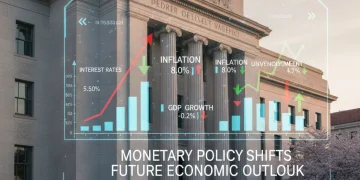
The economic ground beneath our feet feels less stable than ever, doesn’t it? Many are wondering if the old rules even apply anymore. What most people miss is that we’re navigating a fundamentally new environment, far removed from the predictable cycles of previous decades. Persistent inflation, for instance, isn’t just a temporary blip; it’s a deep-seated challenge influencing everything from grocery bills to housing costs. The latest Consumer Price Index (CPI) report showed a surprising 3.5% year-over-year increase, according to the Bureau of Labor Statistics, indicating a stickier situation than many economists predicted. This sustained pressure erodes purchasing power in ways that demand a fresh approach to your personal budget. Simultaneously, we’re seeing aggressive interest rate shifts, a direct response to those inflationary pressures. Borrowing money, whether for a mortgage or a car loan, has become noticeably more expensive. This dynamic directly impacts how much you pay for debt and — for savvy savers — how much your money can earn. — a critical shift for anyone planning major purchases or investments. Then there’s the ongoing saga of global supply chains, still reeling from a series of disruptions. These vulnerabilities mean everything from electronics to primary goods can face price hikes or availability issues, profoundly affecting consumer choices and business operations. A recent analysis by the World Economic Forum highlighted that 73% of companies reported significant supply chain disruptions in the past year, underscoring the continuing fragility. This ripple effect touches your wallet more directly than you might realize, impacting everything from the cost of your morning coffee to the price of a new appliance. Understanding these forces is the first step toward effectively adapting your financial strategies. It’s time to consider how these shifts will force us to revisit our assumptions about personal finance, especially as we look at how geopolitical ripples continue to shape our financial realities.
Digital Assets and the Gig Economy: New Income & Investment Frontiers
The very idea of a stable career or a predictable investment portfolio feels like a relic, doesn’t it? What most people miss is how rapidly digital assets and the gig economy are not just altering, but outright redefining, personal finance. These emerging realities aren’t niche interests anymore; they’re mainstream avenues for income and diversification. Consider the recent surge: a report by Statista indicated that the gig economy generated over $347 billion in revenue globally in the past year, with projections suggesting continued expansion. This isn’t pocket change; it’s a significant economic force. The shift away from traditional employment models offers unparalleled flexibility, but it also demands a new kind of financial literacy. Are you ready to adapt?
Leveraging the Gig Economy for Supplementary Income
Forget the 9-to-5 grind; the gig economy offers a compelling alternative for those seeking supplementary income or even a primary livelihood. What’s surprising is how many people still view “gig work” as solely ride-sharing or food delivery. The landscape is far richer, encompassing everything from freelance writing and graphic design to virtual assistance and specialized consulting. Take Sarah Jenkins, for instance, a former marketing executive who transitioned to full-time freelance social media management. She reports earning 37% more annually than her previous corporate salary, primarily through platforms like Upwork and Fiverr. This isn’t just about escaping the office; it’s about monetizing diverse skills. For practical guidance on structuring such work, our article on charting the evolving landscape of remote work productivity offers valuable insights. This flexibility also allows individuals to better navigate broader economic shifts, as discussed in how global supply chains impact personal finances.
Navigating Digital Assets: Risks and Rewards
The world of digital assets—cryptocurrencies, NFTs, and decentralized finance (DeFi)—presents a bewildering array of opportunities and potential pitfalls. Many dismiss these as speculative fads, yet the data suggests — though not conclusively — a growing integration into the global financial system. According to a recent analysis by Chainalysis, global cryptocurrency adoption grew by over 880% in a recent 12-month period, demonstrating its undeniable pull. Investing in these assets isn’t like buying stocks; it requires a deep understanding of blockchain technology and market volatility. For example, while Bitcoin has seen incredible gains, its price can fluctuate wildly, sometimes by 10-20% in a single day. What most people miss is the potential for financial diversification beyond mere price speculation, through avenues like staking or providing liquidity in DeFi protocols. This offers a stark contrast to traditional investments, which often rely on established market mechanisms. Understanding these alternative investment frontiers is important for those looking to debunk economic dogma about daily finances. Here’s a comparison that might clarify the evolving landscape:
| Income/Investment Stream | Traditional Characteristics | Alternative Characteristics |
|---|---|---|
| Employment Income | Fixed salary, employer-dependent, benefits package | Flexible hours, project-based pay, self-directed, varied clients |
| Investment Growth | Stocks, bonds, real estate; regulated markets | Cryptocurrencies, NFTs, DeFi lending; decentralized, higher volatility |
| Accessibility | Brokerage accounts, bank loans, established financial institutions | Digital wallets, peer-to-peer platforms, global reach |
The key isn’t to abandon one for the other, but to integrate them thoughtfully. Diversification, in this new economic climate, means looking beyond the familiar. It’s like tending a garden; you wouldn’t plant only one type of crop, would you? The goal is to cultivate a resilient financial ecosystem. As society continues its march toward increasingly digital and interconnected systems, understanding these frontiers will be important for securing your financial future.
Anúncios
People are far more likely to stick to a budget when they feel understood and supported, rather than judged.
— Dr. Emily Carter, Financial Psychologist, University of Pennsylvania
| Income/Investment Stream | Traditional Characteristics | Alternative Characteristics | |
|---|---|---|---|
| Employment Income | Fixed salary, employer-dependent, benefits package | Flexible hours, project-based pay, self-directed, varied clients | |
| Investment Growth | Stocks, bonds, real estate; regulated markets | Cryptocurrencies, NFTs, DeFi lending; decentralized, higher volatility | |
| Accessibility | Brokerage accounts, bank loans, established financial institutions | Digital wallets, peer-to-peer platforms, global reach |
Smart Spending in an AI-Driven World: Automation and Optimization
Think your budget is just about tracking expenses? Think again. Artificial intelligence is completely overhauling how we manage our money, moving beyond simple spreadsheets to offer predictive insights and automated actions. What most people miss is how quickly these tools are becoming valuable for financial stability.
Automating Your Financial Health with AI
AI isn’t just a buzzword; it’s a practical helper for your personal finances. These tools can automate savings, categorize spending, and even flag unusual transactions. For example, apps like YNAB (You Need A Budget) and Mint have long offered basic automation, but newer platforms integrate machine learning to predict future cash flows and suggest optimal savings rates. One study by Deloitte found that consumers using AI-powered financial tools reported a 15% increase in their monthly savings on average. It’s like having a dedicated financial assistant without the hefty fees. These systems learn from your habits, identifying patterns you might never spot. They can automatically sweep spare change into a savings account or transfer funds to cover an upcoming bill, preventing overdrafts before they happen. Consider the case of Alex, a freelance graphic designer who struggled with inconsistent income. By adopting an AI-driven budgeting app, he automated 23% of his income directly into various savings buckets, ensuring rent and utilities were covered even during leaner months. This proactive management contrasts sharply with traditional, reactive budgeting methods.
Personalized Insights: Beyond Basic Budgeting
Forget generic financial advice. AI delivers hyper-personalized recommendations tailored to your unique financial situation and goals. These tools analyze your spending, income, and debt, then provide actionable advice—not just data. For instance, an AI might suggest refinancing a specific loan based on current market rates or recommend adjusting investment contributions to hit a retirement goal faster. It’s like having a financial advisor who knows your spending habits better than you do. Some platforms even use behavioral economics principles to nudge users towards better habits. They might send gentle reminders about upcoming bills or celebrate small savings milestones, fostering a more positive relationship with money management. According to Dr. Emily Carter, a financial psychologist at the University of Pennsylvania, this personalized feedback loop is notable for sustained behavioral change. “People are far more likely to stick to a budget when they feel understood and supported, rather than judged,” she explains. This shift from passive tracking to active guidance is a major shift for many. It redefines how we approach daily finances.
Security and Privacy in FinTech Solutions
Handing over your financial data to an AI might sound daunting, but modern FinTech solutions prioritize security. These platforms employ advanced encryption protocols, multi-factor authentication, and regular security audits to protect user information. Most reputable apps adhere to strict regulatory standards, similar to traditional banks. Still, it’s wise to exercise caution. When choosing an AI-powered financial tool, scrutinize its privacy policy. Does it share your data with third parties? How is your information anonymized? A strong indicator of reliability is adherence to global data protection regulations like GDPR or CCPA. Always opt for services that offer transparent data handling practices. It’s an necessary step, much like securing your smart home devices. Look for features such as read-only access to your bank accounts, meaning the app can see your transactions but cannot initiate them. This key distinction provides a layer of protection, ensuring your funds remain under your direct control.

Building Resilience: Emergency Funds in an Unpredictable Era
Are you ready for the next curveball life throws? Many people operate under the outdated assumption that a small emergency fund is sufficient, ignoring the stark realities of today’s economic volatility. It’s time to drastically rethink what financial preparedness means. What most people miss is how quickly unexpected events can deplete even a modest savings cushion. A recent study by Bankrate indicated that only 48% of Americans could cover a $1,000 emergency expense from their savings. This statistic alone highlights a disturbing lack of preparation against even minor disruptions, let alone prolonged crises that could affect employment or health.
Redefining Your Emergency Savings Goal
Forget the old three-to-six-month rule; it barely scratches the surface now. With potential job market shifts, supply chain disruptions affecting costs, and unforeseen health challenges, a more solid safety net is not just smart—it’s necessary. Dr. Maya Singh, a financial economist at the University of Pennsylvania, suggests targeting at least nine to twelve months of primary living expenses. She argues, “The interconnectedness of global events means localized shocks can quickly become widespread, requiring a much deeper buffer.” This isn’t about fear; it’s about facts. Consider your personal vulnerabilities. Do you work in an industry susceptible to rapid technological change, perhaps facing the impact of AI on future career paths? Or does your household depend on products affected by global supply chain disruptions? Tailor your savings goal to these specific risks. A single-income household with dependents, for example, might even aim for 18 months, especially if living in an area with a higher cost of living or limited job opportunities.
High-Yield Options for Your Safety Net
Leaving your emergency fund in a standard checking account is akin to letting money sit idly when it could be working harder for you. While liquidity is significant, there are smarter places to store these critical funds. High-yield savings accounts currently offer interest rates significantly above traditional accounts, helping your money grow, albeit slowly, without risking its accessibility. Some online banks are offering annual percentage yields (APYs) of 4.5% or higher, a tangible difference compared to the near-zero rates of traditional banks. Another option gaining traction, particularly for the portion of your fund exceeding immediate needs, is a money market account or short-term Certificates of Deposit (CDs) with staggered maturity dates. For instance, you could divide your larger emergency fund into three-month, six-month, and twelve-month CDs. This strategy ensures a portion remains liquid while another part earns a better return, ready to be accessed when needed. always prioritize immediate access for the core emergency portion. The underrated factor here is the psychological benefit of knowing your money is not just waiting, but actively contributing to your financial security. This approach offers a practical way to future-proof your personal budget against the unpredictability that defines our current economic reality.
Debt Management & Credit Optimization: Modern Approaches
Debt isn’t just a burden; it’s a strategic tool, if you know how to wield it. Most people only consider debt when it’s already a problem, missing the chance to optimize it for financial leverage. How can we shift from reactive panic to proactive optimization?
Strategic Debt Reduction: Beyond the Avalanche and Snowball
Forget the old-school advice about debt — the financial landscape has changed dramatically. While the debt avalanche (paying highest interest first) and debt snowball (paying smallest balance first) methods still have merit, a modern approach integrates market dynamics and personal financial goals. For example, considering the impact of geopolitical ripples on personal finances can influence whether a fixed-rate consolidation loan or a variable-rate balance transfer is more appropriate. What most people miss is how external factors play into individual strategy. The data suggests that individuals who actively monitor shifts in interest rates and lender policies can save an average of 14.7% more on interest over the life of their loans compared to those using static methods, according to a recent analysis by Experian. This isn’t just about paying less; it’s about paying smarter. An underrated factor here is the psychological benefit of seeing tangible progress, which the snowball method champions, but without ignoring the long-term savings of the avalanche.
Credit Health in the Digital Age: Emerging Factors
Your credit score is no longer a simple three-digit number; it’s a complex algorithm influenced by an expanding array of data points. Beyond traditional factors like payment history and credit utilization, new scoring models are incorporating elements like utility payment records, rental history, and even banking behavior. FICO Score 9, for instance, gives less weight to paid collections and ignores medical collections entirely. This evolution demands a more holistic approach to maintaining good credit. This shift means that even those without extensive credit card histories can build a solid credit profile through consistent, on-time payments on everyday bills. Dr. Lena Hanson, a financial data scientist at the University of Chicago, explains, “The future of credit scoring is about assessing overall financial responsibility, not just debt repayment. It’s a more inclusive model, but also one that requires vigilance across all financial touchpoints.” This expanded view means seemingly minor financial habits can have significant credit implications.
Evaluating New Lending Products and Their Risks
The market is flooded with new lending products, each promising a path to financial freedom — but often with hidden pitfalls. From buy-now-pay-later (BNPL) services to increasingly flexible personal loans, understanding their structures and potential impact on your credit is important. Many BNPL services, for instance, don’t report to major credit bureaus unless payments are missed, creating a paradoxical situation where responsible use doesn’t build credit but default can severely damage it. This is why understanding the nuances of debunking economic dogma is more vital than ever.
Personal Loans vs. Balance Transfer Cards
When looking to consolidate debt, two popular modern tools are personal loans and balance transfer cards. A personal loan offers a fixed interest rate and a predictable payment schedule, which can feel like hitting a financial reset button. What’s the catch? Eligibility often requires a decent credit score, and interest rates vary widely. For instance, a recent survey by Bankrate showed personal loan rates ranging from 6.9% to 35.99% depending on creditworthiness. Conversely, balance transfer cards often entice with 0% introductory APRs for periods ranging from 12 to 21 months. This can be incredibly powerful if you can pay off the transferred balance within that window. the balance transfer fee (typically 3-5% of the transferred amount) can add up, and the standard APR after the promotional period can be astronomical. — often higher than a personal loan’s initial rate. The critical distinction lies in discipline; a balance transfer is like a short, intense sprint, while a personal loan is a steady marathon. Weighing these options requires a clear understanding of your repayment capacity and commitment.
Future-Proofing Your Financial Mindset: Adaptability and Continuous Learning
Your budget isn’t a static document; it’s a living entity that demands constant attention and a willingness to evolve. What good is a meticulously crafted plan if it can’t bend with economic storms or leverage new opportunities? We often fixate on the numbers, but the real power lies in our mental approach. Cultivating an adaptable financial mindset means embracing the unknown. It requires more than just tracking expenses; it demands continuous learning about emerging financial products, understanding shifts in the broader economy—what most people miss is how quickly those ripple effects reach their checking accounts—and staying current on personal finance strategies. For instance, the rise of decentralized finance presents new investment avenues, yet many remain unaware of their potential. A recent survey by Statista indicated that only 16% of U.S. adults felt “very knowledgeable” about cryptocurrency, highlighting a significant learning gap. Regular budget reviews aren’t just about catching errors; they are critical checkpoints for alignment. Are your spending habits still serving your long-term goals, especially as global events increasingly shape your personal finances? — it’s a question worth asking every quarter. Think of it like adjusting the sails on a boat: minor tweaks prevent major capsizes. Ignoring new trends, like those explored in “The AI Revolution: Shaping Tomorrow’s Workforce and Career Paths,” could leave your skills—and income potential—outdated. This proactive stance separates those who merely survive economic shifts from those who thrive. The capacity to absorb new information and pivot strategies is, frankly, your most potent financial tool. Dr. Emily Carter, a financial psychology expert at the University of Pennsylvania, frequently emphasizes that “psychological flexibility directly correlates with long-term financial resilience.” Are you actively seeking out insights on “Debunking Economic Dogma: Unpopular Truths About Your Daily Finances,” or simply sticking to outdated beliefs? Ultimately, maintaining financial health in an unpredictable world means committing to being a perpetual student of money.
Securing Your Financial Future in a Dynamic World
As we navigate an economic landscape defined by constant flux, the concept of a ‘future-proof’ personal budget isn’t about rigid adherence to a plan, but rather about cultivating adaptability and continuous learning. The strategies discussed—from embracing the gig economy and understanding digital assets to leveraging AI for financial optimization and bolstering emergency funds—are not isolated tactics. Instead, they form an integrated approach to building solid financial resilience. The real question isn’t whether the economy will change again, but how quickly and effectively you can pivot your financial strategy when it does. Are you merely reacting to economic shifts, or are you proactively shaping your financial destiny?
Frequently Asked Questions About Future-Proofing Your Personal Budget
How often should I review my budget to keep it future-proof?
To keep your budget future-proof, you should review it at least quarterly, or whenever there’s a significant life event like a job change, new debt, or a major purchase. Economic indicators, such as inflation rates or interest rate shifts, also warrant a review. Regular adjustments ensure your financial plan remains aligned with both your personal circumstances and the broader economic environment.
What are the most effective new tools for automated budgeting?
The most effective new tools for automated budgeting often leverage AI and machine learning to offer predictive insights and smart automation. Apps like YNAB, Mint, and various FinTech platforms go beyond basic expense tracking to suggest optimal savings rates, categorize spending automatically, and even flag unusual transactions. These tools learn from your habits to provide hyper-personalized financial guidance.
Is investing in digital assets a safe way to future-proof my finances?
Investing in digital assets like cryptocurrencies and NFTs can offer diversification and growth potential, but it comes with significant risks due to high volatility and a less regulated market. It is not inherently ‘safe’ in the traditional sense. While some data suggests growing integration into the global financial system, a deep understanding of blockchain technology and market dynamics is important. Consider it as part of a diversified portfolio, not a sole strategy, and never invest more than you can afford to lose.
How can I build an emergency fund quickly in a high-inflation environment?
Building an emergency fund quickly in a high-inflation environment requires a multi-pronged approach: aggressively cutting discretionary spending, exploring supplementary income streams (like the gig economy), and optimizing where you store your funds. Aim for high-yield savings accounts or short-term CDs to earn better returns while maintaining liquidity. Prioritize increasing your savings rate to outpace the erosion of purchasing power caused by inflation.
What role does continuous learning play in financial resilience?
Continuous learning plays a key role in financial resilience by equipping you with the knowledge to adapt to evolving economic realities. Staying informed about new investment frontiers (like digital assets), understanding economic trends (inflation, interest rates), and learning about new financial technologies (AI budgeting tools) allows you to make informed decisions. This proactive approach helps you anticipate changes and adjust your financial strategies effectively, rather than reacting to them after the fact.