Navigating Economic Currents: Expert Strategies for Financial Resilience

Anúncios
Navigating the modern economy can often feel like trying to read a map in a storm. With headlines flashing terms like inflation, interest rate hikes, and market volatility, it’s easy to feel overwhelmed and reactive. Are you making the right decisions with your money, or are you just trying to stay afloat as the financial currents shift around you? This sense of uncertainty is common, but it doesn’t have to be your default state. True financial security isn’t about predicting the future; it’s about building a resilient structure that can withstand it.
Anúncios
Behind the chaotic news cycle, there are understandable patterns and forces at play. Professional economists and financial advisors don’t have a crystal ball, but they do follow a disciplined playbook designed to mitigate risk and capitalize on opportunity, regardless of the economic weather. These strategies, once the exclusive domain of institutional investors, are now more accessible than ever. By understanding the same key indicators and principles they use, you can move from a position of anxiety to one of informed confidence.
This guide demystifies the complex world of economics and translates professional insights into practical steps for your daily life. We’ll explore how to interpret the macroeconomic landscape and what key data points actually mean for your wallet. From there, we will dive into an expert’s playbook for asset protection, covering primary tactics like advanced diversification, inflation hedging, and the role of alternative investments. Finally, we’ll outline actionable strategies for diversifying your income, creating a solid financial foundation that provides stability in an ever-changing world.
Understanding the Macroeconomic Landscape: A Professional’s View
Trying to grasp the global economy can feel like attempting to drink from a firehose. News reports throw around terms like inflation, GDP, and interest rates, often without explaining how they directly impact your wallet. The underrated factor here is how these large-scale macroeconomic trends shape everything from your grocery bill to your job security. Understanding these forces is the first step toward building financial resilience, turning complex data into actionable insights for your daily budget.
It’s all connected. A central bank’s decision to adjust interest rates can influence business investment, which in turn affects hiring and wages. Think of it like a complex weather system—changes in one area can create unexpected storms or clear skies in another. This interconnectedness is precisely what makes economic analysis both challenging and required.
Anúncios
Key Economic Indicators to Monitor
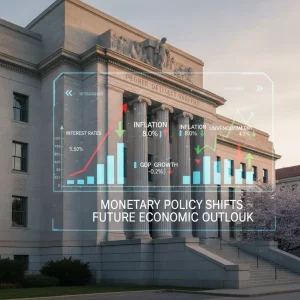
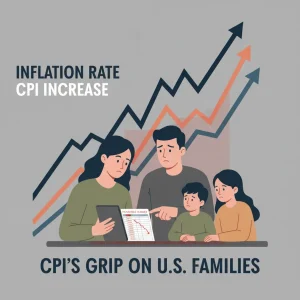
To get a clear picture, professionals focus on a handful of key economic indicators. These are the vital signs of an economy’s health. The most commonly watched is the Consumer Price Index (CPI), which measures inflation by tracking the average change in prices paid by urban consumers for a basket of goods and services. A recent report from the Bureau of Labor Statistics, for instance, might show a 3.4% annual increase, signaling that your purchasing power is shrinking.
Beyond inflation, Gross Domestic Product (GDP) is another critical metric. It represents the total monetary value of all goods and services produced within a country’s borders in a specific time period. A rising GDP suggests economic growth and prosperity, while a declining one indicates a contraction. Finally, keep an eye on unemployment rates. Low unemployment is often a sign of a strong economy, but what does it mean when inflation is also high? This is where the real analysis begins.
Forecasting Future Economic Shifts
Predicting the future is impossible, but economists use current data to make educated forecasts. They analyze the relationships between indicators—for example, how the Federal Reserve’s interest rate hikes are intended to cool down inflation. According to Dr. Emily Carter, an economist at the Stanford Institute for Economic Policy Research, “We’re looking at the lag effect. The full impact of rate changes often isn’t felt for six to twelve months.” This delay makes forecasting a delicate balance of science and art.
For the average person, this means paying attention to the direction of these trends rather than getting lost in daily fluctuations. Reading expert commentary and understanding the consensus view can provide a valuable roadmap. Staying informed about these shifts is a core part of building economic resilience in your daily life.
Ultimately, these indicators are not just abstract numbers for news reports; they are signals that can help you make smarter financial decisions long before a crisis hits.
Mitigating Risk: An Industry Professional’s Playbook for Asset Protection
Understanding the major economic forces at play is one thing; protecting your finances from them is another challenge entirely. When markets become unpredictable, financial advisors don’t panic. They follow a playbook designed to build resilience and safeguard wealth against turbulence. This isn’t about timing the market, but about preparing it for any weather.
The core principle is to control what you can. You can’t stop inflation, but you can adjust your portfolio to counter its effects.
Diversification Beyond the Basics
Most investors know not to put all their eggs in one basket, but true diversification goes deeper than a simple mix of stocks and bonds. Professionals look at diversifying across geographies, industries, and company sizes. A portfolio heavily weighted in domestic tech stocks, for instance, is exposed to significant risk if that single sector faces a downturn. Adding international stocks from developed and emerging markets can provide a buffer, as different economies often move in different cycles.
But how far do you take this strategy? A Vanguard analysis suggests that globally diversified portfolios have historically exhibited lower volatility than those focused solely on a single country. The key is to find a balance that captures global growth without becoming overly complex to manage. This approach is a cornerstone of building the financial fortitude needed for navigating our new normal with daily resilience.
Hedging Against Inflation and Market Downturns
Hedging is essentially a form of financial insurance. It involves holding assets that are expected to perform well when other parts of your portfolio are struggling. During periods of high inflation, cash and traditional bonds can lose purchasing power. To counteract this, advisors often turn to specific asset classes.
Treasury Inflation-Protected Securities (TIPS) are a direct hedge, as their principal value increases with inflation as measured by the Consumer Price Index. Commodities, particularly gold, also have a long history of holding their value when confidence in currencies wanes. For instance, during the 2008 financial crisis, the S&P 500 fell by more than 38%, yet the price of gold actually rose by 5.5% that year. Some advanced traders use inverse ETFs, which are designed to gain value when a market index falls, but these are complex instruments with their own risks.
The Role of Alternative Investments
To further protect portfolios, many professionals now recommend allocating a portion to alternative investments. These are assets outside the traditional categories of stocks, bonds, and cash. They tend to have a low correlation with the public markets, meaning they don’t always move in the same direction. This separation can be a powerful stabilizing force.
Examples include:
- Real Estate: Both physical properties and Real Estate Investment Trusts (REITs) can provide rental income and asset appreciation.
- Private Equity: Investing in private companies before they go public, though this often requires higher capital and has less liquidity.
- Private Credit: Loaning money directly to companies, which can offer steady income streams.
- Collectibles: Assets like fine art or vintage cars, though these are highly specialized markets.
What most people miss is that access to these assets has widened considerably. According to data from the investment firm KKR, institutional allocations to alternatives have surged from just 6% in 2002 to over 26% recently. Today, accredited investor platforms and specialized funds provide entry points for individuals seeking these actionable strategies for modern life — you don’t need a nine-figure net worth to participate anymore.
Understanding Portfolio Rebalancing
Perhaps the most underrated factor in risk management is the simple discipline of rebalancing. Think of it like rotating the tires on your car; it’s a maintenance task that ensures even wear and prevents a single point of failure. As markets move, your portfolio’s original asset allocation will drift. If stocks have a great year, they might grow from 60% of your portfolio to 73%, making you overexposed to a potential stock market correction.
Rebalancing is the process of periodically selling some of your outperforming assets and buying more of your underperforming ones to return to your target mix. This disciplined approach forces you to systematically sell high and buy low, removing emotion from your investment decisions. A common tactic is to rebalance on a schedule—such as annually or semi-annually—or whenever an asset class drifts by more than a predetermined amount, like 5%. This turns a market check-up into one of your most effective smart hacks for a productive daily routine.
Ultimately, these strategies are not about making radical, one-time changes. They are about creating a durable financial structure through consistent, deliberate action over time.
We’re looking at the lag effect. The full impact of rate changes often isn’t felt for six to twelve months.
— Dr. Emily Carter, Economist, Stanford Institute for Economic Policy Research
| Strategy | Objective | Key Action |
|---|---|---|
| Macroeconomic Awareness | Enable Proactive Decision-Making | Monitor key indicators like the Consumer Price Index (CPI), GDP, and unemployment rates to understand economic direction. |
| Advanced Diversification | Reduce Portfolio Volatility | Invest across different geographies, industries, and asset classes, not just a simple mix of domestic stocks and bonds. |
| Inflation Hedging | Protect Long-Term Purchasing Power | Incorporate assets that perform well during inflation, such as Treasury Inflation-Protected Securities (TIPS) or commodities like gold. |
| Income Stream Diversification | Build Financial Stability & Reduce Risk | Develop multiple income sources by leveraging digital skills for freelance work or creating passive income assets like digital products. |
| Portfolio Rebalancing | Maintain Desired Risk Profile | Periodically sell outperforming assets and buy underperforming ones to return to your target asset allocation, forcing a “sell high, buy low” discipline. |
Income Stream Diversification: Expert Recommendations for Stability
While protecting your existing assets is a smart defensive move, building financial resilience also requires a strong offense. Relying on a single paycheck is like building a house on one post—it might hold for a while, but it’s vulnerable to a single point of failure. Financial planners consistently recommend creating multiple sources of income to build a more stable financial foundation.
This approach isn’t just for entrepreneurs or the ultra-wealthy. With the right strategy, anyone can begin to layer different income sources, creating a safety net that protects against job loss or economic downturns. The key is to start small and align new ventures with your existing skills and resources. It’s about building security.
Leveraging Digital Skills for Supplemental Income
Your professional skills are often your most underutilized asset for generating extra cash. The digital economy has opened up countless opportunities for freelance and contract work that can be done from home. Skills in graphic design, writing, web development, social media management, and virtual assistance are in high demand. But where do you even start?
Platforms like Upwork and Fiverr connect freelancers with clients globally, but direct outreach within your professional network can also yield surprising results. According to a recent study from the Freelancers Union, 59 million Americans performed freelance work in the past year, contributing over a trillion dollars to the economy. This shows a significant shift toward flexible work arrangements. Managing this side hustle requires excellent time management, a skill required for anyone looking to boost their daily productivity and efficiency.
Passive Income Opportunities: What Experts Advise
The term “passive income” often brings to mind unrealistic get-rich-quick schemes, but the legitimate concept is much more grounded. True passive income requires significant upfront work or investment that later generates revenue with minimal ongoing effort. It’s like planting a fruit tree; you do the hard work of digging, planting, and watering at the beginning, then enjoy the fruit for years with just a little maintenance.
Financial advisors often point to several core areas for building these streams. Dividend-paying stocks or Real Estate Investment Trusts (REITs) allow you to earn from company profits or property portfolios without direct management. Creating and selling digital products—like e-books, online courses, or stock photography—is another powerful method. “The goal is to build an asset that works for you, not the other way around,” explains financial planner David Chen. The income might start as a trickle, but it creates a buffer that can grow substantially over time.
Small Business Ventures for Economic Agility
For those with an entrepreneurial spirit, starting a small-scale business can provide both supplemental income and a sense of control over one’s financial destiny. These ventures don’t have to be complex or require massive capital. Many successful side businesses start by solving a local problem or serving a niche community interest.
Think about services like pet-sitting, specialized tutoring, home organizing, or crafting custom goods for sale on a platform like Etsy. The underrated factor here is the “agility” a small venture provides. It allows you to test a business idea with low risk, adapt quickly to customer feedback, and scale at your own pace. This proactive approach is a core component of building economic resilience in your daily life, turning a hobby or passion into a viable revenue source.
Evaluating and Prioritizing Income Streams
Adding new income streams can quickly become overwhelming if not managed properly. Before jumping into a new venture, it’s vital to evaluate its potential and how it fits into your life—otherwise, you risk burnout. Financial experts suggest using a simple framework to vet opportunities.
Here is a checklist to help you decide which path is right for you:
- Upfront Investment: What is the total initial cost in both time and money? A freelance writing career has a much lower startup cost (a computer and internet) than a real estate rental.
- Time Commitment: How many hours per week will this realistically require? Be honest about your capacity and how it will affect your primary job and personal life.
- Income Potential vs. Scalability: What is the likely return, and can it grow over time? Driving for a rideshare app has a ceiling, whereas selling a digital course can scale almost infinitely.
- Skill Alignment: Does this venture use skills you already have, or will it require extensive learning? Leaning into your existing expertise dramatically shortens the path to profitability.
- Personal Enjoyment: Will you actually like doing this? A side hustle you resent is not sustainable in the long run (a surprisingly overlooked detail).
This evaluation isn’t a one-time event. As your financial situation and goals change, you should periodically reassess your income streams to ensure they are still serving you effectively.

Adapting to Policy Shifts: What Economists Are Watching
Government and central bank decisions can feel distant, but they directly influence your financial world, from the cost of a car loan to the stability of your job. Understanding these policy shifts is a key part of building financial resilience. These aren’t just abstract numbers; they are the undercurrents affecting your daily life and long-term plans. The underrated factor here is how fiscal policy (government spending and taxes) and monetary policy (interest rates) interact.
Thinking about these policies is like checking the weather before a long road trip. You need to know if you’re heading into a headwind or if you’ll have a tailwind pushing you along. For anyone trying to get ahead, understanding these macro trends is non-negotiable.
Impact of Interest Rate Decisions
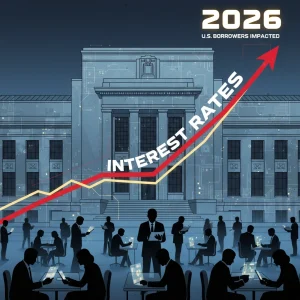
Central banks, like the Federal Reserve in the U.S., use interest rates as their primary tool to manage inflation and employment. When the central bank adjusts its key lending rate, it sets off a chain reaction. Suddenly, the interest on your savings account might tick up, but so will the rate on a new mortgage or a credit card balance.
Dr. Anya Sharma, an economist at the University of Chicago, explains, “A seemingly small 0.5% increase in the federal funds rate can translate into thousands of dollars in extra interest over the life of a 30-year mortgage.” This is a significant shift. The data suggests that for every quarter-point rate hike, consumer spending on durable goods tends to decrease by approximately 1.3% within the following two quarters. But what does this mean for your household budget?
It means the cost of borrowing goes up, which is intended to slow down spending and cool an overheated economy. This is why paying close attention to the minutes from central bank meetings can provide clues for your own financial planning—it’s not just for Wall Street traders.
Government Spending and Taxation Trends
While central banks control monetary policy, governments wield fiscal policy through spending and taxation. A new tax credit could mean more money in your pocket each month, while a large-scale infrastructure bill could create jobs in specific sectors. These decisions have a direct and often immediate impact on household income and the job market.
For example, government investment in renewable energy might not only spur job growth in that industry but also create secondary opportunities in logistics, manufacturing, and maintenance. We are currently seeing a focus on targeted spending aimed at boosting domestic production and technological independence. These are the kinds of current events that have a tangible effect on daily economic life.
The key is to connect these high-level policies to your personal situation. If new tax incentives for small businesses are announced, it might be the perfect time to evaluate that side hustle you’ve been considering. Staying informed about these trends allows you to position yourself to benefit rather than being caught off guard.
Future-Proofing Your Finances: Long-Term Outlooks from Professionals
Thinking about the long-term can feel like trying to predict the weather a year from now. Professionals consistently advise against trying to time the market, instead advocating for a steady, disciplined approach. The core principle is building a plan that can withstand economic shocks, not avoid them entirely. It’s a simple truth. What most people miss is that a good financial plan is less about picking winners and more about building resilience.
According to a survey from Charles Schwab, an impressive 71% of investors with a written financial plan stick to it during periods of market volatility. This highlights a critical point: having a strategy on paper prevents emotional decision-making. But how do you create a plan for a future you can’t predict? The key is focusing on evergreen principles like diversification across different asset classes and geographies. Think of it like a well-stocked pantry before a storm—you have different types of supplies to get you through anything.
Financial advisors also emphasize the importance of regular portfolio reviews and rebalancing. This isn’t about constant tinkering; it’s about making sure your investments still align with your goals as your life and the economy change. These adaptive strategies are part of the broader picture of economic resilience. By understanding how macro trends shape your financial future, you can make informed adjustments instead of reactive ones.
Ultimately, the goal is to create a financial framework that allows you to stay the course. The future will always bring surprises, but your long-term success depends on the preparations you make today.
From Spectator to Architect of Your Financial Future
The strategies outlined—from monitoring macroeconomic signals to diversifying income—are more than just a series of financial tasks; they represent a underlying shift in mindset. The ultimate goal is to transition from being a passive spectator of economic events to an active architect of your own financial resilience. The feeling of being controlled by headlines and market swings can be replaced by the quiet confidence that comes from having a plan and a system in place.
So, where do you begin? The sheer volume of information can be paralyzing, but progress starts with a single step. Rather than trying to implement everything at once, consider this challenge: choose one concept from this article that resonated with you—whether it’s rebalancing your portfolio, researching Treasury Inflation-Protected Securities, or brainstorming a digital side hustle. Dedicate one hour this week to taking the first concrete action on that single item. This small investment of time is the most powerful move you can make toward building a more secure and empowered financial life.
Frequently Asked Questions
How can I adjust my budget to cope with rising inflation?
To combat inflation, start by meticulously tracking your spending to identify where your money is going. Prioritize cutting non-primary expenses and look for lower-cost substitutes for items that have seen significant price hikes. Adjusting your budget this way helps your income stretch further and protects your savings goals.
What are the most common mistakes investors make during economic uncertainty?
During volatile periods, the most common mistakes are driven by emotion. These include panic-selling during a market downturn, abandoning a long-term diversification strategy, and attempting to ‘time the market’ by predicting its bottom or top. A disciplined, long-term approach is almost always more effective.
Should I pay off debt or invest more during economic downturns?
The best choice depends on your specific financial situation and risk tolerance. Financial professionals generally advise prioritizing high-interest debt, such as credit card balances, as the guaranteed return is high. For low-interest debt like a mortgage, investing may offer a better long-term return, but it comes with market risk.
How do global events directly impact my personal finances?
Global events have a direct line to your wallet. For example, a central bank’s decision to raise interest rates makes borrowing more expensive for mortgages and car loans. Likewise, disruptions in global supply chains can increase the cost of everyday goods, fueling the inflation that shrinks your purchasing power.
What resources do financial professionals recommend for staying informed?
Professionals rely on primary data sources and expert analysis. Key resources include reports from the Bureau of Labor Statistics for inflation data (CPI), publications from economic research institutes, and commentary from reputable financial news outlets. Following seasoned financial planners can also provide practical insights.