Comprehensive Checklist: Ensuring Data Security for SMEs in 2026
Anúncios
In an increasingly digital world, data has become the lifeblood of businesses, regardless of their size. For Small and Medium Enterprises (SMEs), the challenges of safeguarding this invaluable asset are particularly acute. With limited resources and often less specialized IT staff, SMEs are frequently targeted by cybercriminals who perceive them as easier prey than larger corporations. As we look towards 2026, the threat landscape continues to evolve at an unprecedented pace, making it imperative for SMEs to adopt a proactive and robust approach to data security. This comprehensive checklist is designed to guide your business through the complexities of SME data security 2026, ensuring you are well-prepared to face emerging threats and maintain the trust of your customers.
Anúncios
The digital transformation accelerated by recent global events has blurred the lines between work and personal life, introducing new vulnerabilities. Cloud adoption, remote work, and the proliferation of IoT devices have expanded the attack surface, demanding a more sophisticated and layered defense strategy. This article will delve into critical aspects of SME Data Security 2026, providing actionable insights and a practical checklist to fortify your defenses.
Understanding the Evolving Threat Landscape in 2026
The year 2026 brings with it a new set of challenges and sophisticated cyber threats. Ransomware remains a dominant force, but its tactics are becoming more insidious, often involving data exfiltration before encryption, leading to double extortion. Phishing and social engineering attacks are more personalized and convincing, leveraging AI to craft highly deceptive messages. Supply chain attacks are also on the rise, where adversaries compromise a trusted vendor to gain access to their clients’ systems. Moreover, the increasing reliance on cloud services introduces new vectors for attack if not properly secured.
For SMEs, the financial and reputational damage from a data breach can be catastrophic, often leading to business closure. Therefore, understanding these evolving threats is the first step towards building an effective defense strategy for SME Data Security 2026.
Anúncios
The Essential SME Data Security 2026 Checklist
1. Foundational Cybersecurity Practices
1.1. Robust Access Control and Identity Management
- Implement Multi-Factor Authentication (MFA): Mandate MFA for all employees accessing sensitive data or systems. This adds a crucial layer of security beyond just passwords.
- Strong Password Policies: Enforce the use of complex, unique passwords that are regularly updated. Consider password managers to help employees manage them effectively.
- Principle of Least Privilege: Grant employees only the minimum access necessary to perform their job functions. Regularly review and revoke unnecessary access.
- User Account Lifecycle Management: Establish clear procedures for creating, modifying, and deactivating user accounts, especially for departing employees.
1.2. Network Security
- Firewall Protection: Maintain properly configured firewalls to monitor and control incoming and outgoing network traffic.
- Intrusion Detection/Prevention Systems (IDS/IPS): Deploy solutions to detect and prevent unauthorized access or malicious activities on your network.
- Secure Wi-Fi Networks: Use strong encryption (WPA3 where available) and separate guest networks from your primary business network.
- Network Segmentation: Divide your network into smaller, isolated segments to limit the lateral movement of attackers in case of a breach.
1.3. Endpoint Security
- Antivirus and Anti-Malware Software: Install and regularly update comprehensive endpoint protection on all devices, including desktops, laptops, and mobile devices.
- Patch Management: Implement a rigorous patch management program to ensure all operating systems, applications, and firmware are updated promptly to address known vulnerabilities.
- Device Encryption: Encrypt hard drives and other storage devices to protect data in case of device loss or theft.
- Mobile Device Management (MDM): For businesses with mobile workforces, MDM solutions are crucial for securing, monitoring, and managing mobile devices.
2. Data Protection and Management
2.1. Data Backup and Recovery
- Regular Backups: Implement a robust backup strategy, following the 3-2-1 rule (three copies of data, on two different media, with one copy offsite).
- Test Backups Regularly: Periodically test your backup and recovery procedures to ensure data integrity and a quick restoration process.
- Secure Backup Storage: Ensure backup data is stored securely, preferably encrypted, and isolated from your primary network to prevent ransomware from affecting backups.
2.2. Data Encryption
- Data in Transit Encryption: Use secure protocols like HTTPS, SSL/TLS, and VPNs to encrypt data as it travels across networks.
- Data at Rest Encryption: Encrypt sensitive data stored on servers, databases, and cloud storage.
2.3. Data Minimization and Retention
- Collect Only Necessary Data: Avoid collecting or storing data that is not essential for business operations.
- Data Retention Policies: Establish clear policies for how long different types of data should be retained, and securely dispose of data that is no longer needed.
3. Employee Awareness and Training
Human error remains one of the leading causes of data breaches. Investing in comprehensive and ongoing cybersecurity awareness training for all employees is paramount for effective SME Data Security 2026.
- Regular Training Sessions: Conduct mandatory training sessions on cybersecurity best practices, identifying phishing attempts, and safe internet usage.
- Simulated Phishing Attacks: Periodically conduct simulated phishing campaigns to test employee vigilance and provide targeted feedback.
- Clear Security Policies: Develop and communicate clear security policies and procedures that employees must adhere to.
- Reporting Procedures: Establish clear channels for employees to report suspicious activities or potential security incidents without fear of reprisal.
4. Incident Response and Business Continuity Planning
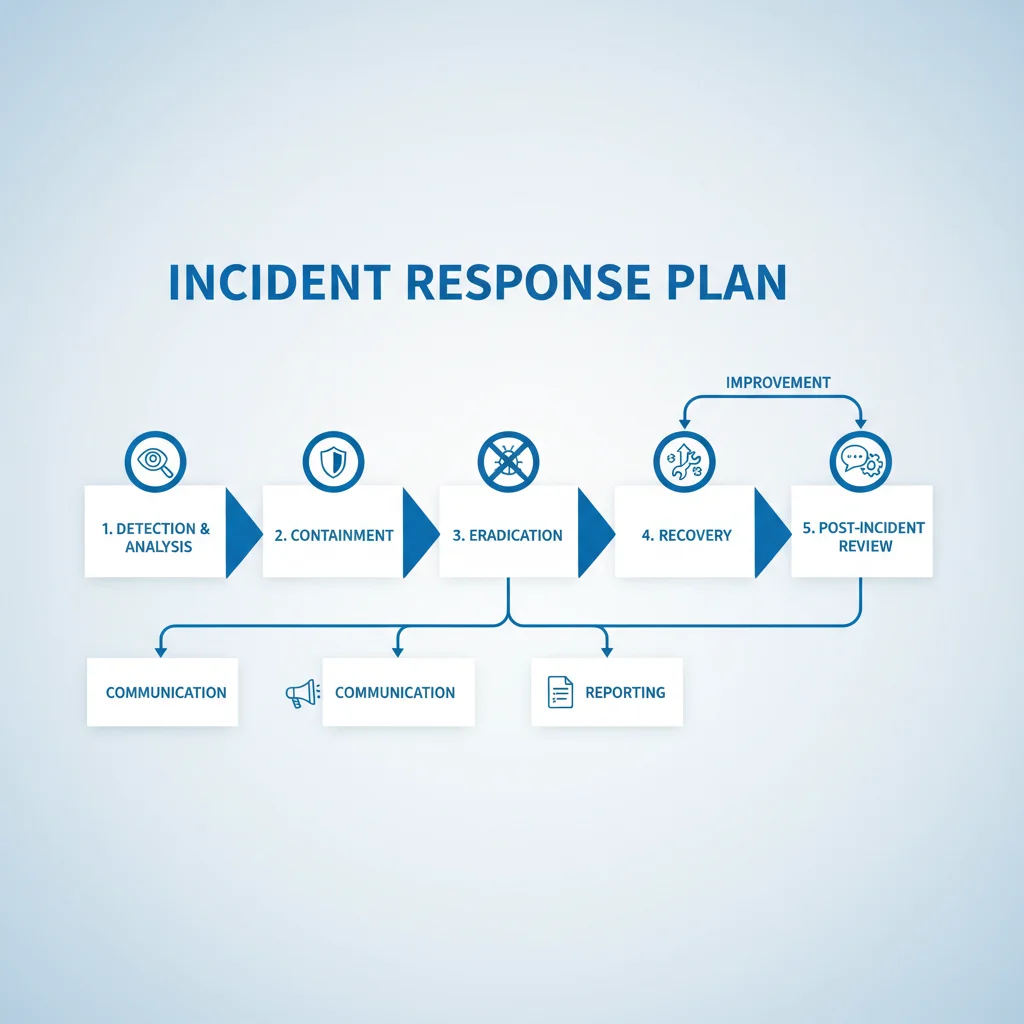
No security measure is foolproof. Having a well-defined incident response plan is critical for minimizing the impact of a breach and ensuring business continuity. This is a non-negotiable aspect of SME Data Security 2026.
- Develop an Incident Response Plan: Outline clear steps for detecting, responding to, and recovering from security incidents. Assign roles and responsibilities.
- Test the Plan: Regularly test your incident response plan through tabletop exercises or simulated attacks to identify weaknesses and refine procedures.
- Business Continuity Plan (BCP): Develop a BCP to ensure essential business functions can continue during and after a significant disruption.
- Communication Strategy: Prepare a communication plan for informing stakeholders (employees, customers, regulators) in the event of a data breach.
5. Vendor and Third-Party Risk Management
SMEs often rely on a multitude of third-party vendors for services like cloud hosting, software, and payment processing. Each vendor represents a potential entry point for attackers. Managing this risk is crucial for SME Data Security 2026.
- Vendor Security Assessments: Conduct thorough security assessments of all third-party vendors who have access to your data or systems.
- Service Level Agreements (SLAs): Ensure your contracts with vendors include clear security clauses and expectations regarding data protection.
- Regular Reviews: Periodically review the security posture of your vendors and their compliance with your security requirements.
6. Compliance and Regulatory Adherence
Depending on your industry and location, various data protection regulations (e.g., GDPR, CCPA, HIPAA) may apply to your business. Non-compliance can lead to significant fines and reputational damage. Staying abreast of these regulations is vital for SME Data Security 2026.
- Identify Applicable Regulations: Determine which data protection and privacy regulations apply to your business.
- Conduct Regular Audits: Perform internal and external audits to ensure compliance with relevant regulations.
- Data Privacy Officer (DPO): Consider appointing a DPO or assigning this responsibility to a knowledgeable individual, especially if handling sensitive personal data.
- Data Protection Impact Assessments (DPIAs): Conduct DPIAs for new projects or technologies that involve processing personal data.
7. Cloud Security Best Practices
Cloud adoption is widespread among SMEs due to its scalability and cost-effectiveness. However, securing cloud environments requires specific expertise and vigilance. This is a critical area for SME Data Security 2026.
- Shared Responsibility Model: Understand the shared responsibility model with your cloud provider (e.g., AWS, Azure, Google Cloud). You are responsible for security in the cloud, while the provider is responsible for security of the cloud.
- Cloud Access Security Brokers (CASBs): Consider CASBs to enforce security policies across multiple cloud services, providing visibility and control.
- Secure Configuration: Ensure all cloud services are configured securely, following best practices and avoiding default settings.
- Regular Auditing of Cloud Environments: Continuously monitor and audit your cloud resources for misconfigurations or suspicious activities.
8. Advanced Threat Protection and Monitoring
As threats become more sophisticated, traditional security measures alone may not suffice. Integrating advanced threat protection and continuous monitoring tools is increasingly important for SME Data Security 2026.
- Security Information and Event Management (SIEM): Consider a SIEM solution to centralize security logs, detect anomalies, and provide real-time alerts.
- Endpoint Detection and Response (EDR): EDR solutions go beyond traditional antivirus by continuously monitoring endpoints for malicious activity and enabling rapid response.
- Vulnerability Management Program: Regularly scan your systems and applications for vulnerabilities and prioritize their remediation.
- Threat Intelligence: Stay informed about the latest cyber threats and attack techniques relevant to your industry.

9. Emerging Technologies and Future-Proofing for 2026
The landscape of technology is always changing, and with it, the methods used by cybercriminals. Future-proofing your SME Data Security 2026 strategy involves anticipating these changes.
- AI and Machine Learning in Security: Explore how AI and ML-powered tools can enhance your threat detection and response capabilities.
- Zero Trust Architecture: Begin exploring and planning for a Zero Trust model, where no user or device is trusted by default, regardless of its location.
- Quantum Computing Threats: While not an immediate threat for most SMEs, be aware of the long-term implications of quantum computing on current encryption standards.
- IoT Security: If your business utilizes IoT devices, ensure they are securely configured, regularly patched, and isolated on separate networks.
Implementing Your SME Data Security 2026 Checklist
Implementing this comprehensive checklist requires a phased approach. Start by conducting a thorough risk assessment to identify your most critical assets and vulnerabilities. Prioritize actions based on the potential impact and likelihood of threats. Consider bringing in external cybersecurity experts if your internal resources are limited. Many managed security service providers (MSSPs) offer tailored solutions for SMEs, helping them implement and manage complex security measures without the need for a large in-house team.
Regularly review and update your security policies and procedures. The cyber threat landscape is dynamic, and your defense strategy must adapt accordingly. Foster a culture of security within your organization, where every employee understands their role in protecting the company’s data. Education and communication are key to embedding security awareness into the daily operations of your business.
Remember, data security is not a one-time project but an ongoing process. Continuous monitoring, regular assessments, and adapting to new threats are essential for maintaining a strong security posture. By diligently following this SME Data Security 2026 checklist, your business can significantly reduce its risk of cyberattacks, protect valuable data, and build resilience against future threats.
Conclusion
The digital age offers immense opportunities for growth and innovation for SMEs, but it also presents significant cybersecurity risks. Ensuring robust SME Data Security 2026 is not merely an IT concern; it’s a fundamental business imperative. By systematically addressing the points outlined in this comprehensive checklist – from foundational cybersecurity practices and employee training to incident response and compliance – small and medium enterprises can build a resilient defense against the evolving threat landscape.
Proactive security measures, continuous vigilance, and a commitment to adapting to new challenges will not only protect your data but also safeguard your reputation and foster long-term trust with your customers and partners. Invest in your security today to secure your future in the digital economy of 2026 and beyond.