
Digital Wellbeing: A 2026 Plan to Reduce Screen Time by 25% in One Week
In our increasingly connected world, the glow of screens has become an almost constant companion. From the moment we wake up to the last moments before sleep, our lives are intertwined with smartphones, tablets, computers, and televisions. While these devices offer unparalleled access to information, entertainment, and connection, their omnipresence comes at a cost. The concept of digital wellbeing has emerged as a critical topic, highlighting the importance of managing our relationship with technology to foster a healthier, more balanced life. As we step into 2026, the urgency to address excessive screen time is more pronounced than ever, with many individuals seeking actionable strategies to reclaim their focus, improve their sleep, and enhance their overall mental and physical health. This comprehensive guide outlines a practical, week-long plan designed to help you significantly reduce screen time by 25%, paving the way for sustainable digital habits.
The average person spends an astonishing amount of time looking at screens daily. Studies consistently show that adults can easily spend upwards of 6-7 hours a day on digital devices, often without realizing the cumulative impact. This constant engagement can lead to a myriad of issues, including eye strain, headaches, poor sleep quality, decreased attention spans, increased anxiety, and even a diminished sense of real-world connection. Recognizing these challenges is the first step towards creating a healthier digital environment. Our 2026 plan isn’t about shunning technology entirely; rather, it’s about fostering intentional use, ensuring that technology serves us, rather than us serving it. By committing to a structured approach, you can effectively reduce screen time and experience a profound positive shift in your daily life.
This plan is built on the principles of awareness, gradual reduction, and the introduction of fulfilling offline activities. It’s designed to be flexible, allowing you to adapt it to your unique lifestyle while still achieving the ambitious goal of a 25% reduction in screen time within a single week. We’ll explore strategies for tracking your current usage, setting realistic goals, implementing practical changes, and maintaining your progress long-term. Get ready to embark on a journey towards enhanced digital wellbeing, improved focus, and a more vibrant, present existence. Let’s dive into how you can effectively reduce screen time and unlock a healthier digital future.
Anúncios
Understanding Your Current Screen Time Habits
Before you can effectively reduce screen time, you need to understand where you currently stand. Many people underestimate their daily usage, often by a significant margin. The first crucial step in our 2026 plan is to gain an accurate picture of your current digital consumption. This isn’t about judgment; it’s about awareness and gathering data to inform your strategy.
Track Your Usage: The Foundation of Reduction
Modern smartphones and operating systems come equipped with built-in screen time tracking features. For example, iOS has ‘Screen Time’ and Android offers ‘Digital Wellbeing.’ These tools provide detailed reports on how much time you spend on your device, which apps you use most frequently, and how often you pick up your phone. If you primarily use a computer for work or entertainment, consider browser extensions or desktop applications that monitor usage. Dedicate the first day of your week to simply observing without trying to change anything. This baseline measurement is vital for setting realistic goals and evaluating your 25% reduction progress.
- Smartphone Tracking: Utilize native features like ‘Screen Time’ (iOS) or ‘Digital Wellbeing’ (Android).
- Computer Tracking: Explore extensions like ‘RescueTime’ or ‘Freedom’ for detailed insights.
- Manual Logging: For a more hands-on approach, keep a notepad and jot down when you start and stop using devices.
Once you have this baseline data, you’ll likely be surprised by the numbers. This awareness is a powerful motivator. It transforms an abstract goal of ‘less screen time’ into a concrete target. For instance, if your baseline is 8 hours a day, a 25% reduction means aiming for 6 hours a day – a tangible and achievable goal to reduce screen time.
Identify Your Digital Triggers
Beyond just knowing how much time you spend, it’s equally important to understand why. What are the triggers that lead you to pick up your phone or open a new tab? Is it boredom, stress, habit, or a genuine need for information or connection? Pay attention to the moments you reach for your device. Are you waiting in line? Feeling a lull in conversation? Procrastinating on a task? Recognizing these triggers allows you to develop alternative, healthier responses. For example, if boredom is a trigger, you can prepare a list of offline activities to engage in instead.
Categorize Your Screen Time
Not all screen time is created equal. Differentiate between ‘productive’ screen time (e.g., work, learning, essential communication) and ‘unproductive’ screen time (e.g., endless social media scrolling, binge-watching without purpose). Your goal to reduce screen time should primarily target the unproductive categories. This classification helps you prioritize and make informed decisions about where to cut back without impacting essential tasks.
By diligently tracking and analyzing your current habits, you lay a robust foundation for the rest of your week-long plan. This initial self-assessment is the cornerstone of effectively learning how to reduce screen time and ultimately improve your digital wellbeing.
Setting Realistic Goals for a 25% Reduction
With your baseline screen time established, the next step is to set clear, achievable goals. A 25% reduction in one week is an ambitious yet entirely attainable target. This section will guide you through breaking down this overall goal into manageable daily and hourly targets, making the process of how to reduce screen time feel less daunting.
Calculate Your Target Reduction
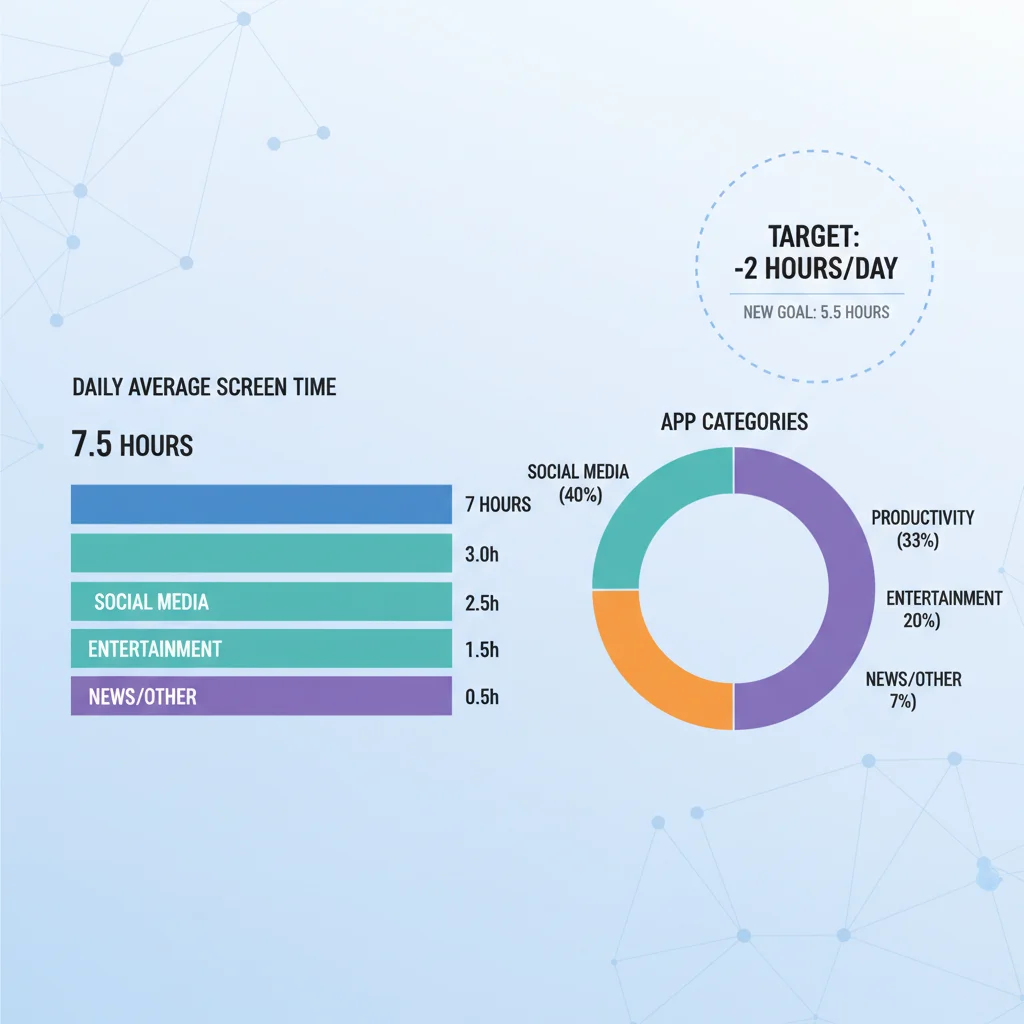
Let’s say your average daily screen time from your tracking period was 7 hours. A 25% reduction means you aim to cut 1.75 hours (7 hours * 0.25) from your daily usage, bringing your new target to 5.25 hours per day. This specific number provides a concrete benchmark for your week. If your weekly total was 49 hours, your new goal is approximately 36.75 hours. Knowing these figures makes monitoring your progress much easier.
Daily and Hourly Micro-Goals
Instead of thinking about a large, abstract number, break it down. How can you shave off 15-30 minutes here and there throughout your day? This might involve:
- Morning Routine: Delay checking your phone for the first 30 minutes after waking up.
- Meal Times: Designate meals as screen-free zones.
- Commute: Opt for a book or simply observe your surroundings instead of scrolling.
- Evening Wind-Down: Implement a ‘digital curfew’ 1-2 hours before bed.
These small, consistent changes accumulate quickly and are less disruptive than trying to eliminate large blocks of screen time all at once. The key is consistency in these micro-changes to effectively reduce screen time.
Focus on Unproductive Time First
As identified in the previous section, target your unproductive screen time first. If you spend 2 hours daily on social media and 1 hour on news apps, these are prime candidates for reduction. You might decide to cut social media time by 50% (1 hour) and news consumption by 30 minutes. This immediately gets you closer to your 1.75-hour daily reduction goal without impacting work or essential communication. This strategic approach makes it much easier to reduce screen time without feeling deprived.
Visualize Your Success
Keep your goal visible. Write it down, put a sticky note on your monitor, or set a daily reminder. Visualizing your progress and the benefits of reduced screen time – improved sleep, better focus, more engagement with your surroundings – can be a powerful motivator to stay on track. Remember, this is a positive step towards a healthier you, not a punishment.
By meticulously calculating your target, breaking it into smaller, manageable chunks, and focusing on unproductive usage, you create a clear roadmap for achieving your 25% screen time reduction goal within the week. This structured approach is essential for successfully learning how to reduce screen time effectively.
Practical Strategies to Implement Daily
With your goals set, it’s time to put strategies into action. This section provides a toolkit of practical, actionable steps you can integrate into your daily routine to actively reduce screen time. Consistency is key, so try to implement at least a few of these suggestions each day.
Leverage Device Settings and Apps
- Notifications: Turn off non-essential notifications. Each ping or vibration is an invitation to pick up your phone. Prioritize only critical alerts.
- Grayscale Mode: Experiment with setting your phone to grayscale. The world becomes less stimulating and less addictive when colors are removed, making you less likely to mindlessly scroll.
- App Limits: Use your device’s built-in app limits (e.g., ‘App Limits’ on iOS, ‘App Timers’ on Android) to restrict time spent on specific apps that consume most of your unproductive screen time.
- Do Not Disturb: Schedule ‘Do Not Disturb’ periods, especially during work, meals, and before bed.
Create Screen-Free Zones and Times
Designate specific areas or times in your day where screens are strictly off-limits. This creates clear boundaries and helps break the habit of constant connectivity.
- Bedrooms: Make your bedroom a screen-free sanctuary. Charge your phone outside the room.
- Meal Times: Enjoy meals with family or friends without the distraction of devices.
- First and Last Hour: Avoid screens for the first hour after waking and the last hour before sleeping.
- Social Gatherings: When with others, keep your phone tucked away.
Re-engage with the Physical World
Replacing screen time with fulfilling offline activities is perhaps the most effective way to reduce screen time sustainably. Think about hobbies you’ve neglected or new interests you’d like to explore.
- Read Physical Books: Rediscover the joy of holding a book.
- Spend Time Outdoors: Go for a walk, hike, or simply sit in a park.
- Engage in Hobbies: Pick up painting, knitting, playing an instrument, or gardening.
- Connect with People: Have face-to-face conversations or make phone calls instead of texting.
- Exercise: Physical activity is a great way to clear your head and step away from screens.
Optimize Your Digital Environment
- Declutter Your Home Screen: Remove distracting apps from your primary home screen. Bury them in folders or on secondary pages.
- Log Out of Social Media: Make it slightly harder to access addictive apps by logging out after each use.
- Charge Devices Away From Bed: This prevents late-night scrolling and ensures you don’t reach for your phone first thing in the morning.
Mindful Consumption
Before opening an app or website, pause and ask yourself: ‘Why am I doing this? Is it productive or purposeful?’. This moment of mindfulness can often prevent mindless scrolling. Be intentional about your digital interactions. By implementing these practical strategies, you’ll find it much easier to actively reduce screen time throughout your week and establish healthier digital habits.
Overcoming Challenges and Staying Motivated
Reducing screen time, even for just a week, can present various challenges. It’s easy to fall back into old habits, especially when boredom or stress kicks in. This section focuses on anticipating these hurdles and providing strategies to overcome them, ensuring you stay motivated and successfully reduce screen time by 25%.
Acknowledge and Address Withdrawal Symptoms
When you significantly cut back on screen time, especially from addictive apps, you might experience mild withdrawal symptoms such as restlessness, anxiety, or a feeling of missing out (FOMO). Recognize these feelings as normal reactions to changing a deeply ingrained habit. Instead of giving in, acknowledge them and remind yourself of your goal. Engage in a pre-planned offline activity to distract yourself.
The Power of Accountability
Share your goal to reduce screen time with a friend, family member, or colleague. Having an accountability partner can significantly boost your chances of success. You can check in with each other daily, share your struggles and triumphs, and offer encouragement. Some people even create friendly competitions to see who can stick to their digital detox goals best.
Reward Your Progress, Not Just the Outcome
Don’t wait until the end of the week to celebrate. Acknowledge small victories along the way. Did you go an entire meal without checking your phone? Did you read a chapter of a book instead of scrolling? Reward yourself with a non-screen-related treat: a favorite snack, a short walk, or listening to music. Positive reinforcement helps solidify new habits and encourages you to continue your efforts to reduce screen time.
Prepare for Slip-Ups
It’s highly probable you’ll have moments where you slip up and find yourself mindlessly scrolling. Don’t let a single setback derail your entire plan. Acknowledge it, learn from it (what triggered it?), and then immediately get back on track. Perfection isn’t the goal; consistent effort and progress are. The key is not to dwell on the mistake but to recommit to your goal to reduce screen time.
Find Healthy Substitutes for Digital Habits
Many digital habits serve a purpose, even if it’s just to fill time or provide a momentary escape. Identify what purpose your excessive screen time serves and find healthier, offline substitutes. If you scroll social media for connection, try calling a friend. If you watch videos to relax, try meditation or reading. Proactive substitution is a powerful tool to reduce screen time.
Review and Adjust Regularly
At the end of each day, briefly review your screen time data. How did you do compared to your daily goal? What worked well? What challenges did you face? Use these insights to adjust your strategy for the next day. This iterative process allows you to fine-tune your approach and makes your efforts to reduce screen time more effective over the week.
By anticipating challenges, building a support system, and being kind to yourself through the process, you can navigate the path to reduced screen time with greater ease and success. Remember, this journey is about creating a healthier, more balanced relationship with technology.
The Benefits of Reduced Screen Time and Long-Term Maintenance
Successfully reducing screen time by 25% in a week is a significant achievement, but the real reward lies in the lasting benefits and how you maintain these healthier habits. This section explores the profound positive impacts you can expect and provides strategies for sustaining your newfound digital wellbeing.
Immediate and Long-Term Benefits
- Improved Sleep Quality: Less blue light exposure before bed leads to better melatonin production and more restful sleep.
- Enhanced Focus and Concentration: Your brain will begin to adapt to less constant stimulation, improving your ability to concentrate on tasks.
- Reduced Eye Strain and Headaches: Giving your eyes a break from screens can alleviate common discomforts.
- Increased Productivity: With fewer digital distractions, you’ll find more time and energy for meaningful work and activities.
- Stronger Real-World Connections: More face-to-face interactions and engagement with your surroundings.
- Better Mood and Reduced Anxiety: Less exposure to curated online lives and constant news cycles can significantly lower stress levels.
- More Time for Hobbies: You’ll rediscover passions and have more bandwidth for enriching offline activities.
These benefits aren’t just temporary; they compound over time, leading to a profound improvement in your overall quality of life. The effort to reduce screen time is an investment in your mental and physical health.
Strategies for Long-Term Digital Wellbeing
The week-long challenge is just the beginning. To maintain your progress and continue to reduce screen time where necessary, consider these long-term strategies:
- Regular Digital Audits: Periodically review your screen time statistics (e.g., monthly) to ensure you haven’t slipped back into old patterns.
- Scheduled Digital Detoxes: Plan a longer digital detox weekend or even a full week a few times a year. This helps reset your habits and reminds you of the benefits of being unplugged.
- Mindful Technology Use: Continue to practice intentionality. Before picking up your device, ask yourself, ‘What is my purpose here?’
- Cultivate Offline Habits: Actively schedule and prioritize non-screen activities into your daily and weekly routine. Make them non-negotiable.
- Optimize Your Work Environment: If screens are essential for work, optimize your setup to minimize strain (e.g., ergonomic monitor height, blue light filters).
- Educate Yourself and Others: Stay informed about the latest research on digital health and share your insights with friends and family.

Embrace a Balanced Approach
Digital wellbeing isn’t about eliminating technology; it’s about balance. Technology is a powerful tool, and when used mindfully, it can enhance our lives. The goal is to be in control of your devices, rather than them controlling you. By consciously choosing when and how you engage with screens, you empower yourself to live a more present, focused, and fulfilling life. Continuing to reduce screen time when you notice it creeping up is a skill that will serve you well for years to come.
Your journey to reduce screen time by 25% in one week is a significant step towards a healthier, more balanced digital life. Embrace the changes, enjoy the benefits, and commit to maintaining these positive habits for a future where technology truly serves your wellbeing.
Conclusion: A Healthier Digital Future Starts Now
The journey to reduce screen time by 25% in a single week, as outlined in this 2026 plan, is more than just a challenge; it’s an invitation to reclaim your attention, improve your health, and foster a more intentional relationship with the digital world. We’ve navigated through understanding your current habits, setting realistic yet ambitious goals, implementing practical daily strategies, and preparing for the inevitable challenges that arise when breaking old patterns. The profound benefits – from improved sleep and enhanced focus to stronger real-world connections and a greater sense of peace – are well within your reach.
Remember that this plan is a framework, designed to be adapted to your unique circumstances. The key is not rigid adherence but consistent effort and a genuine desire to improve your digital wellbeing. Start by tracking your usage without judgment, then set your 25% reduction target, focusing on unproductive screen time. Implement device settings like notification controls and grayscale mode, create screen-free zones, and, most importantly, actively replace digital habits with enriching offline activities. When faced with a slip-up, don’t despair; simply learn and recommit.
The year 2026 marks a perfect opportunity to prioritize your digital health. As technology continues to evolve, so too must our strategies for managing its integration into our lives. By taking proactive steps to reduce screen time, you are not only benefiting yourself but also setting a positive example for those around you.
This isn’t about living without technology; it’s about living with it in a way that supports your overall health and happiness. By completing this week-long challenge, you’ll have built a strong foundation for sustainable digital habits, empowering you to be the master of your devices, not their servant. Embrace the quiet moments, enjoy the real-world connections, and savor the enhanced clarity that comes with a balanced digital life. Your healthier digital future begins today.