Cybersecurity Alerts 2026: Protecting Your Data from 3 Emerging National Threats

Anúncios
In the rapidly evolving digital landscape, the year 2026 presents a new frontier of cybersecurity challenges. As technology advances, so too do the sophistication and scale of threats, particularly those originating from national actors. Understanding and preparing for these emerging national threats is not just a best practice; it’s a critical imperative for individuals, businesses, and governments alike. This comprehensive guide delves into the cybersecurity alerts for 2026, focusing on three distinct yet interconnected national threats that demand immediate attention and robust defensive strategies.
The digital realm has become an extension of geopolitical battlegrounds, with nation-states leveraging cyber capabilities to achieve strategic objectives. These objectives range from espionage and intellectual property theft to destabilizing critical infrastructure and influencing public opinion. The stakes have never been higher, as successful attacks can lead to massive economic disruption, loss of sensitive data, and even compromise national security. Therefore, a proactive and adaptive approach to cybersecurity is paramount. We will explore the nature of these threats, their potential impact, and, most importantly, the actionable steps you can take to fortify your digital defenses against these emerging national threats.
Anúncios
The Shifting Landscape of Cyber Warfare: An Overview of 2026
The year 2026 is poised to be a pivotal moment in cybersecurity. The lines between state-sponsored hacking groups and criminal enterprises continue to blur, making attribution increasingly difficult. Furthermore, the proliferation of advanced persistent threats (APTs), powered by artificial intelligence and machine learning, allows attackers to conduct highly targeted, stealthy, and persistent campaigns. These groups are often well-funded, highly skilled, and operate with long-term objectives, making them formidable adversaries. The focus for 2026 cybersecurity alerts is shifting from reactive incident response to proactive threat intelligence and resilience building. Organizations must adopt a posture that anticipates attacks rather than merely responding to them. This involves continuous monitoring, threat hunting, and a deep understanding of the tactics, techniques, and procedures (TTPs) employed by state-backed actors. The global interconnectedness of digital systems means that a breach in one sector or nation can have ripple effects across the globe, underscoring the need for international cooperation and information sharing to combat these emerging national threats effectively.
Threat 1: Sophisticated Supply Chain Infiltrations
One of the most insidious emerging national threats for 2026 is the increasing sophistication of supply chain infiltrations. Unlike direct attacks on an organization’s primary systems, supply chain attacks target less secure links in the chain – often third-party vendors, software providers, or hardware manufacturers. By compromising a trusted supplier, national actors can gain access to numerous downstream targets without directly breaching their robust defenses. The SolarWinds attack in 2020 served as a stark reminder of the devastating potential of such an approach, affecting thousands of organizations, including government agencies and Fortune 500 companies. In 2026, we anticipate these attacks to become even more stealthy and pervasive, leveraging zero-day vulnerabilities and advanced social engineering tactics to compromise software updates, hardware components, and managed service providers.
Anúncios
The Mechanics of Supply Chain Attacks
National actors typically employ several methods for supply chain infiltration:
- Software Tampering: Injecting malicious code into legitimate software updates or open-source libraries.
- Hardware Backdoors: Compromising hardware components during manufacturing or distribution to install hidden functionalities.
- Third-Party Vendor Exploitation: Targeting smaller, less secure vendors that have legitimate access to larger organizations’ systems.
- Code Repository Attacks: Maliciously modifying code in shared repositories, affecting any project that uses that code.
These attacks are particularly dangerous because they exploit trust relationships. When an organization installs a software update from a reputable vendor, it implicitly trusts that the update is secure. A compromised update can bypass traditional security controls, allowing attackers deep access into networks before detection. The focus for national actors in 2026 will be on high-value targets, such as critical infrastructure providers, defense contractors, and technology companies holding vast amounts of sensitive data or intellectual property. Protecting against these emerging national threats requires a multi-layered approach that extends beyond an organization’s immediate perimeter.
Mitigation Strategies for Supply Chain Infiltrations
To defend against sophisticated supply chain infiltrations, organizations must implement robust strategies:
- Vendor Risk Management: Implement comprehensive due diligence processes for all third-party vendors. This includes security audits, contractual requirements for cybersecurity standards, and continuous monitoring of vendor security postures.
- Software Bill of Materials (SBOM): Demand and utilize SBOMs for all software components. This provides transparency into the components, libraries, and dependencies within software, making it easier to identify known vulnerabilities.
- Code Integrity Checks: Implement strong code signing and verification processes. Use cryptographic hashes to ensure that software has not been tampered with since its original release.
- Network Segmentation: Isolate critical systems and data from less secure parts of the network. This limits the lateral movement of attackers even if an initial breach occurs through a supply chain vector.
- Zero Trust Architecture: Adopt a Zero Trust model where no user, device, or application is inherently trusted, regardless of its location. Every access request must be authenticated and authorized.
- Advanced Endpoint Detection and Response (EDR): Deploy EDR solutions that can detect anomalous behavior and malicious activities at the endpoint level, even if the initial compromise came from a trusted source.
By focusing on these areas, organizations can significantly reduce their attack surface and improve their resilience against supply chain attacks, which are among the most concerning emerging national threats for 2026.
Threat 2: AI-Powered Disinformation and Influence Operations
The second major category of emerging national threats for 2026 is the weaponization of artificial intelligence (AI) in disinformation and influence operations. While disinformation is not new, AI capabilities, particularly in generative AI, elevate these operations to unprecedented levels of sophistication, scale, and believability. National actors are increasingly using AI to create highly convincing fake content – deepfakes, synthetic media, and AI-generated text – to manipulate public opinion, sow discord, and undermine democratic processes. The goal is often to create cognitive confusion, erode trust in institutions, and polarize societies, thereby weakening adversaries from within.

The Evolution of AI in Influence Operations
The capabilities of AI in this domain are rapidly expanding:
- Deepfakes: Generating hyper-realistic videos and audio that convincingly portray individuals saying or doing things they never did. These can be used to discredit political figures, spread false information, or create diplomatic incidents.
- Synthetic Media: Creating entirely artificial images, videos, and audio clips that appear authentic, often used to fabricate events or narratives.
- AI-Generated Text: Producing vast quantities of coherent, contextually relevant text for fake news articles, social media posts, and comments, making it difficult to distinguish from human-written content.
- Automated Propaganda Dissemination: Using AI-powered bots and networks to rapidly spread disinformation across social media platforms, amplifying its reach and impact.
- Targeted Psychological Operations: AI can analyze vast datasets of individual user behavior, preferences, and vulnerabilities to create highly personalized and persuasive disinformation campaigns.
The danger lies not only in the creation of this content but also in its rapid dissemination and the difficulty in detecting its artificial origins. These operations can severely impact national cohesion, electoral integrity, and public trust, making them a significant component of emerging national threats. The ability to erode the shared understanding of reality poses a fundamental challenge to societal stability.
Countering AI-Powered Disinformation
Combating AI-powered disinformation requires a multi-faceted approach involving technology, education, and policy:
- AI-Driven Detection Tools: Develop and deploy AI models specifically trained to detect deepfakes, synthetic media, and AI-generated text. This includes analyzing subtle inconsistencies, digital watermarks, and metadata.
- Media Literacy Education: Educate the public on how to identify disinformation, critically evaluate sources, and understand the capabilities of generative AI. Promote digital skepticism and critical thinking.
- Platform Responsibility: Pressure social media companies and digital platforms to implement stricter policies, invest in detection technologies, and act swiftly to remove AI-generated disinformation.
- Fact-Checking Initiatives: Support independent fact-checking organizations and integrate their findings prominently into news feeds and search results.
- Content Provenance Standards: Advocate for and implement standards that digitally sign and verify the origin of digital content, making it easier to trace its source.
- International Cooperation: Foster international collaboration to share threat intelligence, develop common standards, and coordinate responses to state-sponsored influence operations.
Addressing these emerging national threats requires a societal-level response, as purely technical solutions may not be sufficient against the psychological and social engineering aspects of these campaigns.
Threat 3: Advanced Attacks on Critical Infrastructure
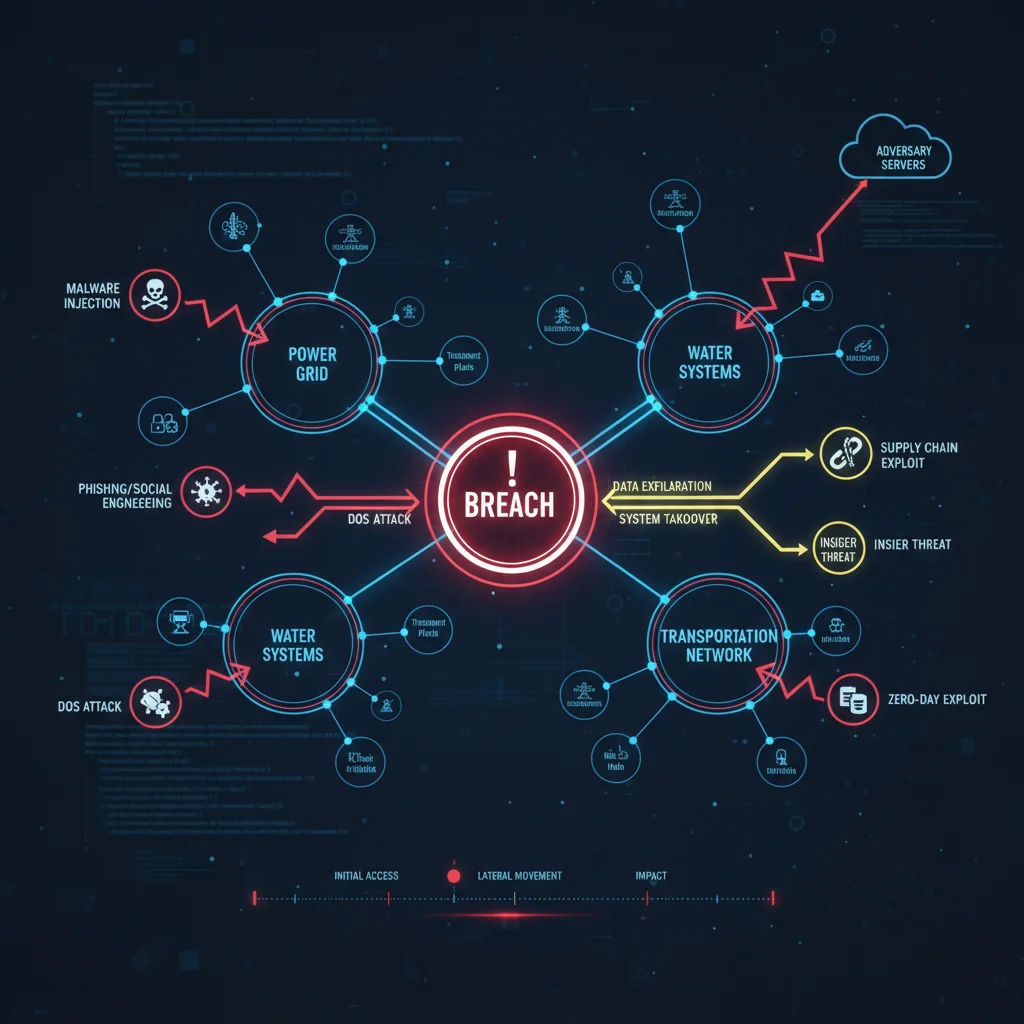
The third and arguably most impactful category of emerging national threats for 2026 involves advanced, targeted attacks on critical national infrastructure (CNI). This includes sectors such as energy (power grids, oil and gas), water treatment, transportation (air traffic control, railways), healthcare, and financial services. These systems are increasingly digitized and interconnected, making them vulnerable to sophisticated cyberattacks aimed at causing widespread disruption, economic paralysis, or even loss of life. National actors view CNI as high-value targets for their potential to inflict maximum damage and exert political leverage.
The Growing Vulnerability of CNI
Several factors contribute to the heightened risk of CNI attacks in 2026:
- Aging Infrastructure with Legacy Systems: Many CNI systems rely on older operational technology (OT) and industrial control systems (ICS) that were not designed with modern cybersecurity in mind. Integrating these with IT networks creates new attack vectors.
- Increased Interconnectivity: The drive for efficiency and remote management has led to greater connectivity between OT/ICS and the internet, expanding the attack surface significantly.
- Specialized Malware: National actors are developing highly specialized malware designed to exploit vulnerabilities in specific industrial protocols and hardware, making detection and removal extremely challenging.
- Insider Threats: The potential for disgruntled employees or agents to facilitate attacks from within remains a persistent concern.
- Complex Attack Chains: Attacks on CNI often involve multiple stages, from initial reconnaissance and credential theft to lateral movement and ultimately, disruption of operational processes.
Successful attacks on CNI can have catastrophic consequences, such as widespread power outages, contamination of water supplies, disruption of essential services, and severe economic repercussions. The potential for physical damage and human casualties elevates these to the most severe of emerging national threats.
Fortifying Critical Infrastructure Against National Threats
Protecting CNI requires a specialized and coordinated approach:
- Robust OT/ICS Security: Implement deep packet inspection, intrusion detection systems, and anomaly detection specifically tailored for industrial control protocols. Segment OT networks from IT networks.
- Regular Vulnerability Assessments and Penetration Testing: Conduct frequent and thorough assessments of both IT and OT environments, simulating attacks to identify weaknesses before adversaries do.
- Threat Intelligence Sharing: Foster strong information-sharing partnerships between government agencies, CNI operators, and cybersecurity firms to stay informed about the latest threats and attack methodologies.
- Incident Response and Disaster Recovery Plans: Develop and regularly test comprehensive incident response plans specifically for CNI breaches, including manual override procedures and robust disaster recovery capabilities to ensure operational continuity.
- Employee Training and Awareness: Train CNI personnel on cybersecurity best practices, recognizing social engineering attempts, and adhering to strict operational security protocols.
- Physical Security Integration: Ensure that physical security measures are tightly integrated with cybersecurity strategies, as many CNI attacks can begin with physical access.
- Regulatory Frameworks and Compliance: Adhere to and advocate for strong regulatory frameworks that mandate robust cybersecurity practices for CNI, ensuring a baseline level of protection across the sector.
Addressing these emerging national threats requires sustained investment, collaboration, and a commitment to continuous improvement in cybersecurity posture across all critical sectors.
Cross-Cutting Strategies for All Emerging National Threats
While each threat category has its specific mitigation strategies, several overarching principles and technologies are crucial for defending against the broad spectrum of emerging national threats in 2026:
1. Enhanced Threat Intelligence and Sharing
The ability to anticipate and respond effectively to national threats hinges on superior threat intelligence. This involves gathering, analyzing, and disseminating information about adversary TTPs, indicators of compromise (IoCs), and emerging attack vectors. Organizations should actively participate in threat intelligence-sharing platforms, both within their industry and with government agencies. Real-time intelligence allows for proactive adjustments to defensive postures, enabling organizations to stay one step ahead of sophisticated attackers. This includes leveraging AI and machine learning to process vast amounts of threat data and identify patterns that human analysts might miss. Sharing intelligence is not just a courtesy; it’s a necessity in an interconnected threat landscape where a vulnerability exploited in one sector can quickly be weaponized against another. The rapid evolution of emerging national threats necessitates a collective defense strategy.
2. Human Element Fortification: Training and Awareness
Despite technological advancements, the human element remains the weakest link in many security chains. National actors frequently exploit human vulnerabilities through social engineering tactics like phishing, spear-phishing, and pretexting. Comprehensive and continuous cybersecurity training programs are essential. These programs should go beyond basic awareness to include simulated phishing exercises, education on identifying deepfakes and disinformation, and fostering a security-first culture. Employees must understand their role in protecting organizational assets and be equipped with the knowledge to recognize and report suspicious activities. A well-informed workforce is a powerful line of defense against emerging national threats, especially those relying on deception and manipulation.
3. Redundant and Resilient Systems
Recognizing that no defense is impenetrable, organizations must prioritize building redundant and resilient systems. This means having backup systems, robust disaster recovery plans, and the ability to operate in a degraded state during or after an attack. For critical infrastructure, this includes maintaining offline operational capabilities and having contingency plans for manual control. The goal is to minimize the impact of a successful breach and ensure rapid recovery, thereby limiting the strategic advantage gained by national adversaries. Investing in redundancy and resilience is a pragmatic acknowledgment of the persistent nature of emerging national threats.
4. Advanced Identity and Access Management (IAM)
Strong IAM is fundamental. This includes multi-factor authentication (MFA) for all users and systems, least privilege access, and continuous monitoring of access patterns. Privileged access management (PAM) solutions are crucial for protecting administrative accounts, which are prime targets for national actors. Regular audits of user accounts and permissions can help identify and rectify potential vulnerabilities. As national threats often involve compromising legitimate credentials, robust IAM practices are a cornerstone of effective defense.
5. Secure Development Life Cycle (SDLC)
For organizations developing software, integrating security throughout the entire SDLC is non-negotiable. This involves security by design, secure coding practices, regular code reviews, and automated security testing. Addressing vulnerabilities at the development stage significantly reduces the risk of introducing exploitable flaws into products and services, thereby mitigating a key vector for supply chain attacks. A secure SDLC is a proactive measure against emerging national threats that target software integrity.
Conclusion: A Call to Action for 2026 and Beyond
The cybersecurity landscape of 2026 is characterized by increasingly sophisticated and pervasive emerging national threats. From insidious supply chain infiltrations and the weaponization of AI in disinformation campaigns to potentially catastrophic attacks on critical infrastructure, the challenges are formidable. However, by understanding these threats and implementing comprehensive, multi-layered defensive strategies, organizations and nations can significantly enhance their resilience. A proactive posture, continuous adaptation, strong international cooperation, and a well-trained human element are not merely recommendations; they are essential components of a robust cybersecurity framework for the years to come. Protecting our data, our infrastructure, and our societal trust demands unwavering vigilance and commitment from everyone in the digital ecosystem. The time to act is now, to ensure a secure and stable digital future against these evolving national challenges.