U.S. Supply Chain Resilience: Adapting to Disruptions in 18 Months

Anúncios
Anúncios
The past 18 months have been a crucible for global commerce, testing the mettle of supply chains worldwide. For U.S. industries, this period has been defined by an urgent, often dramatic, pivot towards enhanced U.S. Supply Chain Resilience. From unforeseen geopolitical shifts to persistent logistical bottlenecks and the lingering effects of a global pandemic, businesses have faced an unprecedented array of challenges. Yet, out of this adversity, a stronger, more adaptable framework is emerging, characterized by innovation, strategic foresight, and a renewed commitment to domestic capabilities.
Before this tumultuous period, many U.S. industries operated on a lean, globalized model, prioritizing cost efficiency above all else. This approach, while effective in stable times, proved vulnerable to shocks. The ripple effects of a single disruption could quickly cascade, causing widespread shortages, production delays, and significant economic losses. Recognizing this fragility, U.S. businesses, policymakers, and industry leaders have embarked on a concerted effort to recalibrate their strategies, focusing on building robustness and agility into every link of the supply chain.
This article delves into the transformative journey of U.S. industries over the last 18 months, exploring the key drivers behind the push for greater resilience, the innovative strategies adopted, and the tangible outcomes observed. We will examine how companies have leveraged technology, re-evaluated sourcing strategies, invested in domestic production, and fostered stronger collaborations to create a supply chain ecosystem better equipped to withstand future shocks. The narrative is one of adaptation, learning, and the relentless pursuit of operational excellence in the face of continuous change.
Anúncios
The Imperative for U.S. Supply Chain Resilience: Lessons Learned
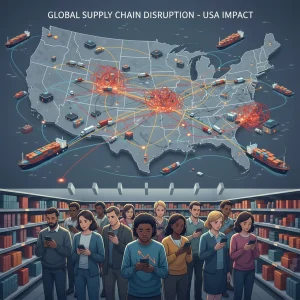
The events of the recent past served as a stark reminder of the interconnectedness and inherent vulnerabilities of global supply chains. For years, the mantra was ‘just-in-time’ inventory and optimizing for the lowest possible cost, often leading to reliance on single-source suppliers located thousands of miles away. While this model delivered impressive efficiencies during periods of stability, it left little room for error when faced with significant disruptions. The initial shockwaves, triggered by factory shutdowns, port congestion, and labor shortages, exposed critical weaknesses across various sectors, from semiconductors to consumer goods.
Identifying Key Vulnerabilities
One of the primary lessons was the over-reliance on a limited number of geographical regions for critical components and raw materials. For instance, the semiconductor industry, vital to nearly every modern technology, highlighted a significant concentration of manufacturing capacity in a few East Asian nations. When these regions faced their own challenges, the global impact was immediate and severe. Similarly, the automotive industry experienced unprecedented production halts due to chip shortages, demonstrating how a single bottleneck could cripple an entire sector.
Another crucial vulnerability identified was the lack of visibility across extended supply chains. Many companies had limited insight beyond their Tier 1 suppliers, making it difficult to anticipate and react to disruptions further upstream. This ‘blind spot’ exacerbated problems, turning minor issues into major crises as businesses struggled to understand the true extent of their exposure.
The Economic and Social Impact
The implications of these vulnerabilities extended far beyond corporate balance sheets. Consumers faced inflated prices and empty shelves, impacting daily life and confidence. Essential goods, from medical supplies to everyday necessities, became scarce, underscoring the critical link between supply chain stability and national security. The economic fallout included significant revenue losses for businesses, job displacements in affected sectors, and a broader slowdown in economic growth. These profound impacts galvanized a collective resolve to prioritize U.S. Supply Chain Resilience as a national economic and security imperative.
The recognition of these deep-seated issues has been the driving force behind the substantial changes observed in the last 18 months. It shifted the conversation from merely optimizing for cost to strategically investing in resilience, recognizing that a small increase in operational cost could yield significant returns in stability and risk mitigation. This fundamental re-evaluation has set the stage for a new era of supply chain management in the U.S.
Strategic Pillars of Enhanced U.S. Supply Chain Resilience
In response to the lessons learned, U.S. industries have adopted a multi-faceted approach to bolster their supply chains. This strategic overhaul is built upon several key pillars, each designed to address specific vulnerabilities and enhance overall robustness.
Diversification of Sourcing and Supplier Networks
A significant shift has been the move away from single-source reliance towards a more diversified supplier base. Companies are actively seeking multiple suppliers for critical components, often across different geographic regions, to mitigate the risk of disruption from any one source. This includes exploring suppliers in friendly nations and increasing domestic sourcing where feasible. The goal is not just to have alternatives, but to cultivate a network of reliable partners that can step in during emergencies, ensuring continuity of supply.
This diversification also extends to logistical routes. Instead of relying on a limited number of ports or transportation methods, businesses are exploring multimodal options and alternative shipping lanes. This flexibility allows them to reroute goods quickly in response to port congestion, natural disasters, or geopolitical events, thereby maintaining the flow of goods.
Nearshoring and Reshoring Initiatives
The concept of nearshoring (bringing production closer to home, often to neighboring countries) and reshoring (bringing production back to the U.S.) has gained significant traction. While not always the cheapest option, these strategies offer substantial benefits in terms of reduced lead times, lower transportation costs, increased control over quality and intellectual property, and greater responsiveness to market changes. Furthermore, they contribute to job creation and economic growth within the U.S. and its allies.
Government incentives, such as the CHIPS and Science Act, have further propelled reshoring efforts, particularly in critical sectors like semiconductors. These policies aim to rebuild domestic manufacturing capabilities, reducing dependence on foreign sources for technologies vital to national security and economic competitiveness. This trend is not just about manufacturing; it also encompasses the entire ecosystem, from raw material processing to final assembly.
Investment in Technology and Digital Transformation
Technology is at the heart of modern U.S. Supply Chain Resilience. Companies are heavily investing in digital tools and platforms to gain end-to-end visibility, automate processes, and improve decision-making. Key technological advancements include:
- Artificial Intelligence (AI) and Machine Learning (ML): Used for demand forecasting, predictive analytics, risk assessment, and optimizing logistics routes. AI can analyze vast datasets to identify potential disruptions before they occur, allowing for proactive mitigation strategies.
- Blockchain: Enhances transparency and traceability across the supply chain, ensuring the authenticity and provenance of goods, especially critical for high-value or sensitive products.
- Internet of Things (IoT): Sensors embedded in products, vehicles, and warehouses provide real-time data on inventory levels, location, and environmental conditions, enabling precise tracking and management.
- Cloud-based Supply Chain Management (SCM) Platforms: Facilitate seamless collaboration among supply chain partners, providing a single source of truth and enabling real-time information sharing.
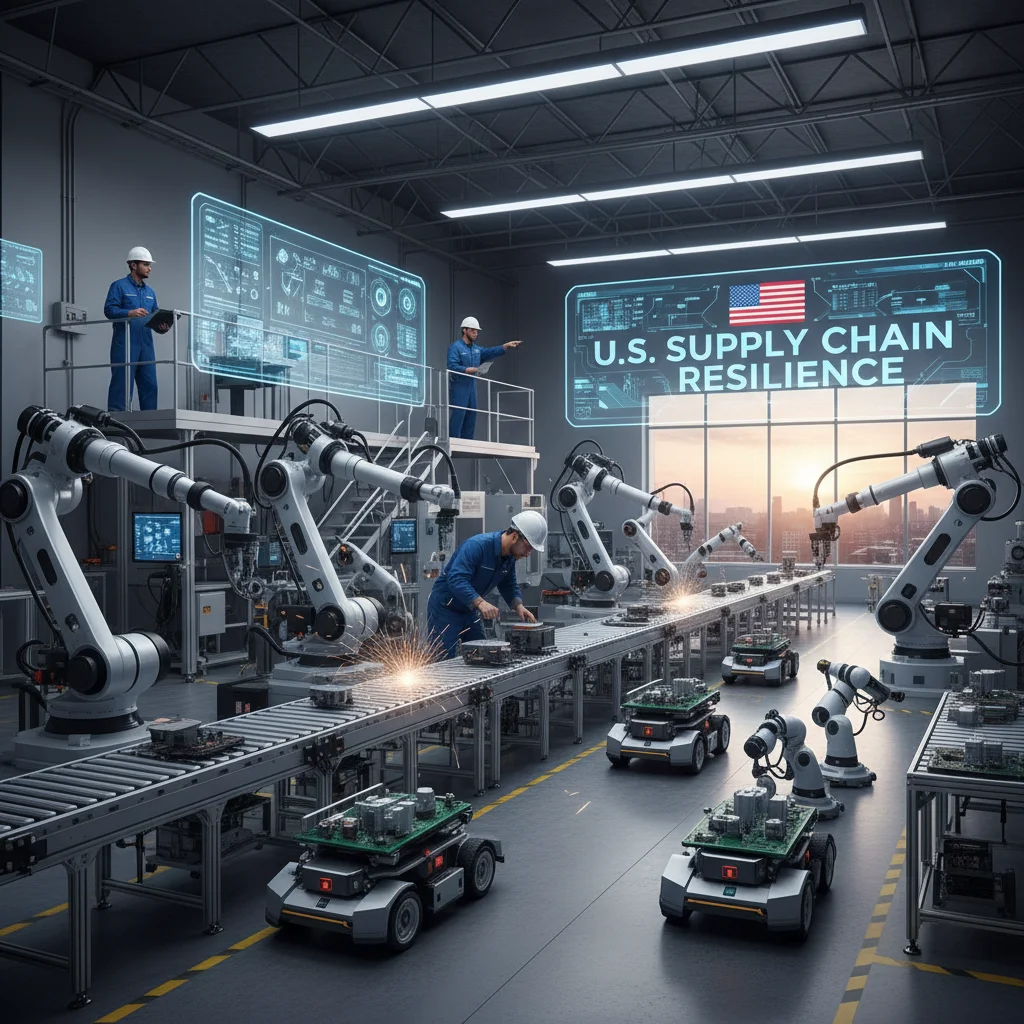
These technologies not only improve efficiency but also provide the agility needed to react swiftly to unforeseen events. They transform raw data into actionable insights, empowering businesses to make informed decisions and build more robust operations.
Enhanced Inventory Management Strategies
While ‘just-in-time’ remains a valid strategy for some, many industries are re-evaluating their inventory policies. This doesn’t necessarily mean a return to massive stockpiles, but rather a more strategic approach to buffer inventory for critical components and finished goods. Concepts like ‘just-in-case’ inventory are being selectively applied, especially for items with long lead times or high volatility in supply. This is often combined with advanced analytics to determine optimal buffer levels, balancing the cost of holding inventory against the risk of stockouts.
Furthermore, businesses are exploring strategies like vendor-managed inventory (VMI) and collaborative planning, forecasting, and replenishment (CPFR) with key suppliers to improve inventory synchronization and reduce overall supply chain risk. The focus is on creating a more adaptive inventory system that can flex with demand and supply fluctuations.
Industry-Specific Adaptations and Success Stories
The push for U.S. Supply Chain Resilience has manifested differently across various sectors, each facing unique challenges and opportunities. Yet, common themes of innovation and strategic adaptation emerge.
Semiconductor Industry: A National Priority
Perhaps no sector has garnered as much attention regarding supply chain vulnerabilities as semiconductors. The U.S. government, recognizing the strategic importance of these chips, has launched aggressive initiatives like the CHIPS and Science Act. This legislation provides billions in subsidies and tax credits to encourage domestic semiconductor manufacturing and research. Companies like Intel and TSMC have announced massive investments in new fabrication plants (fabs) within the U.S., signaling a significant reshoring trend. This not only aims to secure a domestic supply of critical chips but also to foster innovation and create high-tech jobs.
These investments are long-term, but their impact on reducing reliance on overseas production and strengthening the domestic tech ecosystem is already being felt in terms of planning and initial construction phases. The goal is to build a more geographically diversified and secure semiconductor supply chain, enhancing global stability and U.S. competitiveness.
Automotive Sector: Redefining Production and Sourcing
The automotive industry was severely impacted by chip shortages and other disruptions. In response, manufacturers have aggressively pursued diversification of their component suppliers and increased collaboration with chipmakers to secure future supply. Many are also exploring vertical integration, bringing more component manufacturing in-house or investing in joint ventures with key suppliers to gain greater control over their supply chains.
Furthermore, the shift towards electric vehicles (EVs) is driving new supply chain considerations, particularly for critical minerals and battery production. U.S. automakers are investing heavily in domestic battery manufacturing and rare earth processing capabilities, aiming to build a more self-reliant EV supply chain from mining to recycling. This strategic pivot is crucial for the future of the American auto industry and its long-term resilience.
Healthcare and Pharmaceuticals: Localizing Production for Critical Needs
The pandemic exposed critical weaknesses in the healthcare supply chain, particularly for personal protective equipment (PPE) and essential medicines. The U.S. has since seen a concerted effort to reshore production of these vital items. Companies are investing in new domestic manufacturing facilities for N95 masks, ventilators, and active pharmaceutical ingredients (APIs). The focus is on creating redundant supply lines and building strategic national reserves to prevent future shortages.
Additionally, pharmaceutical companies are leveraging advanced manufacturing techniques, such as continuous manufacturing, to increase agility and reduce reliance on batch production, which can be less flexible. This enhances the ability to quickly scale up production of critical drugs in response to health crises, a vital aspect of national security.
Consumer Goods and Retail: Agility and Data-Driven Decisions
Retailers and consumer goods companies have focused on improving supply chain visibility and agility. This involves implementing advanced inventory management systems, leveraging AI for demand forecasting, and diversifying their logistics partners. Many have also invested in micro-fulfillment centers and expanded their e-commerce infrastructure to offer faster, more reliable delivery options.
For example, some major retailers have strategically increased their domestic warehousing capacity and invested in dedicated fleets to reduce dependence on third-party logistics providers during peak seasons or disruptions. This allows for greater control over the ‘last mile’ delivery, a critical component of customer satisfaction and overall supply chain performance.
The Role of Government and Policy in Strengthening U.S. Supply Chain Resilience
Government intervention and policy initiatives have played a pivotal role in accelerating the drive towards greater U.S. Supply Chain Resilience. Recognizing the national security and economic implications of vulnerable supply chains, federal and state governments have implemented various measures to support businesses in their adaptation efforts.
Strategic Investments and Incentives
Beyond the CHIPS Act, the U.S. government has introduced other programs and incentives to encourage domestic manufacturing, particularly in critical sectors. These include tax credits for R&D, grants for advanced manufacturing technologies, and funding for workforce development programs designed to train skilled labor for new domestic factories. The Bipartisan Infrastructure Law also allocates substantial funds for improving port infrastructure, roads, and bridges, which are vital for efficient logistics and transportation.
These investments aim to reduce the cost differential between domestic and international production, making reshoring a more attractive option for businesses. By creating a supportive ecosystem, the government is actively working to rebuild American manufacturing capabilities and reduce reliance on potentially unstable foreign sources.
Data Sharing and Collaboration Initiatives
The government has also facilitated increased data sharing and collaboration between industries and across different agencies. Initiatives to create shared platforms for supply chain visibility and risk assessment are emerging, allowing businesses to access real-time information and better understand potential threats. This collaborative approach helps create a more resilient national supply chain network.
For instance, the Department of Commerce and Department of Defense have been actively engaged in mapping critical supply chains and identifying choke points, working with industry partners to develop mitigation strategies. This public-private partnership model is essential for addressing complex, systemic vulnerabilities that individual companies cannot solve alone.
Trade Policy and International Cooperation
U.S. trade policy is also evolving to support supply chain resilience. This includes exploring new trade agreements that prioritize secure and diversified sourcing, as well as working with international allies to build more robust global supply chain networks. The emphasis is shifting towards ‘friendshoring’ or ‘ally-shoring,’ where production is moved to countries with stable political environments and strong trade relationships with the U.S.
This approach aims to create a network of trusted trading partners that can collectively withstand disruptions, rather than relying on a single, potentially unreliable, global source. By fostering stronger international cooperation, the U.S. seeks to build a more stable and predictable global trading environment.

Challenges and Future Outlook for U.S. Supply Chain Resilience
While significant progress has been made in enhancing U.S. Supply Chain Resilience over the last 18 months, the journey is far from over. Several challenges remain, and the future will demand continued vigilance and adaptation.
Persistent Challenges
One of the primary challenges is the sheer complexity and cost associated with transforming deeply entrenched global supply chains. Reshoring and nearshoring require substantial capital investment, workforce retraining, and often, a redesign of manufacturing processes. The economic viability of these shifts must be carefully balanced against the long-term benefits of resilience.
Another challenge is the ongoing global geopolitical instability and climate change, which continue to pose unpredictable threats. Natural disasters, conflicts, and trade disputes can emerge suddenly, requiring constant monitoring and rapid response capabilities. The dynamic nature of these threats means that supply chain resilience is not a one-time fix but an ongoing process of adaptation and improvement.
Workforce development is also a critical concern. As manufacturing returns to the U.S., there is a growing need for skilled labor in advanced manufacturing, robotics, and digital supply chain management. Bridging this skills gap will be essential for the success of reshoring initiatives and for sustaining a competitive domestic industrial base.
The Future of U.S. Supply Chain Resilience
Looking ahead, the future of U.S. Supply Chain Resilience will likely be characterized by several key trends:
- Hyper-Personalization and Customization: As consumer demands evolve, supply chains will need to become even more agile to support highly personalized products and services, requiring greater flexibility in manufacturing and logistics.
- Sustainability as a Core Driver: Environmental, social, and governance (ESG) factors will increasingly influence supply chain decisions, pushing companies towards more sustainable sourcing, production, and transportation methods. Resilient supply chains will also be green supply chains.
- Advanced Analytics and AI Integration: The adoption of AI and machine learning will deepen, moving beyond predictive analytics to prescriptive solutions that can autonomously optimize supply chain operations and respond to disruptions.
- Increased Collaboration and Ecosystem Thinking: Businesses will continue to foster deeper collaborations with suppliers, customers, and even competitors to create resilient ecosystems rather than isolated supply chains. This includes sharing data, resources, and best practices.
- Modular and Flexible Manufacturing: The ability to quickly reconfigure production lines and adapt to changing product demands will become paramount. This involves investing in modular production systems and additive manufacturing (3D printing) for rapid prototyping and localized production.
The past 18 months have undeniably reshaped the landscape of U.S. industries, pushing them towards a more robust and adaptive future. The journey towards complete U.S. Supply Chain Resilience is continuous, but the foundation laid during this challenging period has set a powerful precedent. By embracing innovation, strategic diversification, and collaborative partnerships, U.S. businesses are not just reacting to crises; they are proactively building a resilient economic future, ready to navigate whatever challenges lie ahead.