The Federal Reserve’s 2026 Interest Rate Projections: Navigating Business Investment Over the Next 12 Months
The economic landscape is perpetually shaped by the decisions of central banks, none more so than the Federal Reserve in the United States. As we look towards 2026, understanding the Federal Reserve’s (Fed) anticipated interest rate projections is not merely an academic exercise; it’s a critical imperative for businesses of all sizes. These Fed rate projections serve as a compass, guiding strategic planning, capital allocation, and risk management for the foreseeable future. The next 12 months, in particular, will be a period where businesses must keenly observe and adapt to the Fed’s monetary policy stance.
Interest rates are the lifeblood of an economy. They influence borrowing costs, consumer spending, investment decisions, and ultimately, the pace of economic growth. When the Fed raises rates, it typically aims to curb inflation and cool down an overheating economy. Conversely, rate cuts are often employed to stimulate economic activity during downturns. The challenge for businesses lies in deciphering the Fed’s signals and translating them into actionable strategies that safeguard profitability and foster growth.
This comprehensive guide will delve into the expected Fed rate projections for 2026, analyzing the factors that underpin these forecasts. More importantly, we will explore the multifaceted impact these projections could have on business investment across various sectors over the crucial next 12 months. From small and medium-sized enterprises (SMEs) to large corporations, every entity will feel the ripple effects, necessitating a proactive and informed approach to financial planning and strategic development.
Anúncios
Understanding the Federal Reserve’s Mandate and Forecasting Tools
Before we dissect the 2026 Fed rate projections, it’s essential to grasp the Federal Reserve’s dual mandate: to achieve maximum employment and maintain price stability (low and stable inflation). These two objectives often pull in different directions, making the Fed’s job inherently complex. To fulfill its mandate, the Fed employs various tools, with the federal funds rate being the most prominent.
The federal funds rate is the target rate for overnight lending between banks. While the Fed doesn’t directly set this rate, it influences it through open market operations, primarily by buying or selling government securities. Changes in the federal funds rate cascade throughout the economy, affecting other interest rates, such as those on mortgages, car loans, and business lines of credit.
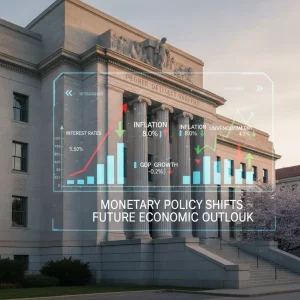
The Fed’s forecasts, including the highly anticipated Summary of Economic Projections (SEP), provide valuable insights into policymakers’ thinking. The SEP, released quarterly, includes individual projections from members of the Federal Open Market Committee (FOMC) on key economic variables like GDP growth, unemployment, inflation, and, crucially, the federal funds rate. These ‘dot plots’ visually represent where each FOMC participant expects the federal funds rate to be at various points in the future, offering a glimpse into the likely trajectory of Fed rate projections.
Several factors influence these projections. Inflation, as measured by the Personal Consumption Expenditures (PCE) price index, is a primary concern. If inflation remains stubbornly high, the Fed is more likely to maintain a restrictive monetary policy, keeping rates elevated. Conversely, a significant slowdown in economic growth or an unexpected surge in unemployment could prompt the Fed to consider rate cuts to stimulate activity. Global economic conditions, geopolitical events, and domestic fiscal policy also play a role in shaping the Fed’s outlook.
For businesses, staying abreast of these factors and understanding the nuances of the Fed’s communication is paramount. The market often reacts strongly to subtle shifts in language or unexpected data releases, which can cause immediate changes in borrowing costs and investor sentiment. Therefore, a forward-looking perspective on Fed rate projections is not just prudent, but essential for strategic resilience.
Key Factors Shaping 2026 Fed Rate Projections
Forecasting the future is always challenging, especially in economics, but several key factors will heavily influence the Federal Reserve’s interest rate decisions for 2026. Businesses need to monitor these indicators closely as they formulate their investment strategies for the next 12 months.
Inflation Trends and the Path to 2%
The Fed’s primary battle has been against inflation. While inflation has cooled from its peak, the journey back to the Fed’s target of 2% remains uncertain. Supply chain disruptions, geopolitical tensions, and wage pressures could keep inflation elevated, forcing the Fed to maintain higher rates for longer. Conversely, a rapid disinflationary trend could pave the way for earlier rate cuts. The persistence of core inflation, which excludes volatile food and energy prices, will be a critical determinant for Fed rate projections.
Labor Market Dynamics
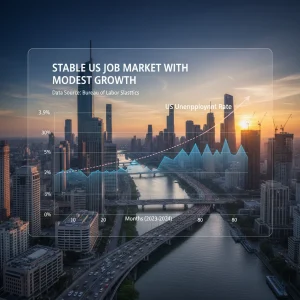
The strength of the labor market is another significant factor. A tight labor market, characterized by low unemployment and strong wage growth, can contribute to inflationary pressures. If the labor market remains robust, the Fed may feel less pressure to cut rates. However, a significant weakening of the job market, indicated by rising unemployment or a sharp decline in job openings, could prompt the Fed to ease monetary policy to prevent a deeper economic downturn. Businesses should pay close attention to unemployment rates, job creation figures, and wage growth data.
Economic Growth and Recession Risks
The overall health of the economy, as measured by GDP growth, will directly influence Fed rate projections. A resilient economy that avoids a recession might allow the Fed to keep rates at a level that effectively tames inflation without stifling growth. However, if the economy shows signs of significant contraction or enters a recession, the Fed would likely pivot towards more accommodative policies, including rate cuts, to support recovery. Business investment is highly sensitive to economic growth expectations, making this a crucial variable.
Global Economic Conditions and Geopolitical Events
The U.S. economy does not operate in a vacuum. Global economic slowdowns, particularly in major trading partners, can impact U.S. exports and economic growth. Geopolitical events, such as conflicts or trade disputes, can also introduce volatility and uncertainty, affecting commodity prices and supply chains, which in turn influence inflation and the Fed’s policy decisions. Businesses with international operations or supply chains must factor these external elements into their risk assessments and investment planning.
The Spectrum of 2026 Fed Rate Projections
While precise predictions are impossible, we can outline a spectrum of likely Fed rate projections for 2026, each with distinct implications for business investment. These scenarios are based on current economic data, historical patterns, and the Fed’s stated objectives.
Scenario 1: Higher for Longer
In this scenario, inflation proves more persistent than anticipated, or economic growth remains surprisingly resilient. The Fed, committed to its 2% inflation target, would maintain a restrictive stance, keeping interest rates elevated throughout 2026. This might mean the federal funds rate remains above 4% or even closer to 5% for an extended period. For businesses, this scenario implies continued high borrowing costs, making capital-intensive projects more expensive and potentially dampening investment in expansion, R&D, and mergers and acquisitions. Companies with significant debt loads could face increased interest expenses, impacting profitability.
Scenario 2: Gradual Rate Cuts
This is perhaps the most widely anticipated scenario. Inflation gradually but consistently moves towards the 2% target, and the labor market cools without a sharp increase in unemployment. In this environment, the Fed would likely initiate a series of gradual rate cuts, bringing the federal funds rate down to a more neutral level, perhaps in the 3-4% range by the end of 2026. This scenario would provide some relief for businesses, reducing borrowing costs and potentially stimulating investment. Capital markets would likely react positively, making it easier to raise funds for growth initiatives. However, the pace and magnitude of cuts would be critical.
Scenario 3: Aggressive Rate Cuts (Recessionary Response)
Should the U.S. economy experience a significant downturn or a full-blown recession, the Fed would likely respond with more aggressive rate cuts, potentially bringing the federal funds rate significantly lower, perhaps even below 3% by 2026. This scenario would aim to provide substantial stimulus to the economy. While lower borrowing costs would be attractive, the underlying recessionary environment would likely dampen business confidence and demand, making companies hesitant to invest. Investment decisions would then be driven more by survival and strategic positioning for recovery rather than immediate growth opportunities.

Impact on Business Investment Over the Next 12 Months
Regardless of which scenario unfolds, the Fed rate projections for 2026 will profoundly influence business investment decisions over the next year. Businesses must analyze these potential impacts across various facets of their operations.
Cost of Capital and Financing Decisions
The most direct impact of Fed rate projections is on the cost of capital. Higher interest rates mean that borrowing money for expansion, equipment purchases, or working capital becomes more expensive. This can lead to:
- Delayed or Canceled Projects: Projects that were marginal at lower interest rates may no longer be financially viable. Businesses might postpone or cancel plans for new factories, technology upgrades, or significant R&D initiatives.
- Reduced Debt Issuance: Companies may be less inclined to issue new bonds or take out loans, opting instead to rely on internal cash flow or equity financing, if available.
- Increased Scrutiny of ROI: Investment decisions will face heightened scrutiny, with a stronger emphasis on projects with quick payback periods and higher returns on investment (ROI) to justify the increased cost of capital.
Conversely, if Fed rate projections point to cuts, the cost of capital will decrease, potentially unlocking previously unfeasible projects and encouraging more aggressive investment strategies.
Mergers and Acquisitions (M&A) Activity
M&A activity is highly sensitive to interest rates. Higher rates increase the cost of financing acquisitions, making deals more expensive and potentially reducing the appetite for large-scale mergers. Valuations may also come under pressure as discount rates rise. In a ‘higher for longer’ scenario, we might see a slowdown in M&A, particularly for highly leveraged transactions. If rates fall, M&A activity could pick up as financing becomes cheaper and valuations more attractive.
Inventory Management and Working Capital
Interest rates affect the cost of holding inventory. If rates are high, the carrying cost of inventory increases, incentivizing businesses to adopt ‘just-in-time’ inventory strategies to minimize capital tied up in goods. This can lead to more efficient supply chains but also potentially higher risks of stockouts if demand fluctuates unexpectedly. Managing working capital effectively becomes even more critical when interest rates are elevated, as every dollar tied up in receivables or inventory incurs a higher opportunity cost.
Technology Adoption and Digital Transformation
Investment in technology and digital transformation initiatives is often a long-term play. High interest rates can make these investments, which may not have immediate returns, less attractive. However, businesses recognizing the long-term competitive advantages of technology might still prioritize these investments, perhaps by seeking alternative financing or relying more on operating leases rather than outright purchases. The imperative to improve efficiency and reduce operational costs might even accelerate certain tech investments despite higher rates.
While not directly an interest rate effect, the broader economic conditions influenced by Fed rate projections will impact hiring and human capital investment. A robust economy with lower rates might encourage businesses to expand their workforce and invest in training and development. A slowing economy with higher rates could lead to hiring freezes, layoffs, and a reduction in professional development budgets as companies tighten their belts.
Strategic Adjustments for Businesses
Given the potential volatility and uncertainty surrounding Fed rate projections, businesses must adopt adaptable and resilient strategies for the next 12 months. Proactive planning is key to navigating this dynamic environment.
Optimize Capital Structure
Businesses should review and optimize their capital structure. For companies with significant variable-rate debt, considering hedging strategies or refinancing to fixed-rate debt might be prudent if Fed rate projections suggest rates will remain high. For those with strong cash flows, paying down debt could be a priority to reduce interest expense. Exploring alternative financing options, such as venture capital, private equity, or government grants, can also diversify funding sources and reduce reliance on traditional bank loans.
Enhance Cash Flow Management
Effective cash flow management becomes even more critical in an environment of potentially higher interest rates. This includes optimizing accounts receivable and payable cycles, negotiating favorable payment terms with suppliers and customers, and maintaining adequate cash reserves. A strong cash position provides flexibility to seize opportunities or weather economic headwinds without relying heavily on expensive debt.
Re-evaluate Investment Criteria
Businesses should adjust their investment criteria to reflect the higher cost of capital. This means increasing the required rate of return for new projects and prioritizing those with a clear, measurable, and relatively quick ROI. Detailed financial modeling and sensitivity analysis, stress-testing investments against various interest rate scenarios, will be essential. Focusing on core competencies and high-growth areas that offer strong competitive advantages can help ensure that capital is allocated effectively.
Focus on Efficiency and Productivity
In a higher-cost environment, improving operational efficiency and productivity becomes paramount. Investments that reduce operating costs, streamline processes, or enhance output per employee can deliver significant value, even if capital is more expensive. This could include investing in automation, lean manufacturing principles, or advanced analytics to optimize resource allocation. These investments can boost profitability and resilience regardless of the interest rate environment.
Diversify Revenue Streams and Markets
Reducing reliance on a single product, service, or market can mitigate risks associated with economic fluctuations. Diversifying revenue streams and exploring new domestic or international markets can provide stability and open new avenues for growth, making the business less susceptible to localized economic downturns influenced by Fed rate projections.

Sector-Specific Considerations for Investment
The impact of Fed rate projections will not be uniform across all sectors. Different industries have varying sensitivities to interest rates and economic cycles.
Real Estate and Construction
These sectors are highly sensitive to interest rates. Higher rates increase mortgage costs for consumers and financing costs for developers, potentially cooling both residential and commercial real estate markets. Investment in new projects might slow down, and existing projects could face higher carrying costs. A significant drop in rates, however, could reignite these markets.
Technology and Startups
Many tech companies and startups rely heavily on venture capital and debt financing for growth. Higher interest rates can make venture capital more selective and debt financing more expensive, potentially slowing down innovation and expansion for some firms. However, established tech giants with strong cash flows might be less affected and could even use their financial strength to acquire smaller, struggling competitors.
Manufacturing and Industrials
These sectors often require significant capital expenditure for machinery, equipment, and facility upgrades. Higher borrowing costs can delay or reduce these investments. However, if the underlying demand for their products remains strong, companies might still invest to maintain competitiveness and meet production targets, albeit with tighter financial scrutiny. Investments in automation to reduce labor costs might become even more attractive.
Retail and Consumer Goods
Consumer spending is influenced by interest rates, as it affects borrowing for big-ticket items like cars and homes, and general consumer confidence. Higher rates can dampen consumer demand, impacting retailers and consumer goods manufacturers. Businesses in these sectors might focus on inventory optimization, pricing strategies, and marketing efficiency to maintain sales volumes and profitability.
Financial Services
Banks and other financial institutions are directly impacted by interest rate changes. Higher rates can increase net interest margins for banks, potentially boosting profitability. However, they also carry the risk of increased loan defaults if borrowers struggle with higher payments. Investment in new financial products and services will be guided by the prevailing rate environment and regulatory landscape.
The Role of Government Policy and Global Economy
While the Federal Reserve’s actions are central, government fiscal policy and the broader global economic environment will also interact with Fed rate projections to shape the investment climate. Fiscal policy, encompassing government spending and taxation, can either complement or counteract monetary policy. For instance, large government deficits could put upward pressure on interest rates, even if the Fed aims for cuts, due to increased borrowing demand. Conversely, targeted government investments in infrastructure or green technology could stimulate private sector investment.
The global economy’s performance, particularly in major economies like China and Europe, will also have spillover effects. A global slowdown could dampen demand for U.S. exports, impacting corporate earnings and investment decisions. Geopolitical stability or instability can similarly influence investor confidence and capital flows, adding another layer of complexity to the investment landscape over the next 12 months.
Businesses must adopt a holistic view, considering not just the Fed’s direct actions but also the broader economic and political forces at play. This integrated approach to risk assessment and opportunity identification will be crucial for making informed investment decisions in 2026.
Conclusion: Navigating Uncertainty with Strategic Foresight
The Federal Reserve’s 2026 Fed rate projections will be a dominant force shaping the business investment landscape over the next 12 months. While the precise trajectory of interest rates remains subject to economic data and evolving conditions, businesses must prepare for a range of scenarios, from ‘higher for longer’ to gradual or even aggressive rate cuts. Each scenario presents unique challenges and opportunities, demanding strategic foresight and adaptability.
For companies to thrive, a proactive approach is essential. This involves optimizing capital structure, enhancing cash flow management, re-evaluating investment criteria with a focus on ROI, and relentlessly pursuing operational efficiency. Diversifying revenue streams and understanding sector-specific impacts will further bolster resilience. The interplay between monetary policy, fiscal policy, and global economic trends creates a complex environment, but with diligent monitoring and agile strategic planning, businesses can successfully navigate the uncertainties of 2026 and position themselves for sustained growth.
Ultimately, the ability to interpret the Fed’s signals, anticipate market reactions, and adjust investment strategies accordingly will differentiate successful businesses. The next 12 months will be a test of strategic acumen, requiring a blend of caution, innovation, and a deep understanding of the economic forces at play, all centered around the critical influence of Fed rate projections.