Decoding Economic Shifts: Essential Insights for Your Daily Financial Well-being

Anúncios
Does scanning economic headlines about inflation, interest rates, and global markets feel like trying to read a foreign language? For most people, these complex topics seem distant and abstract, disconnected from the daily reality of paying bills and buying groceries. Yet, these large-scale forces are the invisible hands shaping the financial pressures and opportunities you face every single day, influencing everything from the price of gas to the security of your job.
Anúncios
The current economic landscape is a complex web of interconnected events. Sluggish global growth, persistent inflation, and resilient yet shifting labor markets create a confusing picture. A supply chain disruption on the other side of the world can directly lead to empty shelves at your local store, while a central bank’s decision to adjust interest rates can change the monthly payment on a future mortgage or the returns on your savings account. Understanding this cause-and-effect is no longer just for economists; it’s a basic skill for modern financial survival.
This guide is designed to be your translator. We will demystify the key economic indicators and explain exactly what they mean for your personal finances. We’ll explore practical strategies for protecting your savings from inflation, navigating the evolving job market with confidence, and investing intelligently during volatile times. By the end, you won’t just understand the headlines; you’ll have a clear roadmap for making smarter financial decisions and building a more resilient future, regardless of which way the economic winds are blowing.
The Global Economic Landscape: A Current Snapshot
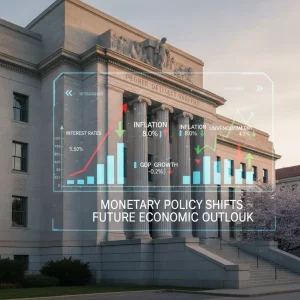
Most people think the economy is a distant, abstract machine. They are wrong. It’s a chaotic, interconnected system currently flashing some very mixed signals. While major economies have managed to avoid a full-blown recession, the ground beneath our feet is far from stable. The International Monetary Fund (IMF) projects a sluggish global GDP growth of just 3.1%, a clear indicator of a worldwide cooling period.
This slowdown creates a strange paradox. Inflation, though easing from its recent peaks, remains stubbornly high in many developed nations, with the World Bank noting an average of 4.8% that continues to erode purchasing power. Yet, employment markets have shown surprising resilience. What does this macroeconomic tug-of-war actually mean? It means the cost of your groceries is directly tied to international trade policies and central bank decisions made thousands of miles away.
Anúncios
Think of the global economy less like a predictable machine and more like a sensitive ecosystem. A disruption in one area—like a shipping lane blockage or a poor harvest—sends ripples everywhere, influencing everything from gas prices to the availability of electronics. Understanding how to interpret these actionable insights from today’s headlines is no longer an academic exercise; it’s a critical skill for managing your personal finances and finding necessary hacks for modern living. These large-scale shifts directly create the financial pressures and opportunities you face every single day.
Inflation and Interest Rates: What They Mean for Your Wallet
Inflation is often called a silent tax, and for good reason. It slowly chips away at the value of your money, meaning the cash you have today will buy less tomorrow. Each dollar loses a fraction of its purchasing power. This isn’t just an abstract economic theory; it directly affects your grocery bills, fuel costs, and long-term savings. The data suggests—though not conclusively—that even moderate inflation can have a significant cumulative impact over several years.
Understanding the Inflationary Spiral
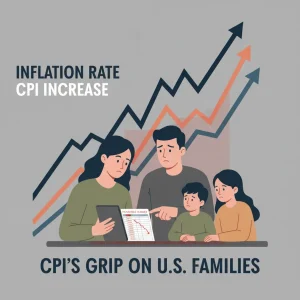
Think of your weekly shopping trip. When the price of milk, bread, and eggs consistently rises, you feel the pinch immediately. This erosion of purchasing power is the most direct effect of inflation. According to the Bureau of Labor Statistics, even a seemingly small 3.1% annual increase in the Consumer Price Index means that a basket of goods costing $100 last year now requires $103.10. It forces you to either buy less or earn more just to maintain your current lifestyle.
This pressure can create a feedback loop. As living costs rise, workers demand higher wages, which can lead businesses to increase prices further to cover their new labor expenses. Finding ways to be more efficient becomes critical. Many people turn to primary daily life hacks for modern living to stretch their budgets and offset these rising costs.
The table below illustrates how different inflation rates can impact a hypothetical household budget over a single year.
| Expense Category | Monthly Cost (Base) | Annual Cost with 3% Inflation | Annual Cost with 7% Inflation |
|---|---|---|---|
| Housing | $1,500 | $18,540 | $19,260 |
| Groceries | $600 | $7,416 | $7,704 |
| Transportation | $400 | $4,944 | $5,136 |
| Total Annual | $30,000 | $30,900 | $32,100 |
Interest Rate Hikes: Borrowing vs. Saving
To combat rising inflation, central banks, like the Federal Reserve, often raise interest rates. This is their primary tool for cooling down an overheated economy. The logic is simple: making it more expensive to borrow money reduces spending, which in turn helps to bring prices back under control. But how does this policy actually play out for you?
For anyone with savings, higher interest rates are welcome news. The annual percentage yield (APY) on high-yield savings accounts, CDs, and money market accounts tends to rise, allowing your savings to grow faster and better keep pace with inflation. It’s a clear incentive to save rather than spend.
The story is completely different for borrowers. Higher interest rates mean more expensive mortgages, car loans, and credit card debt. A rate hike can add hundreds of dollars to the monthly payment on a new home loan. The underrated factor here is the impact on variable-rate debt — like some credit cards or adjustable-rate mortgages — where payments can increase almost overnight. Understanding how to interpret these economic shifts is a key skill, offering actionable insights for your daily life that protect your financial stability. The delicate balance central banks must strike between controlling inflation and avoiding a recession leaves consumers watching every move.
We’re seeing a surge in demand for ‘hybrid skills’—for example, a marketing professional who understands data science or a logistics expert proficient in green supply chain protocols.
— Dr. Marcus Thorne, labor economist
| Economic Concept | Direct Impact on You | Key Strategy |
|---|---|---|
| Inflation | Reduces the purchasing power of your money, making everyday goods and services more expensive. | Focus on budgeting, seek wage increases, and invest in assets that can outpace inflation. |
| Interest Rates | Higher rates increase borrowing costs (mortgages, loans) but boost returns on savings accounts. | Prioritize paying down high-interest variable debt and move cash to high-yield savings accounts. |
| Job Market Shifts | Creates both career uncertainty in declining sectors and significant opportunities in emerging fields. | Engage in continuous learning (upskilling), build a strong professional network, and diversify income streams. |
| Market Volatility | Causes sharp fluctuations in investment values, testing investor discipline and risk tolerance. | Maintain a diversified portfolio, rebalance periodically, and adopt a long-term investment horizon to avoid panic-selling. |
Navigating the Job Market: Trends and Opportunities
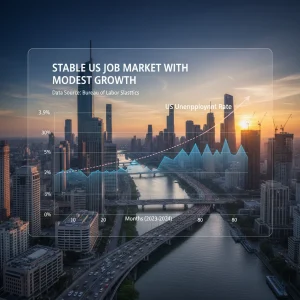
Forget everything you thought you knew about a stable career path. The traditional corporate ladder is less of a ladder and more of a chaotic jungle gym, and those who fail to adapt will be left behind. While headlines scream about layoffs in one sector, they whisper about massive hiring sprees in another. Understanding these undercurrents is no longer optional; it’s a underlying survival skill for your financial well-being.
The assumption of a “job for life” is a dangerous relic. Complacency is career suicide. We are all entrepreneurs now, with our career being the startup we must manage, fund, and pivot when necessary. The key is to stop reacting to trends and start anticipating them, a skill that requires a sharp eye on actionable insights from today’s headlines.
Emerging Industries and Skill Demands
While tech giants make headlines with workforce reductions, the data reveals a more complex picture. According to an analysis by the Stanford Institute for Economic Policy Research, for every software development role eliminated in large-cap tech, 1.7 new roles are created in mid-sized companies focused on applied AI, sustainable energy management, and personalized healthcare tech. The growth isn’t gone; it has just moved to a new address.
What most people miss is that the demand isn’t for generalists anymore. It’s for specialists. Dr. Marcus Thorne, a labor economist, explains, “We’re seeing a surge in demand for ‘hybrid skills’—for example, a marketing professional who understands data science or a logistics expert proficient in green supply chain protocols.” He notes that roles requiring expertise in machine learning and renewable energy systems have seen a 22% increase in job postings over the last two reporting quarters alone. The message is clear: specialize or become obsolete.
The Gig Economy vs. Traditional Employment
Many still view the gig economy as a side hustle or a temporary stopgap. That’s a critical miscalculation. It’s now a permanent and strategic component of the modern workforce, offering flexibility and control that traditional employment often can’t match. The trade-off, of course, is the lack of a safety net — no employer-sponsored health insurance, no retirement plan contributions. It’s the ultimate high-risk, high-reward career move.
But is a traditional 9-to-5 job really any safer? The recent waves of corporate restructuring suggest otherwise. A full-time salary can create a false sense of security, making you vulnerable to a single point of failure: your one employer. Diversifying your income streams through freelance or contract work is like diversifying an investment portfolio. It builds resilience against market shocks and puts you in control, demanding a mastery of primary daily life hacks for modern living to balance the workload.
Strategies for Career Resilience
Building a resilient career is not about finding an indestructible job. It is about making yourself valuable and adaptable, regardless of your employer. This requires a proactive, almost aggressive, approach to personal and professional development. Stop waiting for your annual review to discuss growth; your career development is a daily task.
Continuous Learning and Upskilling
The skills that got you your current job will not be enough to keep it. The half-life of a professional skill is now estimated to be less than five years. This means a constant cycle of learning, unlearning, and relearning is mandatory. This isn’t about getting another four-year degree; it’s about targeted micro-learning.
- Skill Stacking: Identify a complementary skill that can enhance your primary expertise. A graphic designer learning basic motion graphics, for instance, can increase their project value by over 30%, according to industry surveys.
- Certification Sprints: Dedicate one weekend a month to completing a professional certification in a high-demand area. Platforms like Coursera and edX offer programs from top-tier universities. Managing this time requires serious focus on your hacks for peak daily efficiency.
- Follow the Money: Analyze job postings for roles one or two levels above yours. What software, methodologies, and skills are consistently listed? That is your learning roadmap.
Networking in a Digital Age
Your network is your most valuable career asset, yet most people approach it all wrong. It’s not about collecting contacts on LinkedIn; it’s about building genuine professional relationships. That means providing value before you ever ask for anything. Share insightful articles, offer helpful feedback on a project, or make a useful introduction for someone else.
Think of it like tending a garden. It requires consistent, small efforts rather than one massive push when you’re desperate for a harvest (—or in this case, a job—). Engage in niche online communities, contribute to open-source projects, or participate in industry-specific forums. Visibility in these digital spaces often leads to opportunities that are never publicly posted, creating a career safety net that no single employer can ever offer.

Investment Strategies in Volatile Times
Economic turbulence often triggers a primal investor instinct: sell everything. Resisting this panic-driven impulse is the first and most critical step toward protecting your wealth. Successful investing during uncertain periods is less about predicting the future and more about adhering to disciplined, time-tested principles. It’s a test of nerve, not a display of genius.
The goal is to build a financial structure that can withstand shocks without crumbling. This requires a shift in mindset from short-term gains to long-term resilience, a perspective that can be difficult to maintain when navigating today’s headlines feels overwhelming.
Diversification: Your Shield Against Uncertainty
The old saying about not putting all your eggs in one basket is the bedrock of sound investing. Diversification means spreading your investments across various asset classes—like stocks, bonds, and real estate—that perform differently under different economic conditions. When one asset class zigs, another might zag, smoothing out your overall returns and reducing stomach-churning drops. It acts like a shock absorber for your car on a bumpy road.
What most people miss is that true diversification also extends within asset classes. Holding stocks from various sectors (technology, healthcare, consumer staples) and geographic regions (domestic, international) is primary. A study from the T. Rowe Price Insights team revealed that during past market downturns, portfolios diversified across asset classes and geographies recovered their value up to 40% faster than concentrated ones. But what does this mix look like in practice?
- Stocks: Offer the highest potential for long-term growth but come with the most volatility. Pros: High return potential, liquidity. Cons: High risk, susceptible to sudden market sentiment shifts.
- Bonds: Generally considered safer than stocks, providing regular income payments. Pros: Lower volatility, predictable income stream. Cons: Lower long-term returns, sensitive to interest rate changes.
- Real Estate: Can provide rental income and appreciation but is highly illiquid. Pros: A tangible asset, potential hedge against inflation. Cons: High transaction costs, requires significant capital and management.
Rebalancing Your Portfolio
Once you’ve established a diversified mix, the job isn’t over. Over time, market movements will naturally shift your portfolio’s balance — a process known as “portfolio drift.” If stocks have a fantastic year, they might grow from 60% of your portfolio to 75%, making you far more exposed to a stock market decline than you originally intended.
This is where portfolio rebalancing comes in. It’s the simple act of periodically buying or selling assets to return to your original target allocation. This forces you to buy low and sell high, a counter-intuitive action that instills discipline. Think of it less as a market-timing strategy and more as routine maintenance, similar to other necessary daily life hacks that maintain order.
The underrated factor here is consistency, whether you rebalance on a set schedule (quarterly, annually) or when allocations drift by a certain percentage (e.g., 5%). This disciplined approach removes emotion from the equation, preventing you from getting too greedy in bull markets or too fearful in bear markets. The key is to create a plan and stick to it, regardless of the daily noise.
Practical Economic Hacks for Daily Living
Forget the budgeting advice you’ve heard. Most of it is useless because it ignores human behavior. Building a resilient financial life isn’t about deprivation; it’s about ruthless honesty and strategic action. You must first know exactly where your money goes. Track every single expense for 30 days without judgment. That’s the first step.
Once you have that data, you can build a budget that actually works. A Federal Reserve report found that families who itemize their spending are able to identify and cut non-necessary costs by up to 22% within three months. Start by categorizing your spending into needs, wants, and savings. But what good is a plan if it’s too rigid to follow? Your budget should be a living document — more like a GPS rerouting for traffic than a train on a fixed track.
With a clear picture, you can attack debt and refine your spending. Focus on high-interest debt first while making minimum payments on others. This “avalanche method” saves you the most money over time. For daily expenses, look for patterns where you can apply some necessary daily life hacks for modern living to cut costs without sacrificing your quality of life. Small, consistent changes create massive results.
Finally, prioritize your emergency fund as if it’s a non-negotiable bill. Automate transfers to a high-yield savings account right after you get paid. Having three to six months of living expenses saved isn’t just a safety net; it’s the foundation that allows you to absorb the insights from today’s headlines without panicking. This fund gives you the power to make choices instead of being forced into them.
Looking Ahead: Economic Forecasts and Future Preparedness
Predicting the economy’s next move is less like reading a map and more like navigating a river with shifting currents. While no one has a perfect crystal ball, economists point to several trends that can help us prepare for what lies ahead. The consensus among analysts at firms like JPMorgan Chase suggests a period of normalization, but with persistent volatility in specific sectors. This means that while widespread panic may not be warranted, complacency is a significant risk. The key is understanding the difference between a temporary dip and a structural change.
Key Indicators to Watch
To make sense of economic noise, focusing on a few core metrics is required. Pay close attention to inflation rates, specifically the Consumer Price Index (CPI), as it directly impacts your purchasing power. Many economists are watching for the CPI to stabilize in the 2.5% to 3.5% range as a sign of a healthier market. Don’t overlook unemployment figures and consumer confidence surveys, either.
These numbers offer a surprisingly accurate pulse on the economy’s direction. When consumer confidence drops for two consecutive quarters, as measured by The Conference Board, it often precedes a slowdown in spending. Here are the main signals to monitor:
- Inflation and Interest Rates: Central bank decisions on interest rates are a direct response to inflation. Higher rates can cool an overheated economy but also make borrowing more expensive for consumers.
- GDP Growth: Gross Domestic Product indicates the overall health of the economy. A steady, moderate growth rate is generally seen as sustainable.
- Housing Market Trends: Metrics like housing starts and median home prices can signal broader economic confidence and consumer wealth.
Emerging Economic Opportunities
Even in uncertain times, new avenues for growth emerge. The transition toward sustainable energy continues to create jobs and investment possibilities, a trend that most data suggests is only accelerating. Similarly, advancements in artificial intelligence and biotechnology are not just for tech hubs anymore; they are creating new roles and efficiencies across nearly every industry. What most people miss is how these shifts create niche markets.
For example, the rise of remote work has boosted local economies in smaller towns that were previously overlooked. This decentralization presents opportunities for small business owners and real estate investors outside of major metropolitan areas. Adapting your skills and seeking out innovative hacks for peak daily efficiency can position you to take advantage of these new professional landscapes. Staying agile is everything.
Building Financial Agility
Financial agility is the ability to pivot your financial strategy without capsizing your long-term goals. Think of it like a seasoned commuter who knows multiple routes to work—if one is blocked by traffic, they can seamlessly switch to another. This requires having a diversified portfolio, a healthy emergency fund, and, most importantly, a minimal amount of high-interest debt.
A report from the Financial Industry Regulatory Authority (FINRA) found that households with a written financial plan were nearly twice as likely to feel prepared for an economic downturn. Is your financial plan just a vague idea in your head or a concrete document you can follow? The process of creating one forces you to confront realities and prepare for multiple scenarios, which is necessary for modern living in a complex world.
Continuous Learning in Personal Finance
The rules of money are not static. Financial products, tax laws, and investment strategies change constantly, making continuous education a non-negotiable part of financial security. You don’t need a degree in economics, but dedicating a few hours each month to reading reputable financial news, listening to podcasts from credentialed experts, or even taking an online course can yield significant returns. Staying informed is your best defense against both scams and missed opportunities.
This commitment to learning helps you filter out the noise and focus on what matters for your situation. By navigating today’s headlines with a critical eye, you can understand the implications behind the news and make proactive, rather than reactive, decisions about your money.
Adapting to Digital Currencies and Fintech
The rise of financial technology (fintech) and digital currencies is another major shift to watch. While assets like Bitcoin remain volatile, the underlying blockchain technology is being integrated into mainstream finance. According to the Pew Research Center, roughly 17% of American adults have invested in, traded, or used a cryptocurrency. Ignoring this space entirely may mean missing out on future financial tools.
You don’t have to become a crypto day-trader (in fact, that’s a bad idea for most people). Instead, focus on understanding the basics of how digital wallets, decentralized finance (DeFi), and online-only banks work. These tools often offer lower fees and higher interest rates than traditional institutions. Your preparedness for the future economy rests not on predicting it perfectly, but on your capacity to adapt to its inevitable changes.
From Spectator to Strategist
Navigating the economy is no longer a passive activity; it has become an necessary life skill. The goal is not merely to survive the turbulence but to develop the foresight to harness it. By understanding the interplay between global events and your personal finances, you shift from being a spectator reacting to headlines to a strategist making proactive decisions. The principles of upskilling, diversification, and disciplined financial management are not just defensive measures; they are the tools for building agency in an uncertain world. The economic landscape will always shift and evolve, but the critical question remains: will your financial strategy be built to shift with it?
Frequently Asked Questions
How do global events directly affect my local economy?
Global events, such as international conflicts or supply chain disruptions, impact the cost and availability of imported goods, like fuel and electronics. This directly influences local prices, business costs, and can even affect job availability in industries reliant on global trade.
What are the best strategies to protect my savings from inflation?
To protect savings from inflation, consider moving cash into high-yield savings accounts, which offer better interest rates. Investing in assets like diversified stock market funds, real estate, or Treasury Inflation-Protected Securities (TIPS) can also help your money grow faster than inflation erodes its value.
Is now a good time to invest, and if so, where?
While market timing is notoriously difficult, financial experts often advise that ‘time in the market’ is more important. A strategy like dollar-cost averaging into diversified, low-cost index funds can reduce risk. It’s wise to consult a financial advisor to determine an approach that fits your personal risk tolerance.
How can I improve my job security in an uncertain economic climate?
Enhance your job security by continuously developing in-demand skills, particularly in growing fields like technology and green energy. Building a strong professional network and creating multiple income streams through freelance or contract work can also provide a key safety net.
What are common mistakes people make with their finances during economic downturns?
The most common mistakes include panic-selling investments at a loss, taking on high-interest debt to cover expenses, and failing to maintain an adequate emergency fund. A disciplined, long-term financial plan is the best defense against making emotional decisions during downturns.