U.S. Debt Ceiling: Understanding the Implications of the $35 Trillion Limit in 2026
The United States, the world’s largest economy, operates under a unique fiscal constraint known as the debt ceiling. This statutory limit on the total amount of money the U.S. government can borrow to meet its existing legal obligations has become a recurring flashpoint in American politics. As we look towards 2026, projections indicate that the US Debt Ceiling 2026 could reach an unprecedented $35 trillion. This looming milestone raises critical questions about economic stability, political governance, and the future financial health of the nation. Understanding the implications of this potential $35 trillion limit is crucial for policymakers, investors, and the average citizen alike.
Anúncios
The debt ceiling, often misunderstood, is not a green light for new spending. Instead, it is a limit on the government’s ability to pay for spending that Congress has already authorized. When the debt ceiling is reached, the Treasury Department must resort to ‘extraordinary measures’ to avoid default. These measures are temporary and, once exhausted, the government faces the very real possibility of defaulting on its obligations. Such an event would have catastrophic consequences for the U.S. and global economies.
The trajectory towards $35 trillion by 2026 is a result of decades of persistent budget deficits, increased government spending on social programs, defense, and infrastructure, coupled with periods of economic downturns that necessitated significant fiscal stimulus. The COVID-19 pandemic, in particular, led to an explosion in government spending, accelerating the pace at which the national debt has grown. This article will delve into the historical context of the debt ceiling, explore the economic ramifications of hitting a $35 trillion limit, analyze the political challenges involved, and discuss potential strategies and reforms to navigate this complex issue.
Historical Context of the U.S. Debt Ceiling
The concept of a debt ceiling was first introduced in 1917 with the Second Liberty Bond Act, allowing the Treasury to issue bonds without specific congressional approval for each issuance, but setting an aggregate limit. This was intended to provide more flexibility during World War I. Prior to this, Congress approved each debt issuance individually. Over the decades, the debt ceiling has been raised or suspended numerous times – over 100 times since 1960 alone – reflecting the continuous growth of the U.S. economy and the government’s expanding responsibilities.
Anúncios
Historically, raising the debt ceiling was often a routine, bipartisan affair. However, in recent decades, it has become a highly politicized tool, frequently used as leverage in budget negotiations. Notable standoffs, such as those in 2011, 2013, and 2023, brought the U.S. perilously close to default, leading to significant market volatility and a downgrade of the U.S. credit rating in 2011 by Standard & Poor’s. These episodes illustrate the potential for political brinkmanship to destabilize financial markets and erode confidence in the U.S. government’s ability to manage its finances.
The current path towards a $35 trillion US Debt Ceiling 2026 is a continuation of this trend, driven by a combination of factors. Entitlement programs like Social Security and Medicare, which represent a significant portion of federal spending, are facing increasing costs due to an aging population. Defense spending remains substantial, and various discretionary programs also contribute to the overall expenditure. On the revenue side, tax policies and economic growth rates determine the government’s income, which often falls short of outlays, leading to deficits.
Understanding this historical context is vital to grasping the gravity of the current situation. The debt ceiling is not merely an accounting formality; it is a legal constraint with profound economic implications if not addressed. The repeated reliance on last-minute negotiations and extraordinary measures highlights a systemic challenge in U.S. fiscal policy that needs a more sustainable solution than simply raising the limit repeatedly without addressing underlying spending and revenue imbalances.
The Economic Ramifications of a $35 Trillion Debt Ceiling
Reaching a $35 trillion limit on the US Debt Ceiling 2026, particularly if accompanied by political deadlock, could usher in a period of significant economic instability. The most immediate and severe consequence of failing to raise or suspend the debt ceiling would be a default on U.S. government obligations. A default would mean the U.S. government would be unable to pay its bills – including interest payments on its debt, salaries for federal employees, military personnel, Social Security benefits, and payments to contractors. The ripple effects would be devastating.
Impact on Financial Markets
U.S. Treasury securities are considered the safest assets in the world, forming the bedrock of the global financial system. A default would shatter this perception of safety, leading to a dramatic increase in borrowing costs for the U.S. government as investors demand higher yields to compensate for increased risk. This would, in turn, drive up interest rates across the board – for mortgages, auto loans, and business investments – stifling economic growth. The stock market would likely experience a sharp downturn, as investor confidence plummets and uncertainty reigns. International financial markets would also be severely impacted, given the dollar’s role as the world’s primary reserve currency.
Recession and Job Losses
Beyond financial markets, a default could trigger a severe recession. Businesses would face higher borrowing costs and reduced consumer demand, leading to decreased investment, layoffs, and a contraction of economic activity. Millions of jobs could be lost, and unemployment rates would surge. The U.S. economy, still recovering from various global shocks, would be plunged into a crisis far worse than the 2008 financial crisis, according to many economists.
Erosion of U.S. Global Standing
The U.S. dollar’s status as the global reserve currency and the nation’s leadership in international finance would be severely undermined. Other countries and international institutions might seek alternatives to the dollar, diminishing U.S. economic influence and potentially leading to a long-term decline in the dollar’s value. This would make imports more expensive and could contribute to inflation.
Increased Future Borrowing Costs
Even if a default is narrowly averted through last-minute negotiations, the repeated flirting with the debt ceiling could lead to a permanent increase in U.S. borrowing costs. The perception of the U.S. as a reliable borrower would be damaged, requiring the government to pay a premium on its debt. This would divert more taxpayer money towards interest payments, leaving less for essential government services and investments in infrastructure, education, and research.
Political Challenges and Bipartisan Gridlock
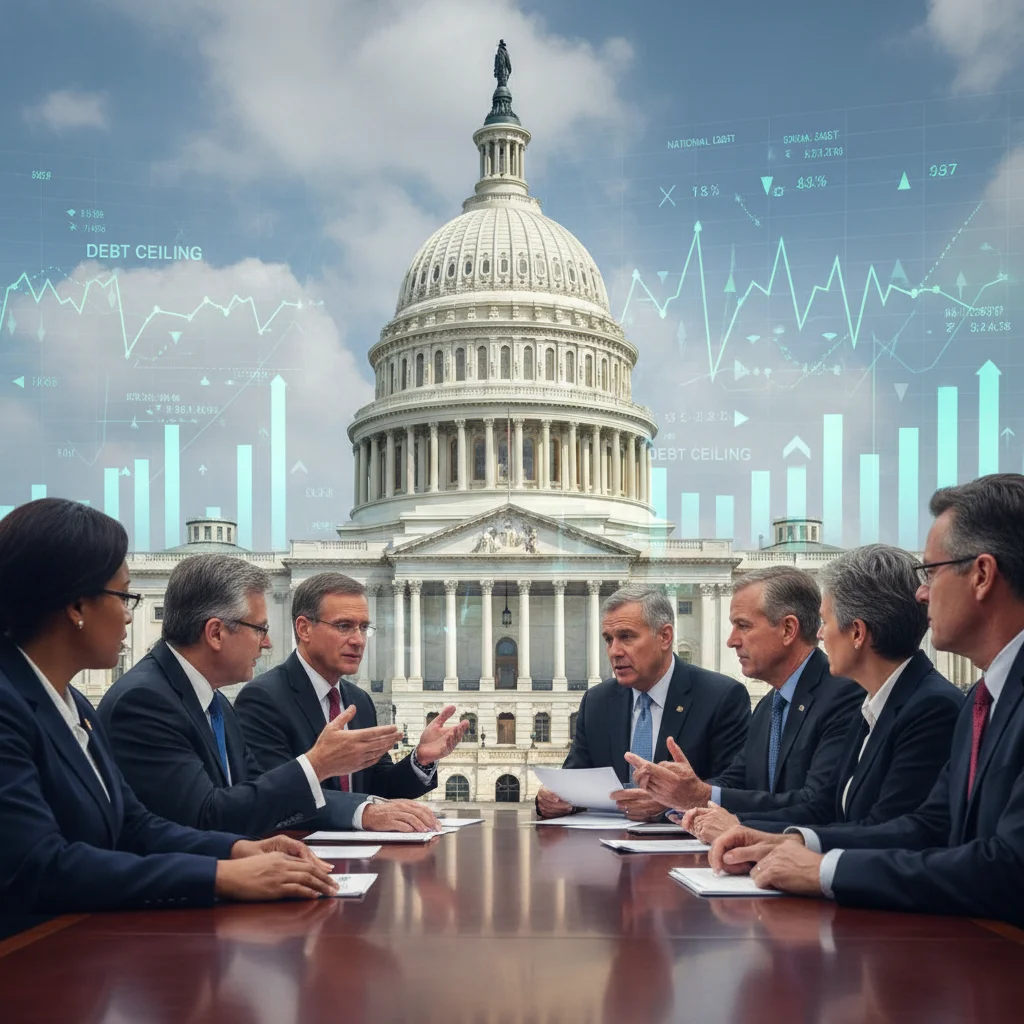
The journey to addressing the US Debt Ceiling 2026 is fraught with political challenges. In an increasingly polarized political landscape, the debt ceiling has become a potent weapon in partisan battles over fiscal policy. One party often uses the threat of not raising the ceiling to extract concessions on spending cuts or other policy priorities from the other party.
Partisan Divides
Republicans often advocate for significant spending cuts and fiscal discipline, viewing the rising national debt as a threat to future generations and an indicator of government overreach. Democrats, while often acknowledging the need for fiscal responsibility, tend to prioritize investments in social programs, infrastructure, and climate initiatives, and are generally more amenable to raising the debt ceiling without preconditions to avoid default.
This fundamental disagreement creates a recurring stalemate. The executive branch, typically the Treasury Department, warns of impending catastrophe if the ceiling isn’t raised, while factions within Congress use the deadline to push their legislative agendas. The result is often a tense, last-minute agreement that does little to address the underlying fiscal challenges.
The ‘Extraordinary Measures’ Dilemma
When the debt ceiling is reached, the Treasury Secretary employs ‘extraordinary measures’ – accounting maneuvers that delay the date of potential default. These measures include suspending investments in certain government funds, exchanging securities, and other actions to manage cash flow. While these provide temporary relief, they are not sustainable solutions. They merely buy time, often leading to more intense pressure as the ‘X-date’ (the date when the Treasury can no longer meet its obligations) approaches.
Public Perception and Misinformation
The complexity of the debt ceiling issue often leads to public misunderstanding. Many believe that raising the debt ceiling implies authorizing new spending, rather than simply allowing the government to pay for spending already approved by Congress. This misinformation can fuel public opposition to raising the ceiling, making it more difficult for politicians to find common ground and reach a compromise.
Overcoming these political hurdles requires strong leadership, a willingness to compromise, and a shared understanding of the severe consequences of a default. Without these, the U.S. risks repeatedly encountering these crises, each time with potentially graver outcomes for its economy and global standing.
Potential Strategies and Reforms for Managing the National Debt
Addressing the challenge of the US Debt Ceiling 2026 and beyond requires a multi-faceted approach, combining immediate solutions for the ceiling itself with long-term fiscal reforms. There are several strategies and reforms that have been proposed or could be considered to better manage the national debt and prevent future debt ceiling crises.
Abolishing or Reforming the Debt Ceiling
One of the most radical, yet often discussed, solutions is to abolish the debt ceiling altogether. Proponents argue that it is an archaic and self-defeating mechanism that serves no useful purpose other than to create political crises. Since Congress already authorizes spending and taxation, the debt ceiling simply prevents the government from paying its bills, which are a result of those prior legislative decisions. Alternatively, reforms could include:
- The Gephardt Rule: This rule, previously in effect, automatically raised the debt ceiling when Congress passed a budget resolution, effectively depoliticizing the issue.
- Linking to the Budget: Automatically adjusting the debt ceiling to match the spending authorized in the annual budget, removing the need for separate votes.
- Presidential Authority: Granting the President the authority to raise the debt ceiling, subject to congressional disapproval, shifting the burden of inaction onto Congress.
Long-Term Fiscal Solutions
Beyond the procedural aspects of the debt ceiling, sustainable management of the national debt requires a focus on long-term fiscal health. This involves a combination of revenue generation and spending control:
Revenue Generation:
- Tax Reform: Adjusting tax rates, closing loopholes, or introducing new taxes could increase government revenue. This is often a highly contentious area, with debates over progressive taxation, corporate tax rates, and the impact on economic growth.
- Economic Growth Policies: Policies that foster robust economic growth can naturally increase tax revenues without necessarily raising tax rates. This includes investments in education, infrastructure, research and development, and policies that promote innovation and entrepreneurship.
Spending Control:
- Entitlement Reform: Social Security and Medicare are the largest drivers of long-term debt. Reforms could include adjusting eligibility ages, modifying benefit formulas, or exploring new funding mechanisms. These are politically sensitive but crucial for fiscal sustainability.
- Discretionary Spending Review: Regularly reviewing and optimizing discretionary spending across various government agencies can identify areas for efficiency and potential cuts.
- Defense Spending: While a critical component of national security, defense spending is also a significant expenditure. Debates often arise about the appropriate level of defense spending in relation to global threats and domestic needs.
Bipartisan Commissions and Fiscal Rules
Another approach involves establishing bipartisan commissions to recommend comprehensive fiscal reform packages, which could then be put to an up-or-down vote in Congress. Additionally, implementing fiscal rules, such as balanced budget amendments or strict spending caps, could impose greater discipline on congressional budgeting, though such measures often face constitutional and practical challenges.

The Path Forward: A Call for Responsible Governance
The impending $35 trillion US Debt Ceiling 2026 represents not just a numerical milestone but a critical juncture for American fiscal policy and political governance. The stakes are incredibly high, with the potential for severe economic disruption if a responsible path is not taken. Avoiding a default is paramount, but merely raising the debt ceiling without addressing the underlying causes of persistent deficits is a temporary fix that kicks the can down the road, making future crises even more likely and potentially more severe.
Responsible governance demands that policymakers move beyond short-term political maneuvering and engage in serious, good-faith negotiations to develop sustainable fiscal solutions. This includes not only finding a permanent, less disruptive mechanism for the debt ceiling but also implementing comprehensive reforms to control spending and enhance revenue over the long term. These reforms will inevitably require difficult choices and compromises from both sides of the political spectrum.
The consequences of inaction or continued partisan gridlock are too significant to ignore. A default would not only harm the U.S. economy and its citizens but would also send shockwaves through the global financial system, eroding trust in the stability of the world’s largest economy. It would weaken the dollar, increase borrowing costs for everyone, and potentially lead to a prolonged period of economic stagnation.
As 2026 approaches, the focus must shift from crisis management to proactive planning. This means fostering a public dialogue that educates citizens about the true nature of the debt ceiling and the importance of fiscal responsibility. It means encouraging political leaders to prioritize the nation’s long-term economic health over partisan victories. The challenge is immense, but the opportunity to secure a more stable and prosperous future for the United States is equally significant.
Ultimately, the ability of the U.S. to navigate the US Debt Ceiling 2026 and manage its national debt responsibly will be a testament to its institutional strength and its leaders’ commitment to the well-being of the nation. The time for meaningful action is now, to ensure that the U.S. continues to be a beacon of economic stability and opportunity for generations to come.
Conclusion
The U.S. debt ceiling, projected to reach $35 trillion by 2026, is a critical issue that demands careful attention and responsible action. Its historical evolution from a procedural convenience to a political weapon highlights deeper challenges in U.S. fiscal policy. The economic ramifications of failing to address this limit are dire, threatening financial market stability, economic growth, and the U.S.’s global standing. Political gridlock frequently exacerbates these risks, making a clear path forward elusive.
However, viable strategies exist, ranging from procedural reforms of the debt ceiling itself to comprehensive long-term fiscal solutions involving both revenue generation and spending control. The path forward requires a renewed commitment to bipartisan cooperation and a focus on sustainable economic policies. As the deadline approaches, the imperative for responsible governance and strategic planning becomes ever more critical to safeguard the economic future of the United States and the global economy.