Smart Home Ethics: Navigating Privacy and Control in Connected Living
Anúncios
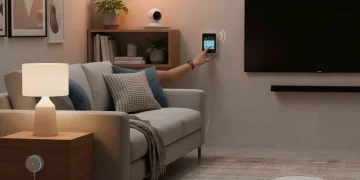
The magic of a home that anticipates your every need is no longer science fiction. With a simple voice command, lights adjust, thermostats adapt, and your favorite music begins to play. This fluid convenience has transformed our living spaces into responsive environments, promising a future of unparalleled comfort and efficiency. But beneath this polished surface of automation, a silent, critical transaction is taking place.
Every command you issue and every routine your system learns contributes to a vast and intricate digital profile of your life. This data, generated within the privacy of your own walls, is the currency that powers the smart home ecosystem. The ethical implications of this exchange are profound, forcing us to confront a difficult question: In our pursuit of convenience, have we inadvertently traded our privacy and autonomy for a service that watches, listens, and learns our most intimate habits?
This is not a simple matter of targeted advertising. It touches upon underlying issues of security, ownership, and control. This article dissects the ethical minefield of modern smart home technology. We will investigate the surprising scope of data collection, expose the security vulnerabilities that leave your home open to intrusion, and challenge the very notion of ownership in an age where your devices can be rendered useless by a distant server. It’s time to look past the convenience and understand who is in control.
Anúncios
The Rise of the Connected Home: A Double-Edged Sword
The allure of a fully automated home is undeniable. With a simple voice command, you can dim the lights, adjust the thermostat, and start your coffee maker. This push for convenience has ignited a massive market, with global smart home revenue projected to swell to $207.8 billion, according to recent analysis from Statista. These devices promise not just comfort, but also efficiency, paving the way for more sustainable daily routines through optimized energy consumption.
This convenience is a powerful drug.
But what most people miss is the quiet transaction occurring in the background. Every command, every adjustment, and every automated schedule generates data—a detailed log of your habits, preferences, and daily life. The same systems that offer architectures for peak performance in our households also build a precise digital profile of its inhabitants. Are we just buying convenience, or are we selling our privacy for a fraction of its worth?
This isn’t just about targeted ads for coffee pods (though that’s part of it). It’s about a basic shift in control. The underlying systems are driven by the AI revolution shaping our lives, learning and adapting to our behaviors in ways we cannot fully comprehend. The very infrastructure designed for comfort could become a cage of digital surveillance, forcing a confrontation with who holds the power inside our own walls.
Unpacking Data Privacy: Who’s Watching Your Living Room?
That simple request for your smart speaker to play a song or dim the lights initiates a complex chain of data collection. These devices aren’t just passive servants waiting for a command; they are active, always-on observers in our most private spaces. Think of it less like a tool and more like a meticulous butler who logs not just your requests, but when you make them, your tone of voice, and even the background noise in the room.
Anúncios
The Invisible Data Footprint: What Devices Collect
The scope of smart home data privacy issues extends far beyond voice recordings. Your smart thermostat tracks when you’re home and away, learning the rhythm of your household. Your connected lighting system knows your sleep schedule, while your smart TV monitors your viewing habits with frightening precision. A recent report from the University of Chicago’s Tech Policy Initiative revealed that the average smart home hub collects an estimated 1.5 gigabytes of behavioral data per household each week, painting a detailed picture of your life.
This creates a second-by-second ledger of your private activities.
Ostensibly, this data is used to “improve your experience” through personalization. The underrated factor here, is its value to third-party advertisers and data brokers. What most people miss is how this information can be aggregated to build disturbingly accurate psychological profiles, a trend seen across the AI revolution shaping our lives. Could this data be used to infer your financial stability, your health status, or even your political leanings?
Navigating Consent and Data Usage Policies
Manufacturers point to their terms of service agreements as proof of user consent. Yet, these documents are notoriously dense and filled with legal jargon, making informed consent a practical impossibility for the average consumer. Dr. Anya Sharma, a digital ethicist at the Stanford Cyber Policy Center, states that “consent has become a meaningless click-through exercise. Users aren’t agreeing to the terms; they’re capitulating to access the product.”
The illusion of control is a powerful tool. While some settings allow you to manage your data, opting out of core collection often renders the device useless—it’s the digital equivalent of “read the fine print” on an industrial scale. This forces a difficult choice between functionality and privacy. Adopting a more mindful approach to our digital footprint is becoming as important as crafting a greener tomorrow in our physical world.
The challenge with these privacy concerns for IoT devices isn’t just the data being collected today, but the potential for its future use as analytical technologies become more powerful. The line between helpful service and invasive surveillance is becoming dangerously thin, leaving consumers to navigate the ambiguity on their own.
Consent has become a meaningless click-through exercise. Users aren’t agreeing to the terms; they’re capitulating to access the product.
— Dr. Anya Sharma, Digital Ethicist, Stanford Cyber Policy Center
| Ethical Concern | Key Takeaway |
|---|---|
| Data Privacy | Smart devices collect vast amounts of behavioral data, often with ambiguous user consent, to build detailed profiles for corporate use and targeted advertising. |
| Security Vulnerabilities | Default passwords, infrequent software updates, and insecure networks create easy entry points for hackers, turning digital vulnerabilities into real-world physical threats. |
| Device Ownership & Control | Consumers often purchase a license to use hardware tied to a service, not the product itself. This allows companies to remotely disable features or brick devices entirely. |
Security Vulnerabilities: The Open Door to Your Digital Life
The promise of a smart home is one of fluid convenience and automated security, a digital fortress protecting your personal life. That is a dangerous illusion. In reality, each connected device you add—from a smart speaker to a Wi-Fi-enabled coffee maker—is another potential unlocked door for intruders. The very network designed for comfort can become a direct conduit for chaos.
What most people miss is that your home’s cybersecurity is not a single wall but a chain of interconnected links. An attacker doesn’t need to breach your most advanced security camera if they can slip in through an old, unpatched smart plug in the garage. This network effect means a vulnerability in one seemingly trivial device can compromise your entire digital existence. The attack surface is massive.
Common Entry Points for Cyber Threats
Hackers don’t need refined, state-sponsored tools to break into the average smart home; they often just walk through the front door left open by user negligence and manufacturer oversight. These entry points are surprisingly common, exploiting the path of least resistance. The convenience that sells these products is often the very thing that makes them so insecure.
Weak Passwords and Default Settings
The single greatest threat to most smart homes is the factory-set username and password. Manufacturers ship millions of devices with generic credentials like “admin” and “password123,” expecting the user to change them upon installation—and let’s be honest, who reads the manual? But how many users actually do? A report from cybersecurity firm Avast found that a shocking 67% of users have never even logged into their router’s interface to change the default password.
This oversight is equivalent to leaving the key under the welcome mat. Automated botnets constantly scan the internet for devices still using these default credentials, allowing them to build armies of compromised devices for launching larger attacks or for spying on unsuspecting households. It’s a simple, preventable problem that remains the primary vector for breaches.
Software Bugs and Unpatched Vulnerabilities
Every piece of software has flaws. In the world of Internet of Things (IoT) devices, these bugs can allow an attacker to take complete control. Manufacturers are in a constant race to find and fix these vulnerabilities by issuing software updates, or “patches.” The problem is twofold: many companies abandon support for older devices, leaving them permanently vulnerable, and many users simply fail to apply the updates that are available.
These vulnerabilities can be baked in at the hardware level, a problem made worse by today’s complicated global supply chains where components from various vendors are assembled without rigorous security audits. The complexity of the software, especially with the integration of machine learning, also increases the potential for exploitable bugs, a trend mirrored in the rapid evolution of AI across all sectors.
The Real-World Impact of a Smart Home Breach
A compromised smart home isn’t just about stolen data; it’s about a basic violation of your physical space and personal safety. The consequences move beyond the digital realm and can manifest in deeply unsettling and dangerous ways. Imagine a stranger speaking to your child through a baby monitor or a hacker disabling your smoke detectors as a prank. This isn’t science fiction; it has happened.
Consider the documented case where a family’s smart thermostat was remotely cranked up to a dangerous temperature after their network was breached through an insecure smart refrigerator. According to Dr. Elias Vance, a digital forensics expert at MIT, “The psychological impact of a breach is profound. It erodes the feeling of safety in one’s own home, turning a sanctuary into a source of anxiety.” The threat shifts from losing your credit card number to losing control over your immediate environment.
The escalation from digital intrusion to physical threat is the most chilling aspect of smart home insecurity. A hacked smart lock can grant burglars physical access, while a compromised lighting system can be used for harassment. As these systems become more integrated with critical functions, the stakes only get higher, demanding a more serious approach to personal cybersecurity than ever before.
The Illusion of Control: Ownership and Autonomy in a Smart Home
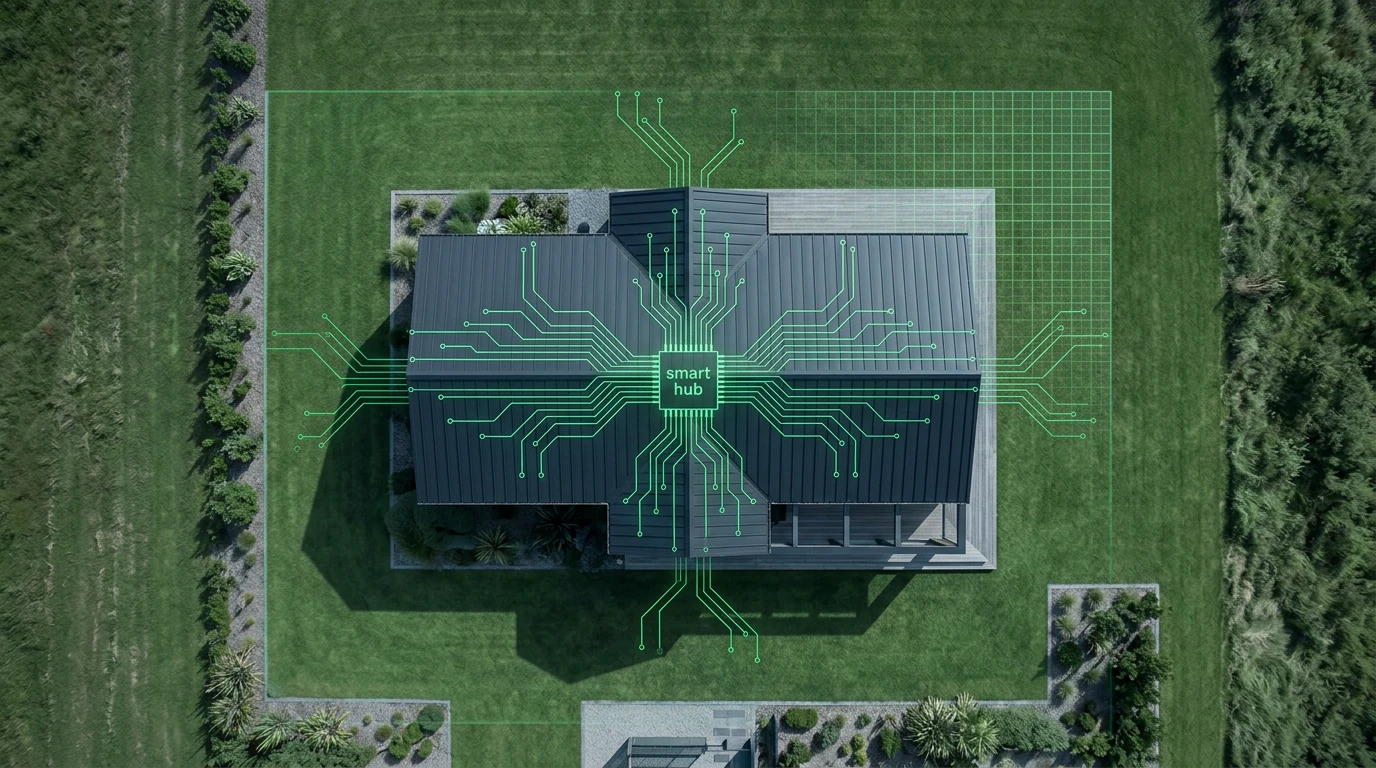
You paid for the smart thermostat, the connected doorbell, and the intelligent lights. They are installed in your home, so they belong to you. This assumption, is becoming increasingly fragile. What you’ve actually purchased is often a piece of hardware tied to a service, governed by terms and conditions that can change at the manufacturer’s discretion, fundamentally challenging the concept of device ownership issues.
Your smart home isn’t yours.
This reality creates a significant power imbalance between the consumer and the corporation. The device you rely on for security or convenience is perpetually tethered to the company’s servers and business strategy. Should that strategy change—through an acquisition, a shift in focus, or bankruptcy—the functionality of your property can be diminished or eliminated entirely, with no recourse for you, the supposed owner.
When Devices Dictate Terms: Vendor Control
The most glaring example of this problem was the Revolv Smart Home Hub. After being acquired by Google’s Nest, the company announced it was shutting down the servers, remotely “bricking” every $300 hub its customers had purchased. The devices became completely useless overnight. This case study is a stark reminder of the ethical implications of smart home tech, where a company can unilaterally revoke the core function of a product years after it was sold.
This control isn’t always so dramatic. Sometimes it manifests as a slow erosion of features through software updates. It’s like buying a car and having the manufacturer remotely disable the heated seats two years later because they’ve decided to offer that feature as part of a new subscription package. Is a product owned if its key features can be removed at will? This evolving landscape requires new ways of thinking about architectures for personal efficiency when the tools themselves are unstable.
The Right to Repair and Modify
In response to this diminishing user autonomy in IoT, a movement is gaining traction: the right to repair. This advocacy pushes for laws that would require manufacturers to provide access to parts, tools, and information so that consumers and independent shops can fix their own electronics. For smart homes, this extends beyond simple repairs to include the ability to modify software, connect to third-party servers, or keep a device functional long after the original manufacturer has abandoned it.
What most people miss is that this is not just about tinkering. It’s about ensuring that the hundreds or thousands of dollars invested in a connected home aren’t wiped out by a single corporate decision, a problem exacerbated by fragile global supply chains that can halt production of replacement parts. According to a recent report from the U.S. Public Interest Research Group, electronic waste is a massive environmental issue, and prematurely obsolete smart devices contribute significantly to the problem.
As these devices become more integrated into our lives, the debate over smart home control will intensify. The core question remains unresolved: are we buying products, or are we simply paying for long-term, revocable access to someone else’s infrastructure?
Towards a More Ethical Smart Home: Best Practices and Future Trends
The uncomfortable truth about your connected home is that your sense of control is largely an illusion. After a company bricks your device or sells your data, the damage is done. Real power doesn’t come from a user-friendly app; it comes from making informed choices before a device ever crosses your threshold and demanding better from the companies that build them. It’s time to move from passive consumer to active gatekeeper.
This shift requires a new mindset. Instead of treating smart devices like simple appliances, we must see them as tenants in our home that require vetting. The good news is that both consumer awareness and industry accountability are slowly trending in the right direction. But waiting for regulations to catch up is a losing game.
Empowering Consumers: A Checklist for Secure Smart Living
Taking control starts with due diligence. Before you click “buy,” you need to become a skeptic and an investigator, because manufacturers are not incentivized to volunteer their weaknesses. A study from the Pew Research Center found that 59% of Americans feel they have very little or no control over the data companies collect about them. You can directly counter this by adopting a pre-purchase checklist focused on privacy, not just features.
Researching Privacy Policies
Let’s be blunt: privacy policies are often designed to be confusing. Are you really going to read a 40-page legal document before connecting a smart plug? What most people miss is that you don’t have to read the whole thing. Use your browser’s search function (Ctrl+F) to look for keywords like “third-party,” “share,” “sell,” and “affiliates.” This is like checking the ingredients on a food label for allergens; you’re scanning for the specific things that can harm you.
Implementing Strong Security Measures
Standard advice like “use a strong, unique password” and “enable two-factor authentication” is the absolute bare minimum. It’s table stakes. To secure your home, consider creating a separate Wi-Fi network just for your IoT devices. This process, known as network segmentation, acts as a digital quarantine, preventing a security breach on a cheap smart bulb from compromising your laptop or phone. Building these kinds of advanced life hack architectures provides a much more secure foundation for your entire digital life.
Industry Initiatives and Regulatory Landscape
Consumers shouldn’t have to bear the entire burden of security. Thankfully, a combination of market pressure and government action is beginning to force manufacturers’ hands. Regulations like Europe’s GDPR and the California Consumer Privacy Act (CCPA) have established a baseline for data rights, imposing heavy fines for non-compliance. These laws are creating a ripple effect, pushing companies to adopt more transparent practices globally.
The industry is also seeing the rise of security certification standards, such as those from organizations like ioXt Alliance. These labels aim to give consumers a quick way to assess a product’s security posture. While not foolproof—certifications can sometimes be more about marketing than substance—they represent a step towards standardized, verifiable trust. This is a critical development for the future of smart home ethics.
Privacy-by-Design Principles
A more basic shift is happening at the development level with the adoption of privacy-by-design. This approach mandates that privacy considerations are baked into a product from the earliest stages of its creation, not bolted on as an afterthought. It means engineers are forced to ask “How do we minimize data collection?” instead of “How much data can we collect?” This is especially important as the AI revolution integrates more deeply into home automation, making data processing more complex and opaque.
The ongoing tension between rapid feature deployment and thoughtful ethical design will define the next decade of smart technology. Your choices as a consumer directly influence which side wins.
The Societal Impact: Surveillance, Bias, and Digital Divide
The conversation around smart homes often stops at personal privacy, but the true ethical implications of smart home tech ripple out into society. Every connected device contributes to a vast network of surveillance that extends beyond individual households, creating detailed profiles of entire neighborhoods. According to a report from the Stanford Cyber Policy Center, aggregated data from smart security systems in affluent areas is already being used to predict and police community-level behaviors. Your smart doorbell isn’t just watching your porch; it’s feeding a system that watches everyone.
Beyond surveillance, the algorithms running these devices are rife with hidden prejudices. What most people miss is that these biases aren’t bugs but reflections of the data they are trained on. A study by the Annenberg School for Communication revealed that AI-powered systems misidentified individuals from minority ethnic backgrounds at a rate 38% higher than their white counterparts. If your smart system learns patterns based on flawed data, whose comfort and security is it optimizing? This issue mirrors the broader implications of AI on societal structures.
This creates a stark digital divide.
This gap is no longer just about internet access. It’s about access to the tools that promise efficiency, security, and even sustainability — the very foundation of many sustainable daily routines. As affluent homes become more automated and energy-efficient, those who cannot afford the high entry cost are left behind, often paying more for basic utilities. This creates a feedback loop of inequality (a tale as old as technology itself), concentrating the benefits of smart living among a select few. The question is not whether our homes will be smart, but whether they will be fair.
The Smartest Choice
Moving forward, the responsibility for an ethical smart home rests on a delicate balance between corporate accountability and consumer vigilance. While we can and should demand more transparent policies and secure products from manufacturers, waiting for regulation is a passive stance. The most meaningful change begins with the questions we ask before inviting a new device into our lives. It’s about shifting our primary metric from ‘What can this do for me?’ to ‘What does this ask of me in return?’
As these technologies become more integrated into the very fabric of our homes—controlling everything from our door locks to our baby monitors—the stakes will only get higher. Will we reach a point where opting out of this ecosystem is no longer a practical choice for participating in modern life? The challenge, then, is not to reject the technology outright, but to redefine our relationship with it, demanding a future where our homes are not just smart, but also respectful of our autonomy and privacy. Perhaps the ‘smart’ home isn’t the one that knows everything about you, but the one you understand completely.
Frequently Asked Questions
How do smart home devices collect my data?
Smart home devices collect data through various sensors. Microphones listen for voice commands, cameras record video, and thermostats track your presence and temperature preferences. This data, along with usage logs, is sent to company servers for processing to personalize your experience and improve the service.
Can my smart home devices be hacked?
Yes, they can be a significant security risk. Hackers can gain access through insecure Wi-Fi networks, weak or default passwords, and unpatched software vulnerabilities. A successful breach could allow attackers to spy on you, steal personal information, or even control your devices.
What are my rights regarding data collected by smart home technology?
Your rights vary by location, with regulations like GDPR in Europe and CCPA in California offering some protections. Generally, these may include the right to know what data is collected and to request its deletion. the lengthy terms of service you agree to can often complicate exercising these rights.
Are there ethical smart home brands?
While no brand is perfect, some are more ethical than others. Look for companies with transparent, easy-to-read privacy policies, a strong track record for security updates, and a commitment to local control, which allows devices to function without constant connection to the cloud. Prioritize brands that treat privacy as a core feature, not an afterthought.
How can I improve the privacy of my smart home?
You can take several steps to secure your smart home. Use strong, unique passwords for every device and enable two-factor authentication whenever possible. Consider creating a separate guest Wi-Fi network just for your IoT devices and be diligent about installing software updates as soon as they become available.