
Supply Chain Resilience 2026: 4 Strategies for Mitigating Disruptions
Anúncios
Supply Chain Resilience in 2026: Implementing 4 Key Strategies to Mitigate Disruptions and Maintain Operations
The global landscape of commerce is ever-evolving, and with it, the complexities of managing a robust supply chain. As we look towards 2026, the imperative for building Supply Chain Resilience has never been more pronounced. Recent years have underscored the fragility of interconnected global systems, exposing vulnerabilities that can lead to significant operational setbacks, financial losses, and reputational damage. From geopolitical tensions and natural disasters to cyber threats and unexpected demand shifts, the potential for disruption is omnipresent. This article delves into four critical strategies that businesses must implement to not only survive but thrive in an increasingly unpredictable future, ensuring continuity and fostering sustainable growth.
Anúncios
Achieving true Supply Chain Resilience requires a proactive and multifaceted approach. It’s no longer sufficient to react to crises; organizations must anticipate, adapt, and build inherent robustness into their operational frameworks. This involves a fundamental shift in mindset, moving from efficiency at all costs to a balanced focus on both efficiency and resilience. We will explore practical solutions, compare different methodologies, and analyze their impact, providing a comprehensive guide for executives and supply chain professionals aiming to fortify their operations for 2026 and beyond.
Anúncios
The Evolving Threat Landscape: Why Supply Chain Resilience is Non-Negotiable in 2026
Before diving into specific strategies, it’s crucial to understand the context. The threats to global supply chains are not static; they are dynamic, interconnected, and often unpredictable. The rise of protectionist policies, the increasing frequency and intensity of climate-related events, rapid technological advancements bringing both opportunities and new risks, and the lingering effects of global health crises all contribute to a volatile operational environment. For businesses, this translates into potential stockouts, production halts, increased costs, and ultimately, dissatisfied customers. Therefore, investing in Supply Chain Resilience is not merely an option; it’s a strategic imperative for long-term survival and competitive advantage.
Consider the ripple effects of a single point of failure. A factory fire in one region can halt production globally for a critical component. A port strike can leave ships stranded and goods undelivered for weeks. A cyberattack can cripple logistics and inventory management systems. These scenarios highlight the interconnectedness and fragility inherent in complex supply networks. In 2026, companies that have not adequately prepared for such eventualities will find themselves at a severe disadvantage. The ability to quickly pivot, find alternative sources, and maintain production will be the hallmark of successful enterprises. This proactive stance is what defines true Supply Chain Resilience.
Strategy 1: Enhanced Visibility and Real-Time Data Analytics
One of the foundational pillars of Supply Chain Resilience is comprehensive visibility. You cannot manage what you cannot see. In 2026, this means moving beyond static reports and embracing real-time data analytics. Enhanced visibility provides an end-to-end view of the entire supply chain, from raw material sourcing to final product delivery. This includes tracking inventory levels across all locations, monitoring shipment progress, assessing supplier performance, and identifying potential bottlenecks or disruptions before they escalate.
Practical Solutions for Enhanced Visibility:
- IoT Sensors and RFID Technology: Deploying Internet of Things (IoT) sensors and Radio-Frequency Identification (RFID) tags can provide real-time location and condition monitoring of goods in transit and storage. This data can alert companies to delays, temperature excursions, or potential theft, allowing for immediate corrective action.
- Blockchain for Traceability: Blockchain technology offers an immutable and transparent ledger for tracking products and transactions across the supply chain. This enhances trust, reduces fraud, and provides unparalleled traceability, crucial for managing recalls or verifying ethical sourcing.
- Integrated Digital Platforms: Implementing a unified digital platform that integrates Enterprise Resource Planning (ERP), Warehouse Management Systems (WMS), Transportation Management Systems (TMS), and supplier portals creates a single source of truth. This eliminates data silos and provides a holistic view of operations.
- AI and Machine Learning for Predictive Analytics: Leveraging Artificial Intelligence (AI) and Machine Learning (ML) algorithms can analyze vast datasets to predict potential disruptions. This includes forecasting demand fluctuations, identifying geopolitical risks, predicting weather-related delays, and even anticipating supplier financial instability.
Comparison/Analysis:
While traditional visibility tools offered historical data, the modern approach emphasizes predictive capabilities. The investment in AI and ML, though initially significant, yields substantial returns by enabling proactive risk management rather than reactive crisis response. For example, a company using AI to predict a potential port congestion due to an impending storm can reroute shipments days in advance, avoiding costly delays and maintaining Supply Chain Resilience. Without this, they would be scrambling to find alternatives once the disruption is already underway.

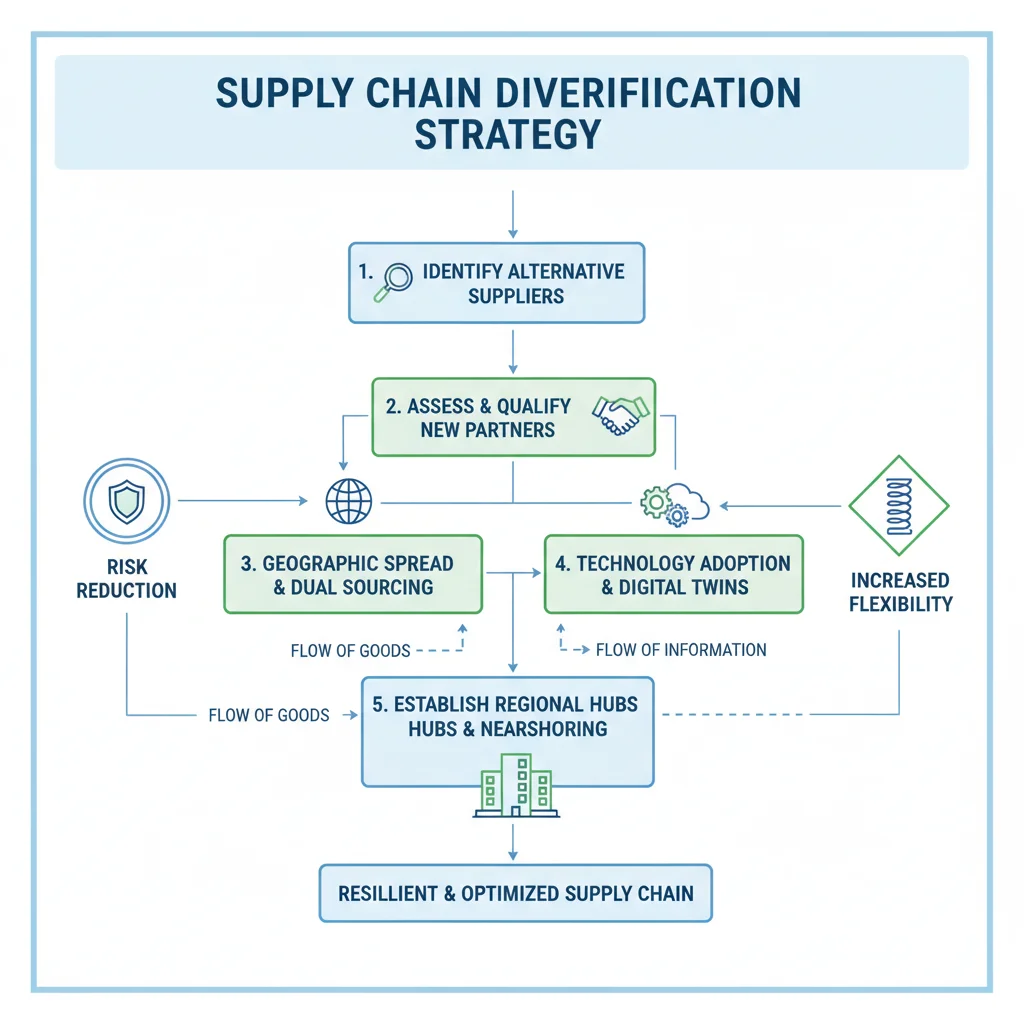
Strategy 2: Diversification of Supplier Networks and Geographies
Over-reliance on a single supplier or a concentrated geographic region is a primary vulnerability for any supply chain. The second critical strategy for building Supply Chain Resilience in 2026 involves strategic diversification. This means expanding the supplier base and distributing manufacturing and sourcing operations across multiple regions to mitigate the impact of localized disruptions.
Practical Solutions for Diversification:
- Multi-Sourcing Critical Components: Identify critical components or raw materials and establish relationships with at least two, preferably three, qualified suppliers in different geographical locations. This redundancy ensures continuity even if one supplier faces issues.
- Regionalization and Nearshoring/Reshoring: While global supply chains offer cost advantages, the trend towards regionalization is growing. Establishing manufacturing facilities or sourcing from suppliers closer to end markets (nearshoring or reshoring) can reduce lead times, transportation costs, and exposure to geopolitical risks.
- Supplier Risk Assessment and Management: Implement a robust supplier risk assessment program that goes beyond financial stability to include operational capabilities, cybersecurity posture, ethical practices, and geographical exposure. Regularly audit and monitor key suppliers.
- Strategic Inventory Buffers: While just-in-time (JIT) principles prioritize efficiency, building strategic inventory buffers for critical components can act as a shock absorber during short-term disruptions. This requires careful analysis to balance carrying costs with the cost of potential stockouts.
Comparison/Analysis:
The traditional focus on single-source suppliers for cost efficiency is giving way to a more balanced approach that prioritizes Supply Chain Resilience. While multi-sourcing might incur slightly higher unit costs, the long-term benefits of reduced risk and enhanced operational continuity far outweigh these incremental expenses. The COVID-19 pandemic vividly demonstrated the pitfalls of concentrated supply chains, prompting many companies to re-evaluate their sourcing strategies. Regionalization, in particular, offers a compelling balance between global reach and local responsiveness, creating more agile and resilient networks.
Strategy 3: Digital Transformation and Automation
The third key strategy for bolstering Supply Chain Resilience in 2026 is accelerating digital transformation and embracing automation. Technology is not just an enabler; it’s a fundamental driver of modern supply chain capabilities, offering unprecedented levels of efficiency, accuracy, and adaptability.
Practical Solutions for Digital Transformation and Automation:
- Robotics and Automation in Warehousing: Automated Guided Vehicles (AGVs), Autonomous Mobile Robots (AMRs), and robotic picking systems can significantly improve warehouse efficiency, reduce labor dependency, and enhance throughput, especially during labor shortages or peak demand.
- Predictive Maintenance: Applying AI and machine learning to maintenance schedules for machinery and vehicles can predict failures before they occur, reducing unplanned downtime and ensuring consistent production and logistics operations.
- Digital Twins: Creating a ‘digital twin’ of the supply chain – a virtual replica that updates in real-time – allows companies to model different scenarios, test the impact of disruptions, and optimize operational strategies without affecting physical operations. This is a powerful tool for enhancing Supply Chain Resilience.
- Automated Order Processing and Fulfillment: Streamlining order-to-cash cycles through automation reduces human error, speeds up processing, and improves overall customer satisfaction, which is crucial during periods of high demand or disruption.
Comparison/Analysis:
The shift from manual processes to digital and automated systems is transformative. Automation reduces operational costs in the long run, minimizes human error, and provides the agility needed to respond quickly to changes. Digital twins, in particular, represent a significant leap forward, allowing for ‘what-if’ analysis that can preemptively identify vulnerabilities and test mitigation strategies, thereby strengthening Supply Chain Resilience in a controlled environment. Companies that embrace these technologies will find themselves far better equipped to handle the unforeseen challenges of 2026.
Strategy 4: Collaborative Partnerships and Information Sharing
The final, yet equally crucial, strategy for building Supply Chain Resilience revolves around fostering strong collaborative partnerships and promoting transparent information sharing across the entire ecosystem. A resilient supply chain is rarely an isolated entity; it’s a network of interdependent relationships.
Practical Solutions for Collaborative Partnerships:
- Strategic Supplier Relationships: Move beyond transactional relationships with suppliers to build long-term, strategic partnerships. This involves sharing forecasts, collaborating on product development, and jointly investing in risk mitigation strategies. Preferred suppliers are more likely to prioritize your needs during times of constraint.
- Cross-Functional Collaboration: Internally, break down silos between departments such as procurement, manufacturing, logistics, sales, and finance. Integrated business planning (IBP) ensures that all functions are aligned with the overall Supply Chain Resilience objectives.
- Industry Consortia and Information Sharing Platforms: Participate in industry groups and platforms that facilitate the sharing of non-competitive information regarding potential risks, best practices, and innovative solutions. Collective intelligence can significantly enhance individual company resilience.
- Customer Collaboration: Engage with key customers to understand their demand patterns, future plans, and service level expectations. This collaboration can help optimize inventory, production schedules, and delivery routes, reducing surprises and improving overall Supply Chain Resilience.
Comparison/Analysis:
In the past, many companies viewed their supply chain partners with a degree of adversarial competition. However, 2026 demands a paradigm shift towards genuine collaboration. Sharing sensitive information, within appropriate legal and ethical boundaries, allows for a more holistic understanding of potential risks and opportunities. When all parties in the supply chain are invested in each other’s success, the entire network becomes more robust. This contrasts sharply with fragmented approaches where each entity optimizes for itself, often at the expense of overall Supply Chain Resilience. For instance, sharing demand forecasts with suppliers enables them to plan their production more effectively, avoiding bottlenecks that could impact your operations.
Implementing the Strategies: A Roadmap to Resilience
Successfully integrating these four strategies for Supply Chain Resilience requires a structured approach. It’s not about implementing them in isolation but rather creating a cohesive framework where each strategy reinforces the others. Here’s a suggested roadmap:
- Assessment and Gap Analysis: Begin by thoroughly assessing your current supply chain vulnerabilities. Where are your single points of failure? Which suppliers pose the highest risk? What is your current level of visibility? This analysis will highlight the most pressing areas for improvement.
- Develop a Resilience Strategy Document: Based on the assessment, articulate a clear Supply Chain Resilience strategy. This document should define objectives, key performance indicators (KPIs), resource allocation, and a timeline for implementation.
- Pilot Programs and Phased Rollout: Don’t try to implement everything at once. Start with pilot programs for specific technologies or diversification efforts. Learn from these pilots and then scale up. A phased rollout allows for adjustments and minimizes disruption.
- Invest in Technology and Talent: Recognize that building Supply Chain Resilience requires investment. This includes not only technology platforms but also upskilling your workforce to manage these new systems and analytical tools. Data scientists, logistics analysts, and risk managers will be crucial.
- Regular Review and Stress Testing: Supply Chain Resilience is not a one-time project; it’s an ongoing process. Regularly review your strategies, conduct stress tests (simulating various disruption scenarios), and adapt your approach based on evolving threats and lessons learned.
The Future of Supply Chain Resilience: Beyond 2026
While this article focuses on strategies for 2026, the journey towards ultimate Supply Chain Resilience is continuous. The landscape will continue to shift, bringing new technologies, new geopolitical realities, and new environmental challenges. Companies that embed a culture of adaptability, continuous learning, and proactive risk management will be best positioned for long-term success.
Consider the emerging trends: the increasing adoption of sustainable practices, the growing importance of ethical sourcing, and the potential impact of quantum computing on data security and processing. These factors will undoubtedly shape the next iteration of Supply Chain Resilience strategies. By laying a strong foundation now with enhanced visibility, diversified networks, digital transformation, and collaborative partnerships, businesses can build the agility required to navigate these future complexities.
Conclusion: Building a Future-Proof Supply Chain
The challenges facing global supply chains are significant, but so are the opportunities for those willing to embrace change and invest in Supply Chain Resilience. By focusing on enhanced visibility through real-time data and AI, diversifying supplier networks and geographies, leveraging digital transformation and automation, and fostering collaborative partnerships, businesses can create robust, adaptable, and future-proof supply chains.
These four strategies are not merely theoretical concepts; they are practical, actionable solutions that, when implemented thoughtfully, can significantly mitigate disruptions, ensure operational continuity, and secure a competitive advantage in the dynamic business environment of 2026 and beyond. The time to act is now, transforming vulnerabilities into strengths and building a resilient foundation for sustainable growth.