Economic Currents: How Global Events Shape Your Daily Wallet
Anúncios
It’s a frustratingly common experience: the price of your weekly groceries creeps up, your gas tank costs more to fill, and the dream of a major purchase seems to drift further away. Most people chalk it up to a vague notion of “the economy,” a distant and uncontrollable force. But what if the real reasons are hiding in plain sight, scattered across international news headlines you might have scrolled past just this morning?
Anúncios
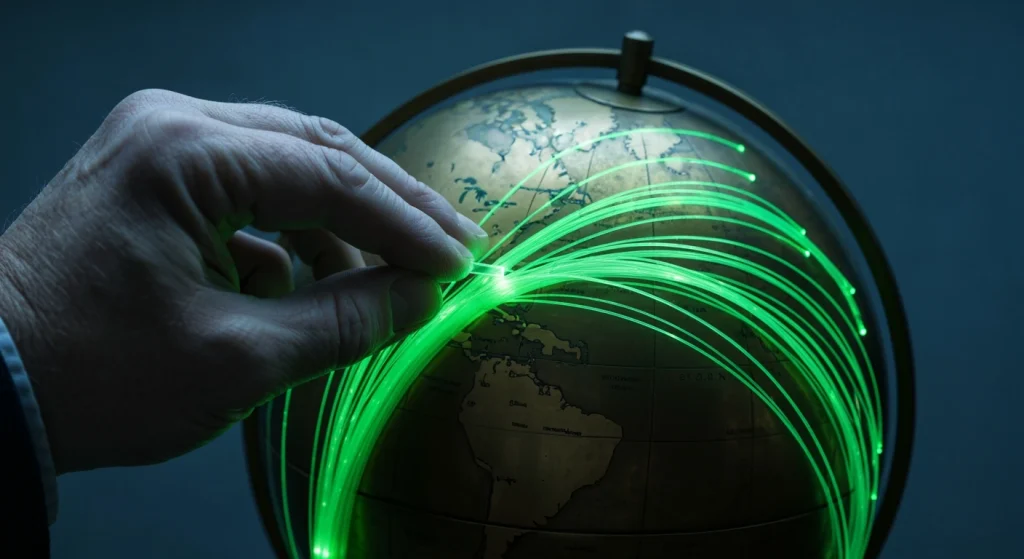
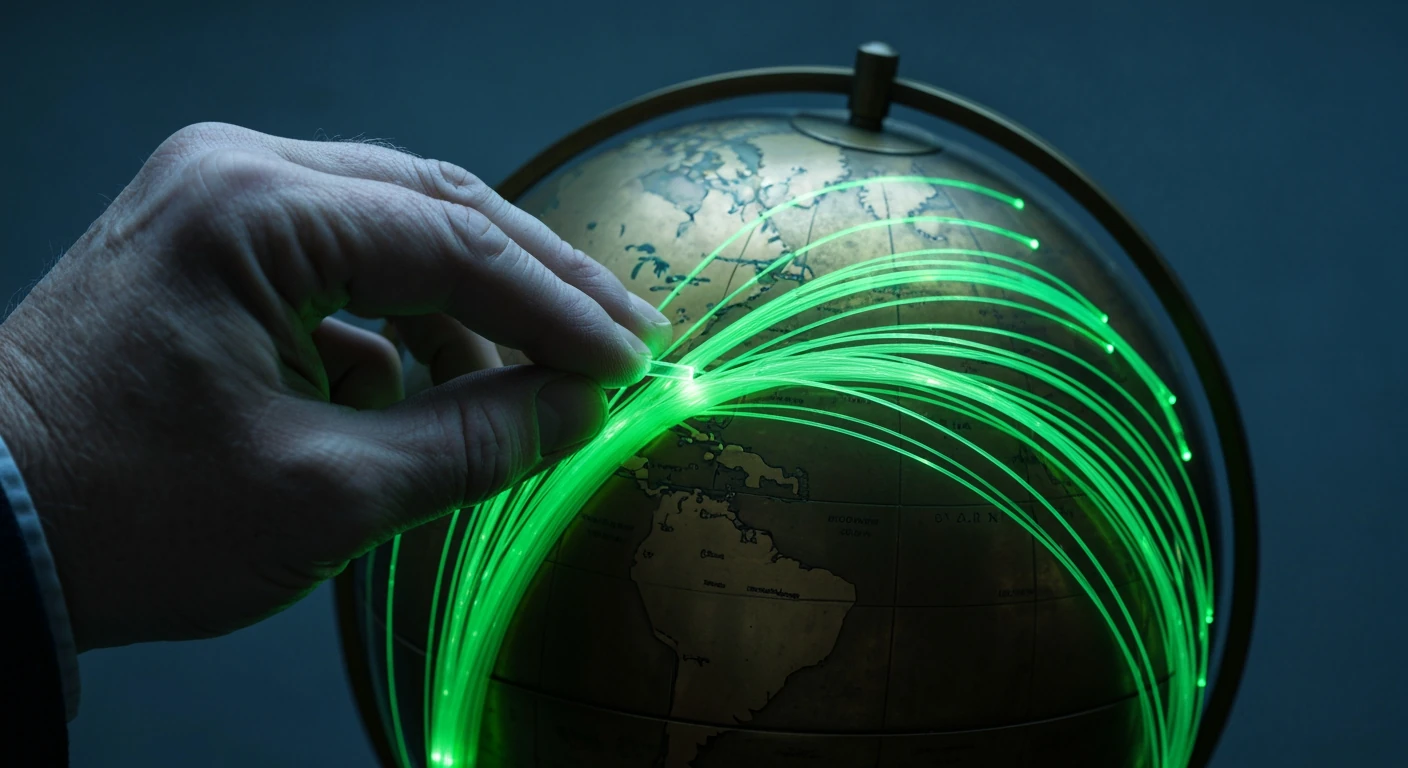
The global economy is not a series of isolated markets; it’s a deeply interconnected web where a political decision in one hemisphere can cause financial tremors in your local supermarket. A disruption in a shipping lane thousands of miles away doesn’t just delay packages; it directly influences the cost and availability of goods on your shelves. Understanding this intricate chain of cause and effect is the first step toward moving from being a passive victim of economic forces to an informed participant who can anticipate and react to them.
This guide demystifies the connection between major world events and your personal finances. We’ll break down how global triggers create ripple effects that reach your budget, decode the real impact of inflation and interest rates on your spending power, and provide actionable strategies for building financial resilience in turbulent times. Finally, we’ll explore how these large-scale economic shifts are reshaping the future of work and what you can do to future-proof your career path.
Understanding the Ripple Effect: From Global Stages to Your Local Market
It’s easy to see major world events as distant television noise, completely disconnected from the price of your morning coffee or the gas in your tank. The reality is far more intertwined. A political decision made thousands of miles away can directly influence your weekly grocery bill through a complex chain of economic reactions. This is the global ripple effect in action.
The global economy functions like a vast, interconnected network. A disruption in one corner sends vibrations across the entire system. What most people miss is the sheer speed at which these effects travel, often showing up as subtle price hikes long before the reasons are clear. But how does a trade dispute in Asia actually add a dollar to the cost of your electronics? The answer lies in the intricate pathways of supply, demand, and investor confidence that link international producers to your local stores, making it critical to understand how to get insights connecting global shifts to your everyday reality.
Anúncios
The Butterfly Effect in Economics: Key Global Triggers
Certain international events are notorious for triggering these widespread economic consequences. They act as the initial flap of the butterfly’s wings, setting off a cascade that eventually reaches consumers. Thinking about these events provides strategic insights for your daily dynamics.
Key triggers often include:
- Geopolitical Tensions: Conflicts or political instability in resource-rich regions can immediately disrupt the flow of primary commodities like oil and grain, causing price spikes globally. Think of it like a major highway closure during rush hour; the entire traffic grid seizes up almost instantly.
- Supply Chain Disruptions: A factory shutdown, a port blockage, or even a shortage of shipping containers can create significant backlogs. For example, a report from the Center for Strategic and International Studies highlighted that a single container ship blockage could delay over $9 billion in trade for each day it persists.
- Major Policy Shifts: When a large economy changes its trade tariffs, interest rates, or environmental regulations, the effects don’t stay within its borders. These policy changes alter the cost of doing business for countless international partners.
This interconnectedness means your personal finances are surprisingly exposed to global volatility. It’s a system where a drought in Brazil can make a cup of coffee in Chicago more expensive, and a tech component shortage in Taiwan can delay a car purchase in Germany. Understanding these connections is the first step toward navigating the economic shifts that affect your daily financial well-being. The next challenge is learning to anticipate and react to them effectively.
Inflation and Interest Rates: Decoding Their Grip on Your Budget
You feel it every time you check out at the grocery store or open a utility bill. That creeping sense that your money just doesn’t go as far as it used to isn’t just a feeling; it’s a calculated economic force designed to slow things down. Inflation and interest rates are the two levers central banks use to manage the economy, but for most people, they just feel like a tightening vise on their household budget.
Understanding these mechanisms is not just academic. It’s about reclaiming control over your financial destiny. When you grasp how these forces work, you can begin to anticipate their moves and adjust your strategy accordingly, turning from a passive victim of economic policy into an active participant in your own financial health.
Inflation’s Erosion: What it Means for Everyday Spending
Think of inflation as a slow leak in your financial tires. You might not notice the pressure dropping on a short trip, but over a long journey, you’ll find yourself running on flats. This gradual decrease in purchasing power means the cash you saved last year buys less this year. A report from the Bureau of Labor Statistics recently highlighted that a typical basket of consumer goods that cost $250 just a few years ago could now require over $278 to purchase. That’s a real loss.
This isn’t just about the price of milk and eggs. It seeps into every corner of your life, from the cost of a tank of gas to the price of your morning coffee. The data suggests — though not conclusively — that wages rarely keep pace with sharp inflationary spikes, creating a gap where household budgets are stretched thin. For a deeper look into these dynamics, many are exploring necessary insights for daily financial well-being. The real challenge is that your income is a fixed number, but the cost of living becomes a moving target.
It’s a silent tax on your savings.
Interest Rates: Your Borrowing and Saving Power
When inflation gets too high, the Federal Reserve steps in with its primary tool: interest rates. Raising rates is like hitting the brakes on the economy. It makes borrowing money more expensive, which cools down spending and, in theory, brings prices back under control. The underrated factor here is how this single action creates two completely different realities for borrowers and savers.
For anyone with debt — credit cards, car loans, or a mortgage — a rate hike is immediate bad news. But for savers? Suddenly, that high-yield savings account starts looking much more attractive. The key is understanding which side of the equation you are on and how to use these strategic insights for your daily dynamics to your advantage.
Mortgages and Loans: The Direct Impact
The most direct impact of rising interest rates is felt by those looking to borrow large sums of money. Consider a $400,000 mortgage on a 30-year fixed term. A jump in the average interest rate from 3.9% to 6.4% doesn’t sound dramatic, but it translates to a monthly payment increase of over $650. That’s nearly $8,000 extra per year, a figure that can easily push a home purchase out of reach for many families.
This chilling effect extends to all forms of credit. “When the cost of capital goes up, it forces a widespread re-evaluation of spending and investment,” explains financial analyst David Chen. Suddenly, financing a new car or using a credit card for a large purchase carries a much heavier penalty — all those 0% APR offers in your mailbox mysteriously dry up. You are pushed to ask yourself, is this purchase necessary right now?
Savings and Investments: Opportunities and Risks
While borrowers face headwinds, savers find a silver lining. Higher interest rates mean banks are willing to pay you more to hold your cash. A high-yield savings account that offered a paltry 0.5% return might now offer a more appealing 4.85% or higher. This shift provides a safe, predictable way to grow your emergency fund or short-term savings without the volatility of the stock market.
This creates a new dilemma for investors. Why take on the risk of the stock market when you can get a guaranteed return from a government bond or a savings account? This flight to safety can cause stock market downturns, impacting retirement accounts like your 401(k). The real skill is learning how to balance the predictable safety of new savings rates with the long-term growth potential of your investments, a constant balancing act in your financial life.
When the cost of capital goes up, it forces a widespread re-evaluation of spending and investment.
— David Chen, Financial Analyst
| Economic Force | Direct Impact on Your Daily Life |
|---|---|
| Geopolitical Tensions | Spikes in prices for essential commodities like oil and grain, leading to higher costs for gas and food. |
| Supply Chain Disruptions | Increased prices and limited availability of consumer goods, from electronics to automobiles. |
| Inflation | Reduces the purchasing power of your savings and income; the same amount of money buys less over time. |
| Interest Rate Hikes | Increases the cost of borrowing for mortgages, car loans, and credit cards, but boosts returns on savings accounts. |
| Market Volatility | Causes fluctuations in retirement and investment accounts, requiring a diversified and long-term strategy. |
| Automation & Gig Economy | Shifts job security from company loyalty to personal skill sets, demanding continuous learning and career adaptability. |
Navigating Market Volatility: Strategies for Personal Financial Resilience
Most people believe their financial plan is solid. It’s a dangerous illusion. True financial resilience isn’t about having a static plan etched in stone; it’s about building a system that can absorb the shocks of an unpredictable world. When global markets tremor, the fallout doesn’t just stay on Wall Street—it lands squarely on your kitchen table, impacting everything from your grocery bill to your retirement account. The real question is whether your finances are a brittle pane of glass or a flexible, shock-absorbing structure.
Relying on a single income stream and a basic savings account is like building a house with no foundation. It stands only until the first storm hits. Understanding how to interpret the ripples from today’s economic headlines is the first step toward building that necessary foundation.
Building a reliable Financial Shield: necessary Steps
Let’s be clear: your checking account is not an emergency fund. An actual emergency fund is a dedicated, liquid account holding three to six months of necessary living expenses, a buffer that most people critically lack. A report from the Federal Reserve found that a surprising 37% of American adults would struggle to cover an unexpected $400 expense. That isn’t a statistic; it’s a vulnerability index for millions of households.
Building this shield requires disciplined, non-negotiable action. It feels like a sacrifice at first, but it is actually the purchase of future peace of mind. What most people miss is that this fund’s primary job isn’t to make you rich—it’s to prevent you from making poor, panicked decisions during a crisis, like selling investments at a loss.
Here’s a no-nonsense checklist to start:
- Automate Savings Transfers: Set up a recurring, automatic transfer to a high-yield savings account the day you get paid. Treat it like a tax you pay to your future self.
- Perform a Budget Autopsy: Ruthlessly track every dollar for 30 days. You will find leaks. The goal isn’t just to see where money goes but to question why it’s going there.
- Establish Clear Tiers: Define what constitutes a true emergency. A car repair that keeps you from getting to work? Yes. A last-minute vacation deal? not.
- Replenish Immediately: If you use the fund, your top financial priority becomes refilling it. No exceptions.
Investment Diversification in Turbulent Times
The mantra “don’t put all your eggs in one basket” is so overused it has lost all meaning. Think of it this way instead: relying only on the stock market for growth is like trying to cook a complex meal using only salt. You need other ingredients—bonds, real estate, international assets—to balance the flavor and ensure a palatable outcome even if one ingredient spoils. This isn’t just about spreading risk; it’s about accessing different sources of return that don’t all move in the same direction.
True diversification means owning assets that behave differently under various economic pressures. When stocks fall due to rising interest rates, for example, certain types of bonds or commodities might hold their value or even appreciate. The data suggests—though not conclusively—that a well-diversified portfolio recovers from downturns more quickly than a concentrated one.
Beyond Stocks: Exploring Alternative Assets
Expanding your portfolio beyond traditional stocks and bonds is where real resilience is forged. Alternative assets can provide a hedge against inflation and market volatility. This includes assets like Real Estate Investment Trusts (REITs), which allow you to invest in property without being a landlord, or commodities like gold and silver. Some investors are even exploring venture capital and private equity, though these carry significantly higher risk.
During the inflationary period of the 1970s, for instance, gold provided returns that far outpaced the S&P 500. While past performance is no guarantee, it highlights how different asset classes can thrive in environments where traditional investments struggle. These are complex tools, and understanding the subtle mechanics of economic shifts is vital before adding them to your mix.
Debt Management: Prioritizing and Restructuring
Debt is the anchor that will drag you under in a financial storm. High-interest debt, particularly from credit cards, actively works against every positive financial step you take. According to the Federal Reserve Bank of New York, total credit card balances recently swelled by $48 billion in a single quarter, pushing the aggregate to over $1.1 trillion. This isn’t just a number; it’s a measure of widespread financial fragility.
Tackling this requires a strategy. The “avalanche” method (paying off highest-interest debt first) is mathematically superior, saving you the most money over time. the “snowball” method (paying off the smallest balances first) can provide powerful psychological wins that keep you motivated. The best method is the one you will actually stick with—an underrated factor in all financial planning.
Look for opportunities to restructure. Could you consolidate multiple credit card balances into a single personal loan with a lower interest rate? Have you called your card issuers to request a lower APR? (You’d be surprised how often they say yes.) The interest you stop paying is guaranteed money back in your pocket, an immediate and risk-free return on your effort. Now, the challenge shifts from just surviving market swings to actively improving your position regardless of them.
The Future of Work: Economic Shifts and Your Career Path
The very idea of a stable, lifelong career path is becoming a nostalgic myth. Economic forces like automation and the rise of the gig economy are not just chipping away at the old model; they are demolishing it entirely. We are told to be “adaptable,” but what does that even mean when the ground is constantly shifting? It means recognizing that your job security is no longer tied to a company, but to your personal skill portfolio and your willingness to pivot.
Automation isn’t just about robots on an assembly line. It’s refined software performing tasks that, until recently, required a college degree. A report from the Forrester Institute suggests that AI-driven automation could impact nearly 1.5 million U.S. jobs in just the next few years. Simultaneously, the gig economy offers a different path, one defined by contracts and projects instead of promotions and pensions — a path that offers flexibility but demands a constant hustle. Understanding how these economic shifts affect your financial well-being is no longer optional.
This is the new reality.
Emerging Industries and In-Demand Skills
Surviving this new job market requires treating your career like a product that needs constant updates. Relying on a single, static skill set is like a mechanic trying to fix a modern electric vehicle with a wrench set from 1985; the tools are simply wrong for the job. The data is clear: the Bureau of Labor Statistics projects that roles in renewable energy, data analysis, and healthcare support will see double-digit growth, while many traditional administrative and manufacturing roles are projected to shrink.
So, what are the “right” tools for your professional toolbox? The most valuable skills are surprisingly human. They include critical thinking, emotional intelligence (EQ), and digital literacy. A machine can process data, but it can’t lead a team through a crisis or design a marketing campaign that resonates on a deep cultural level. Developing these abilities creates a moat around your career that automation can’t easily cross. Learning how to connect these global shifts to your everyday reality gives you a significant advantage.
The most sought-after professionals will be those who can blend technical competence with these uniquely human skills. The question you must ask yourself isn’t whether your industry will be disrupted, but whether you have the skills to become the disruptor instead of the displaced.
Daily Life Hacks: Smart Choices in an Evolving Economy
You’ve retooled your career for a new economic reality, but have you done the same for your wallet? Most people react to inflation by simply complaining, failing to see that their daily habits are leaking cash like a faulty faucet. True financial control isn’t about earning more; it’s about spending smarter. This requires a ruthless audit of your daily life.
Start with your home’s energy use. Simply adjusting your thermostat by a few degrees can have a significant impact, with the Department of Energy suggesting it can save up to 10% annually on heating and cooling costs. This isn’t about freezing in the dark; it’s about reclaiming money that utility companies are happy to take. Are you actively managing your consumption, or just paying the bill that shows up? Considering the broader context of how current events affect daily economics is the first step toward proactive savings.
Your grocery bill is another area ripe for optimization. Instead of brand loyalty, practice price-point loyalty. Generic brands often contain the exact same ingredients as their more expensive counterparts. This simple shift is one of many smart hacks for more effortless living that directly pads your bank account over time.
Modern digital tools offer more than just tracking; they provide strategic oversight. Using an app to categorize every expense feels like micromanagement, but it’s really about gathering intelligence on your own behavior — data you can use to make better decisions. The underrated factor here is that these tools help you understand the deeper story of your spending, which is important for making informed financial choices amid economic shifts.
Ultimately, these adjustments are not about deprivation. They are about building a more resilient financial foundation, one that can withstand economic shocks without forcing drastic, painful changes to your lifestyle.
Staying Informed: Reliable Sources for Economic Insights
Navigating the flood of economic news can feel like trying to drink from a firehose. What most people miss is the distinction between commentary and data, a gap that can lead to poor financial decisions. A study from the FINRA Investor Education Foundation suggests that a significant number of people struggle to differentiate between objective reporting and sponsored content. The key is to bypass the noise and go directly to the sources that matter.
For raw, unfiltered data, your best bet is official publications from central banks like the Federal Reserve or government bodies such as the Bureau of Labor Statistics. These reports provide the foundational numbers—inflation rates, unemployment figures, GDP growth—that all other analysis is built upon. This is like getting produce from the farm instead of a processed meal.
Reputable financial news outlets add a necessary layer of interpretation and context, employing economists to dissect raw data and offer required insights for your daily financial well-being. But even here, a critical eye is necessary. Who funds the analysis and what biases might they have?
The goal is not prediction; it’s preparation.
Ultimately, developing financial literacy means questioning the motive behind every piece of information. This habit is core for connecting global shifts to your everyday reality. Building this skill transforms you from a passive consumer of headlines into an active participant in your own economic future.
From Spectator to Strategist: Owning Your Economic Future
The temptation is to view global economic forces as an uncontrollable tide, something to be weathered rather than navigated. But this perspective misses the underlying shift in power that financial literacy provides. Understanding the ‘why’ behind a price hike or a market dip transforms your relationship with money from one of passive anxiety to active strategy. The goal is not to predict every global event—an impossible task—but to build a personal financial system so resilient and adaptable that it thrives on volatility rather than fears it. What is the one change you can make this week, not just to save more money, but to become a more informed architect of your own financial destiny?
Frequently Asked Questions
How do global oil prices affect my local gas station?
Global oil prices are the biggest factor in what you pay at the pump. Crude oil is a global commodity, so geopolitical events or supply disruptions anywhere in the world can raise its price. That increased cost is passed down through refiners to your local station, often within days, directly impacting your transportation budget.
What’s the difference between inflation and stagflation?
Inflation is the rate at which the general level of prices for goods and services is rising, and subsequently, purchasing power is falling. Stagflation is a more dangerous economic condition where high inflation combines with high unemployment and stagnant economic growth, creating a difficult scenario for consumers and policymakers alike.
Should I change my investment strategy during an economic downturn?
While it’s wise to review your strategy, making drastic changes based on fear can be detrimental. Financial experts often advise against panic-selling, recommending instead that you focus on your long-term goals and ensure your portfolio is well-diversified. An economic downturn can be an opportunity to reassess your risk tolerance with a financial advisor.
What are the best apps for tracking personal finances effectively?
Several apps can help you manage your money by tracking spending, creating budgets, and monitoring investments. Popular options like YNAB (You Need A Budget) focus on proactive budgeting, while apps like Empower Personal Dashboard (formerly Personal Capital) provide a holistic view of your net worth and investment performance.
How can I prepare for potential job market shifts due to economic changes?
Preparing for job market shifts involves a commitment to lifelong learning and adaptability. Focus on developing in-demand skills, particularly in technology and data analysis, and actively build your professional network. Maintaining a solid emergency fund also provides a key financial cushion, giving you flexibility during career transitions.