U.S. Cyber Defense 2026: Fortifying National Security
Anúncios
Anúncios
The year is 2026, and the landscape of global conflict has irrevocably shifted. Traditional battlefields, while still relevant, are increasingly overshadowed by the invisible frontlines of cyberspace. Here, nations engage in a perpetual, high-stakes struggle for dominance, intelligence, and the very integrity of their critical infrastructure. For the United States, the imperative to maintain a robust U.S. Cyber Defense is not merely a strategic advantage; it is an existential necessity. This comprehensive briefing delves into the current state of America’s digital defenses, exploring the evolving threat environment, the strategic responses in play, the technological innovations driving preparedness, and the policy frameworks underpinning this crucial national endeavor.
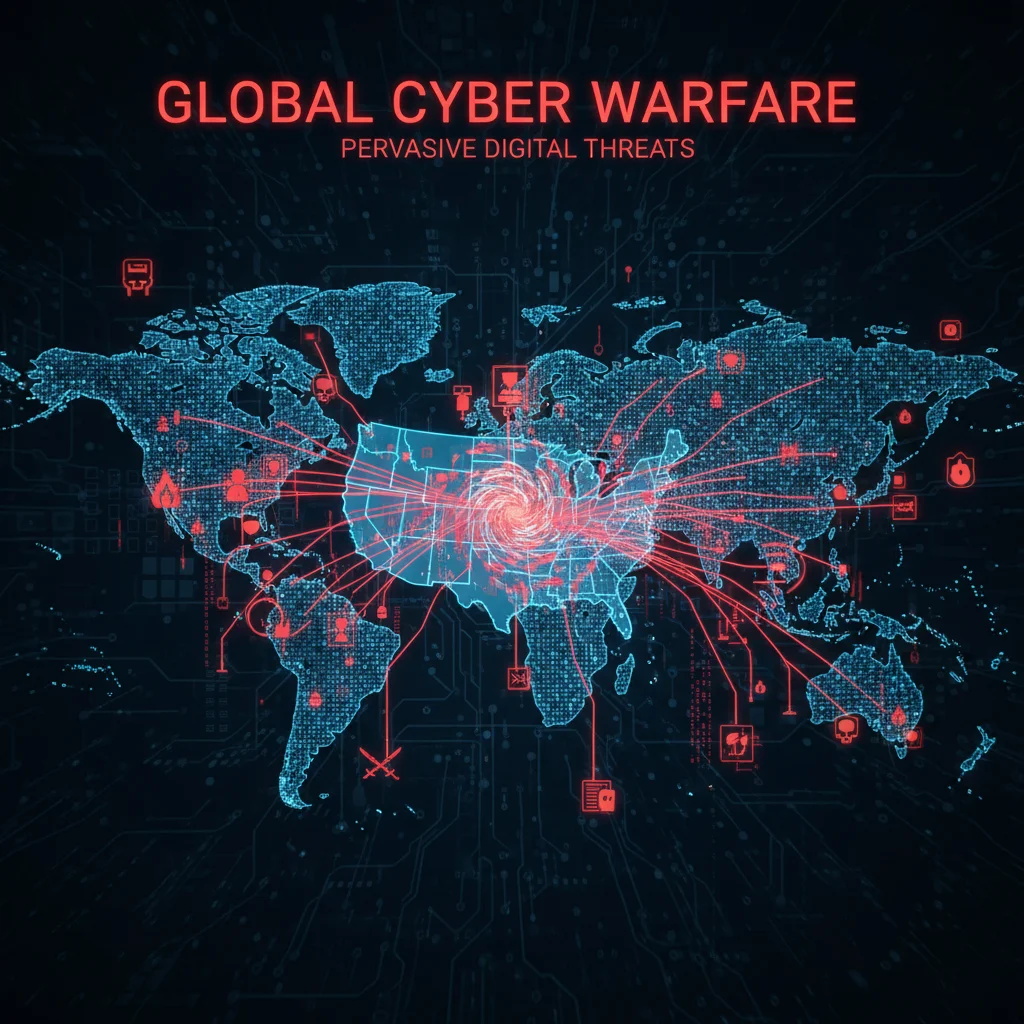
The concept of warfare has expanded beyond kinetic engagements. Cyber warfare, characterized by sophisticated digital attacks designed to disrupt, degrade, or destroy an adversary’s information systems and networks, has become a primary tool in statecraft. It can target everything from financial markets and energy grids to military command-and-control systems, with potentially catastrophic consequences. In 2026, the complexity and frequency of these attacks have reached unprecedented levels, demanding a dynamic and adaptive U.S. Cyber Defense posture.
The Evolving Threat Landscape: A 2026 Perspective on U.S. Cyber Defense
The adversaries operating in cyberspace are diverse, ranging from state-sponsored APTs (Advanced Persistent Threats) with vast resources and sophisticated capabilities to non-state actors, cybercriminals, and even individual hacktivists. What sets 2026 apart is the heightened sophistication and audacity of these actors. We are witnessing:
Anúncios
- Advanced Persistent Threats (APTs) 2.0: State-sponsored groups have evolved, employing AI-driven attack vectors, polymorphic malware that constantly changes its signature, and deepfakes to sow disinformation and destabilize societies. Their campaigns are longer, more targeted, and increasingly difficult to detect and attribute.
- Supply Chain Attacks: The “SolarWinds” incident of the past was a stark precursor. In 2026, supply chain compromises are a preferred method for adversaries to gain access to highly secure networks. By injecting malicious code into widely used software or hardware at the manufacturing stage, attackers can bypass traditional perimeter defenses.
- Critical Infrastructure Targeting: Energy grids, water treatment facilities, transportation networks, and healthcare systems remain prime targets. The aim is often disruption and psychological impact, but the potential for physical damage and loss of life is a constant concern. The resilience of these systems is paramount to U.S. Cyber Defense.
- Ransomware as a Geopolitical Tool: Beyond financial gain, ransomware is now being leveraged by some state actors to extort political concessions or disrupt vital services, blurring the lines between cybercrime and state-sponsored aggression.
- Quantum Computing Threats: While still in its nascent stages, the looming threat of quantum computing capable of breaking current encryption standards is a significant long-term concern. The race to develop “quantum-safe” cryptography is intense and a core component of future U.S. Cyber Defense strategies.
- Information Warfare and Disinformation: Cyber operations are deeply intertwined with information warfare. Sophisticated campaigns to spread propaganda, manipulate public opinion, and undermine democratic processes are commonplace, often leveraging social media and AI-generated content.
This dynamic and multifaceted threat environment necessitates a multi-layered, proactive, and continuously evolving U.S. Cyber Defense strategy.
Strategic Pillars of U.S. Cyber Defense in 2026
The United States has adopted a comprehensive approach to U.S. Cyber Defense, built upon several interlocking strategic pillars:
1. Deterrence by Denial and Punishment
Deterrence remains a cornerstone. “Deterrence by denial” focuses on making attacks so difficult and costly that adversaries are discouraged from attempting them. This involves robust defensive measures, resilient infrastructure, and rapid response capabilities. “Deterrence by punishment” involves the credible threat of retaliation, both in cyberspace and potentially through other domains, against those who launch attacks. The U.S. Cyber Command (CYBERCOM) plays a critical role in both aspects, developing offensive capabilities to hold adversaries at risk while also actively defending U.S. networks.
2. “Defend Forward” and Persistent Engagement
This proactive strategy, championed by CYBERCOM, involves operating in adversary networks to disrupt malicious cyber activities before they can impact U.S. targets. “Persistent engagement” means continuously challenging malicious actors in cyberspace, denying them safe havens, and understanding their tactics, techniques, and procedures (TTPs). This strategy is crucial for bolstering U.S. Cyber Defense by gaining intelligence and disrupting threats at their source.
3. Public-Private Partnerships
Recognizing that approximately 85% of critical infrastructure is privately owned, collaboration between government and the private sector is indispensable. Initiatives like the Cybersecurity and Infrastructure Security Agency (CISA) facilitate information sharing, threat intelligence exchange, and joint vulnerability assessments. This partnership is vital for a holistic U.S. Cyber Defense, as a breach in one sector can have cascading effects across the nation.
4. International Cooperation and Alliances
Cyber threats are borderless. The U.S. actively collaborates with allies through organizations like NATO, Five Eyes, and bilateral agreements to share intelligence, coordinate defensive efforts, and develop common norms of behavior in cyberspace. Joint exercises and capacity-building programs with partner nations strengthen the collective U.S. Cyber Defense posture globally.
5. Investment in Research and Development (R&D)
Staying ahead of adversaries requires continuous innovation. Significant investments are being made in cutting-edge technologies such as artificial intelligence (AI) for threat detection and response, machine learning (ML) for anomaly detection, quantum-resistant cryptography, zero-trust architectures, and advanced behavioral analytics. DARPA, NIST, and various university research programs are at the forefront of these efforts, directly contributing to future U.S. Cyber Defense capabilities.
Technological Innovations Driving U.S. Cyber Defense
The technological arms race in cyberspace is relentless. In 2026, several key innovations are shaping the capabilities of U.S. Cyber Defense:
1. Artificial Intelligence and Machine Learning for Cyber Defense
AI and ML are no longer buzzwords but integral components of modern U.S. Cyber Defense. They are used for:
- Automated Threat Detection: AI algorithms can analyze vast amounts of network traffic and identify anomalous patterns indicative of attacks far faster than human analysts.
- Predictive Analytics: ML models can forecast potential attack vectors and vulnerabilities based on historical data and current threat intelligence, allowing for proactive defenses.
- Automated Response: AI-driven security orchestration, automation, and response (SOAR) platforms can automatically isolate infected systems, block malicious IPs, and deploy patches, significantly reducing response times.
- Deception Technologies: AI-powered honeypots and deception networks are used to lure attackers, gather intelligence on their TTPs, and divert them from critical assets.
2. Zero-Trust Architecture (ZTA) Implementation
The traditional “castle-and-moat” approach to network security is insufficient against sophisticated threats. Zero-Trust Architecture, which assumes that no user or device – whether inside or outside the network perimeter – should be trusted by default, is becoming the standard for U.S. Cyber Defense. Every access request is authenticated, authorized, and continuously validated. This “never trust, always verify” principle significantly reduces the attack surface.
3. Quantum-Resistant Cryptography
The potential advent of fault-tolerant quantum computers poses a severe threat to current cryptographic standards. The U.S. government, through NIST, is actively standardizing new “post-quantum cryptography” algorithms designed to withstand quantum attacks. The migration to these new standards is a massive undertaking but an essential long-term investment in U.S. Cyber Defense.
4. Enhanced Endpoint Detection and Response (EDR) and Extended Detection and Response (XDR)
EDR solutions provide advanced visibility and threat detection at the endpoint level, while XDR expands this to integrate data from endpoints, networks, cloud environments, and applications. This holistic view enables faster and more accurate threat hunting and incident response, fortifying the overall U.S. Cyber Defense posture.
5. Cloud Security Posture Management (CSPM) and Cloud Workload Protection Platforms (CWPP)
As government and critical infrastructure increasingly leverage cloud services, securing these environments is paramount. CSPM tools continuously monitor cloud configurations for misconfigurations and compliance violations, while CWPPs protect workloads (e.g., virtual machines, containers, serverless functions) across hybrid and multi-cloud environments. These are critical for extending U.S. Cyber Defense into distributed cloud infrastructures.
Policy and Regulatory Frameworks: The Backbone of U.S. Cyber Defense
Effective U.S. Cyber Defense is not solely about technology; it’s also about a robust policy and regulatory environment that mandates standards, fosters collaboration, and assigns responsibilities. In 2026, key policy developments include:
1. National Cybersecurity Strategy Updates
The U.S. government regularly updates its National Cybersecurity Strategy to reflect the evolving threat landscape and technological advancements. The 2026 iteration emphasizes a whole-of-nation approach, promoting shared responsibility across federal, state, local, tribal, and territorial governments, as well as the private sector and individual citizens. It prioritizes resilience, information sharing, and international cooperation.
2. Mandatory Reporting Requirements and Incident Response
Legislation has been enacted to mandate timely cybersecurity incident reporting for critical infrastructure entities and federal agencies. This ensures that CISA and other relevant authorities have a comprehensive understanding of the threat landscape and can provide assistance and disseminate warnings more effectively, thereby strengthening collective U.S. Cyber Defense.
3. Cybersecurity Workforce Development
A critical challenge for U.S. Cyber Defense is the shortage of skilled cybersecurity professionals. Significant investments are being made in education, training, and recruitment programs, including scholarships, apprenticeships, and partnerships with academic institutions. The goal is to build a robust pipeline of talent capable of defending the nation’s digital assets.
4. Supply Chain Security Directives
Following past compromises, stringent directives are in place to enhance the security of the technological supply chain for government procurement and critical infrastructure. This includes requirements for software bill of materials (SBOMs), vulnerability disclosure programs, and rigorous vetting of vendors to mitigate risks of embedded malware or backdoors, directly enhancing U.S. Cyber Defense.
5. Cyber Deterrence and Response Frameworks
The U.S. has further refined its frameworks for attributing cyberattacks and responding to them. This includes clear escalation matrices, diplomatic tools, economic sanctions, and the potential for offensive cyber operations, all carefully calibrated to deter aggression and hold malicious actors accountable. This strengthens the “deterrence by punishment” aspect of U.S. Cyber Defense.

Challenges and Future Outlook for U.S. Cyber Defense
Despite significant progress, several challenges persist for U.S. Cyber Defense:
- Talent Gap: The demand for cybersecurity professionals continues to outpace supply, creating a persistent vulnerability.
- Attribution Difficulties: Accurately attributing cyberattacks remains complex, making timely and proportionate responses challenging.
- Pace of Innovation: Adversaries are constantly innovating, requiring U.S. Cyber Defense to be equally agile and adaptive.
- Global Norms: The lack of universally agreed-upon international norms of behavior in cyberspace contributes to instability and increases the risk of escalation.
- Legacy Systems: Many critical systems, especially in older infrastructure, still rely on outdated technology that is difficult to secure, presenting a significant attack surface.
Looking ahead, the U.S. Cyber Defense posture in 2026 is one of continuous adaptation and strategic evolution. The focus will remain on fostering a culture of cybersecurity awareness from the individual user to the highest levels of government and industry. Further integration of AI and ML, continued investment in quantum-safe technologies, and intensified international collaboration will be crucial. The goal is not merely to react to threats but to anticipate them, build inherent resilience into all systems, and maintain a decisive advantage in the digital domain.
The Role of Information Sharing in Strengthening U.S. Cyber Defense
In the complex and rapidly evolving world of cyber warfare, information is power. The ability to quickly and effectively share threat intelligence, vulnerabilities, and best practices across various sectors is a cornerstone of a robust U.S. Cyber Defense. In 2026, several mechanisms and initiatives are in place to facilitate this critical exchange:
1. Information Sharing and Analysis Centers (ISACs) and Organizations (ISAOs)
ISACs and ISAOs serve as vital hubs for sharing sector-specific cybersecurity threats and mitigation strategies within critical infrastructure sectors such as energy, finance, healthcare, and transportation. These organizations enable members to proactively defend against common threats and learn from each other’s experiences. The U.S. government actively supports and participates in these groups, often providing classified threat intelligence that can be declassified and shared with relevant private sector partners, thereby directly enhancing U.S. Cyber Defense capabilities within specific industries.
2. CISA’s Central Role in Cyber Threat Intelligence
The Cybersecurity and Infrastructure Security Agency (CISA) acts as the nation’s civilian cybersecurity agency, playing a pivotal role in “defending today, securing tomorrow.” CISA collects, analyzes, and disseminates cyber threat intelligence to federal agencies, state and local governments, and critical infrastructure owners and operators. Through platforms like the Automated Indicator Sharing (AIS) program, CISA provides real-time machine-readable cyber threat indicators, enabling automated defenses. This centralized intelligence sharing is fundamental to a cohesive national U.S. Cyber Defense strategy.
3. Joint Cyber Defense Collaborative (JCDC)
Established by CISA, the JCDC is a groundbreaking initiative that brings together government and private sector entities to develop and execute joint cyber defense plans. This collaborative model allows for proactive planning and coordinated defensive operations against significant cyber threats to the nation. By working side-by-side, participants can share expertise, resources, and insights, creating a more unified and resilient U.S. Cyber Defense front against sophisticated adversaries.
4. Vulnerability Disclosure Programs (VDPs)
Encouraging responsible vulnerability disclosure from security researchers and ethical hackers is another crucial aspect of information sharing. Federal agencies and many critical infrastructure companies have implemented VDPs, providing clear channels for reporting vulnerabilities without fear of legal repercussions. This allows organizations to patch weaknesses before they can be exploited by malicious actors, significantly strengthening their U.S. Cyber Defense posture.
5. International Intelligence Sharing Agreements
Beyond domestic efforts, the U.S. engages in robust intelligence sharing with its international allies. Agreements with countries in the Five Eyes alliance (Australia, Canada, New Zealand, and the United Kingdom) and other trusted partners facilitate the exchange of highly sensitive cyber threat intelligence. This global collaboration is essential for understanding the origins, capabilities, and intentions of transnational cyber adversaries, thereby extending the reach and effectiveness of U.S. Cyber Defense beyond its borders.
The continuous flow of timely, relevant, and actionable information is the lifeblood of effective cybersecurity. Without it, defenders would be operating in the dark, unable to anticipate or respond effectively to the myriad of threats targeting U.S. interests. Therefore, enhancing and streamlining these information-sharing mechanisms remains a top priority for U.S. Cyber Defense in 2026 and beyond.
The Human Element: Cultivating a Cyber-Aware Nation
While technology and policy are critical, the human element remains the weakest link in many cybersecurity defenses. In 2026, the U.S. government and its partners are placing increased emphasis on cultivating a cyber-aware populace, recognizing that a well-informed citizenry is an integral part of U.S. Cyber Defense.
1. National Cybersecurity Awareness Campaigns
Ongoing national campaigns aim to educate individuals, small businesses, and organizations about common cyber threats such as phishing, malware, and social engineering. These campaigns promote best practices like strong, unique passwords, multi-factor authentication (MFA), regular software updates, and caution against suspicious links or attachments. By raising general awareness, the goal is to reduce the success rate of opportunistic attacks and make the entire nation more resilient.
2. Training and Education for Federal Workforce
All federal employees receive mandatory and recurring cybersecurity training tailored to their roles and responsibilities. This training covers topics ranging from basic cyber hygiene to identifying sophisticated spear-phishing attempts and understanding classified information handling protocols. A well-trained federal workforce is foundational to protecting government networks and data, which are prime targets for adversaries seeking to undermine U.S. Cyber Defense.
3. Cybersecurity Education in Schools and Universities
Efforts are underway to integrate cybersecurity concepts into K-12 curricula and expand cybersecurity programs at colleges and universities. This not only builds a future workforce but also instills foundational digital literacy and security principles from an early age. Encouraging STEM education with a focus on computing and cybersecurity is seen as a long-term investment in national U.S. Cyber Defense capabilities.
4. Promoting Best Practices in Small and Medium-sized Businesses (SMBs)
SMBs often lack the resources of larger enterprises but are frequently targeted by cybercriminals, sometimes as a stepping stone to larger organizations. Government agencies and industry associations provide resources, training, and guidance specifically tailored for SMBs to help them implement basic yet effective cybersecurity measures. Strengthening the defenses of SMBs contributes significantly to the overall U.S. Cyber Defense ecosystem.
5. Insider Threat Programs
Even with advanced external defenses, insider threats – whether malicious or unintentional – can pose significant risks. Robust insider threat programs involve continuous monitoring, behavioral analytics, and employee education to identify potential risks and prevent data exfiltration or system sabotage. A comprehensive U.S. Cyber Defense strategy must account for threats originating from within an organization.
Ultimately, U.S. Cyber Defense is a collective responsibility. From the individual user safeguarding personal data to the highly specialized cybersecurity analyst defending critical infrastructure, every component plays a vital role. Cultivating a nation that is inherently cyber-aware, vigilant, and resilient is as important as any technological or policy advancement in the ongoing battle for digital security.
Conclusion: A Resilient Future for U.S. Cyber Defense
In 2026, the United States stands at a critical juncture in the ongoing cyber arms race. The nation’s commitment to a robust U.S. Cyber Defense is unwavering, backed by significant investments in technology, strategic policy frameworks, and an evolving understanding of the global threat landscape. From the proactive posture of “Defend Forward” to the collaborative spirit of public-private partnerships and international alliances, every effort is geared towards securing the nation’s digital future.
While formidable challenges remain, particularly in workforce development and the relentless pace of adversary innovation, the strategic direction is clear: an agile, resilient, and continuously adaptive U.S. Cyber Defense. By integrating cutting-edge AI and ML, implementing zero-trust architectures, preparing for the quantum era, and fostering a deeply cyber-aware society, the U.S. aims not just to withstand the onslaught of cyber warfare but to maintain its leadership in the digital domain. The integrity of critical infrastructure, the security of sensitive data, and the very fabric of national prosperity depend on the continued strength and evolution of U.S. Cyber Defense.