US Federal Data Privacy Law 2026: What You Need to Know
Anúncios
The digital age has brought unprecedented convenience and connectivity, but with it, a growing concern about personal data privacy. For years, the United States has navigated a patchwork of state-level data privacy regulations, leading to complexity and inconsistency for both consumers and businesses. However, the horizon for data privacy in the U.S. is set to change dramatically with the anticipated implementation of a comprehensive US federal data privacy law in 2026. This landmark legislation promises to consolidate, standardize, and elevate the protection of personal information across the nation, ushering in a new era of digital responsibility.
Anúncios
This article will delve deep into the impending US federal data privacy framework, exploring its potential scope, impact on various stakeholders, and the crucial steps businesses and individuals must take to prepare. Understanding this shift is not just about compliance; it’s about fostering trust, safeguarding user rights, and building a more secure digital ecosystem.
The Current Landscape: A Patchwork of Regulations
Before we look forward to 2026, it’s essential to understand the existing data privacy environment in the U.S. Unlike the European Union’s unified General Data Protection Regulation (GDPR), the U.S. has historically adopted a sector-specific and state-by-state approach. This has resulted in a complex web of laws, each with its own nuances and requirements.
Key State-Level Laws:
- California Consumer Privacy Act (CCPA) and California Privacy Rights Act (CPRA): Often considered the most comprehensive state-level privacy laws, granting consumers significant rights over their personal information, including the right to know, delete, and opt-out of the sale of their data.
- Virginia Consumer Data Protection Act (VCDPA): Similar to CCPA/CPRA but with some key differences in scope and consumer rights.
- Colorado Privacy Act (CPA): Provides consumers with rights regarding access, deletion, and opt-out, and imposes duties on data controllers.
- Utah Consumer Privacy Act (UCPA) and Connecticut Data Privacy Act (CTDPA): More recent additions, further expanding the mosaic of state-level protections.
While these state laws have been instrumental in pushing for greater data protection, their disparate nature creates significant challenges for businesses operating across state lines. Companies must often comply with multiple, sometimes conflicting, regulations, leading to increased operational costs and potential compliance gaps. For consumers, understanding their rights can be confusing, as these rights vary depending on where they reside.
Anúncios
The lack of a unified US federal data privacy standard has also been a point of contention internationally. Global businesses often face difficulties in reconciling U.S. data practices with stricter international frameworks like GDPR, impacting cross-border data transfers and international trade. The upcoming 2026 federal law aims to address these inconsistencies, providing a clearer, more predictable regulatory environment.
Why a Federal Law Now? The Driving Forces Behind the 2026 Framework
The push for a comprehensive US federal data privacy law has been building for years, driven by several key factors:
1. Consumer Demand for Greater Control:
High-profile data breaches, misuse of personal information, and increasing awareness of data monetization practices have fueled public demand for stronger privacy protections. Consumers are increasingly concerned about how their data is collected, used, and shared by companies, and they expect more transparency and control.
2. Business Need for Harmonization:
Businesses, particularly those operating nationally or globally, have expressed a strong desire for a single, consistent set of rules. Navigating the current state-by-state patchwork is resource-intensive and prone to error. A federal standard would streamline compliance efforts, reduce legal complexities, and foster innovation by providing a clearer regulatory playing field.
3. International Pressure and Alignment:
The U.S. has been an outlier among major global economies in not having a comprehensive federal data privacy law. This has created friction in international data transfers and hindered interoperability with frameworks like GDPR. A federal law would help align U.S. practices with global standards, facilitating international commerce and data exchange.
4. Technological Advancements and AI:
The rapid evolution of technologies like artificial intelligence, big data analytics, and the Internet of Things (IoT) has introduced new challenges for data privacy. These technologies often involve the collection and processing of vast amounts of personal data, raising ethical and privacy concerns that existing laws may not adequately address. A new federal framework can provide a more robust and forward-looking approach to these emerging issues.
The momentum towards a federal law reflects a growing consensus that a unified approach is necessary to protect individuals’ rights in the digital age while also supporting a thriving digital economy. The 2026 timeline indicates a serious commitment to crafting a comprehensive, durable solution.
Key Pillars of the Anticipated 2026 Federal Data Privacy Law
While the final details of the 2026 US federal data privacy law are still under legislative development, based on various proposals and the trajectory of state laws, we can anticipate several core pillars:
1. Expanded Consumer Rights:
The new law is expected to grant consumers a consistent set of fundamental rights over their personal data, regardless of their state of residence. These will likely include:
- Right to Know: The right to be informed about what personal data is being collected, used, shared, or sold.
- Right to Access: The right to obtain a copy of their personal data held by businesses.
- Right to Correct/Rectify: The right to request corrections to inaccurate or incomplete personal data.
- Right to Delete: The right to request the deletion of their personal data, with certain exceptions.
- Right to Opt-Out: The right to opt-out of the sale or sharing of their personal data for targeted advertising.
- Right to Data Portability: The right to receive their personal data in a structured, commonly used, and machine-readable format, and to transmit that data to another controller.
2. Universal Definitions and Scope:
A critical aspect of the federal law will be establishing clear, consistent definitions for terms like ‘personal data,’ ‘data controller,’ ‘data processor,’ ‘sale,’ and ‘sharing.’ This will eliminate ambiguities arising from differing state interpretations and provide a common language for compliance across the U.S. The scope of the law is expected to be broad, covering a wide range of businesses that collect, process, or sell the personal data of U.S. residents, potentially with thresholds for revenue or data volume.
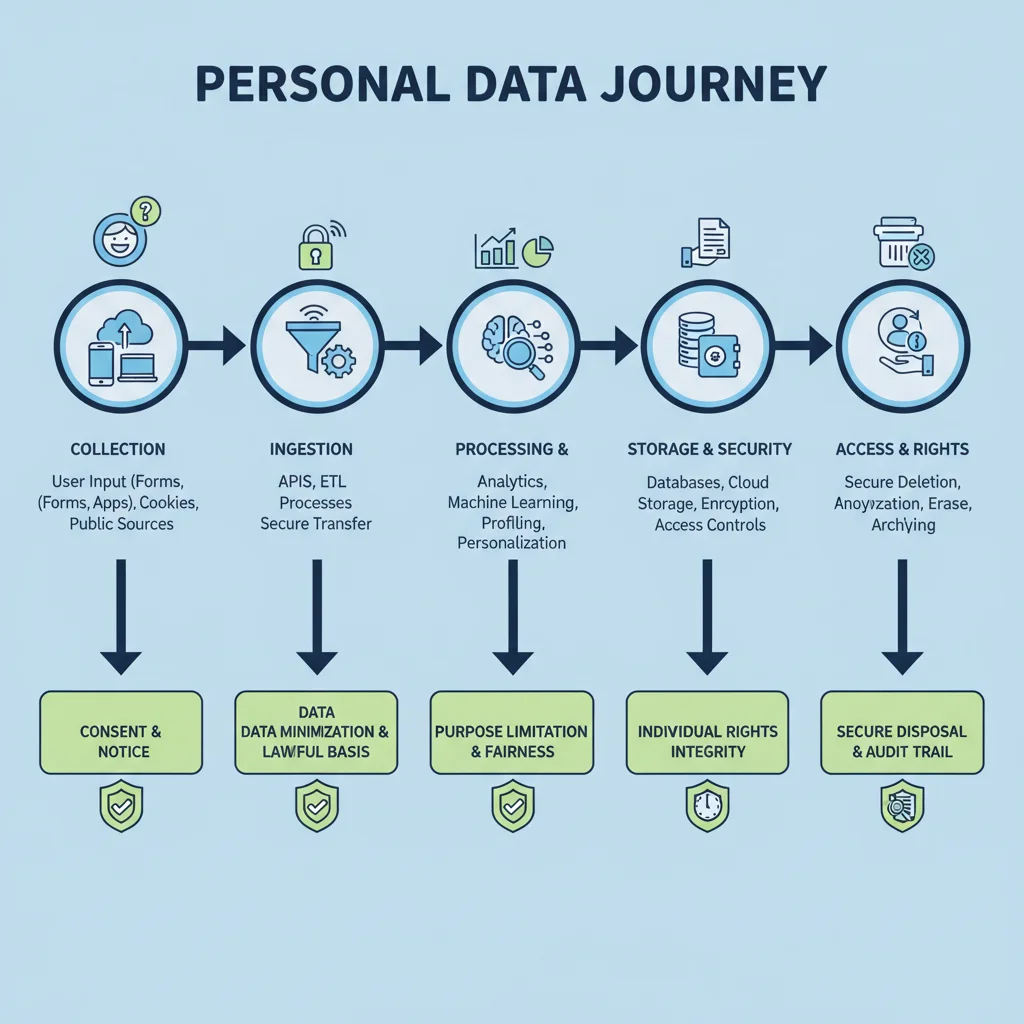
3. Data Minimization and Purpose Limitation:
The law will likely emphasize principles of data minimization, requiring businesses to collect only the personal data that is necessary for a specific, stated purpose. Furthermore, data collected for one purpose should not be used for a different, incompatible purpose without new consent or a strong legal basis. This shifts the burden onto businesses to justify their data collection practices.
4. Enhanced Security Requirements:
Businesses will be mandated to implement reasonable security measures to protect personal data from unauthorized access, disclosure, alteration, or destruction. This could include requirements for data encryption, access controls, regular security assessments, and prompt notification of data breaches to affected individuals and regulatory authorities.
5. Accountability and Governance:
The framework will likely impose significant accountability obligations on businesses, including requirements for data protection assessments (DPAs), the appointment of data protection officers (DPOs) for larger entities, and maintaining records of processing activities. These measures aim to ensure that businesses proactively manage and demonstrate their compliance with the law.
6. Enforcement Mechanisms and Penalties:
A robust enforcement mechanism will be crucial for the effectiveness of the federal law. This could involve a federal agency (e.g., the Federal Trade Commission) as the primary enforcer, with provisions for state attorneys general to also bring actions. Significant penalties for non-compliance, similar to those seen in GDPR and state laws, are expected to deter violations and ensure adherence to the new standards.
Impact on Businesses: Navigating the New Regulatory Landscape
The 2026 US federal data privacy law will undoubtedly have a profound impact on businesses of all sizes and across all sectors. While it promises harmonization, the transition will require significant adjustments.
1. Compliance Overhaul:
Businesses that have already complied with state laws like CCPA will have a head start, but a federal law will likely introduce new requirements or modify existing ones. Those not yet compliant with robust privacy frameworks will face a substantial undertaking. This includes:
- Data Mapping: Identifying what personal data is collected, where it’s stored, how it’s used, and with whom it’s shared.
- Policy Updates: Revising privacy policies, terms of service, and internal data handling procedures to reflect the new federal requirements.
- Consent Mechanisms: Implementing or refining mechanisms for obtaining, managing, and documenting user consent, especially for sensitive data processing.
- Vendor Management: Reviewing and updating contracts with third-party vendors and service providers to ensure they also comply with federal privacy standards.
2. Operational Changes:
Beyond policy, the law will necessitate operational changes:
- Data Subject Request (DSR) Fulfillment: Establishing efficient processes to handle consumer requests for access, deletion, correction, and opt-out within specified timelines.
- Security Enhancements: Investing in stronger cybersecurity infrastructure, employee training, and incident response plans.
- Privacy by Design: Integrating privacy considerations into the design and development of new products, services, and systems from the outset.
- Employee Training: Educating all employees, particularly those handling personal data, about the new legal obligations and best practices.
3. Financial Implications:
Compliance will come with costs, including:
- Technology Investments: Upgrading systems for data management, security, and consent.
- Legal and Consulting Fees: Engaging experts to interpret the law and guide implementation.
- Staffing: Potentially hiring or dedicating staff to privacy compliance roles (e.g., DPOs).
- Potential Fines: Non-compliance can result in significant financial penalties, making proactive investment in compliance a more cost-effective strategy.
However, the federal law also presents opportunities. A unified framework can reduce the complexity of multi-state compliance, potentially lowering long-term operational costs for national businesses. It can also enhance consumer trust, which can be a significant competitive advantage in a privacy-conscious market.
Impact on Consumers: Empowering Individuals in the Digital Age
For consumers, the 2026 US federal data privacy law represents a significant step forward in reclaiming control over their digital lives. The consistent application of privacy rights across all states will simplify the process of exercising those rights and provide a clearer understanding of what to expect from businesses.
1. Enhanced Transparency:
Consumers will have a clearer understanding of what data is collected about them, how it’s used, and who it’s shared with. This transparency fosters greater trust and enables more informed decisions about engaging with digital services.
2. Stronger Rights and Control:
The federal law will empower individuals with robust rights to access, correct, delete, and opt-out of certain data processing activities. This means more agency over their digital footprint and the ability to challenge data practices they disagree with.
3. Greater Protection Against Misuse:
With stricter security requirements and accountability measures, consumers can expect better protection against data breaches and the unauthorized use or sale of their personal information. The prospect of significant penalties for non-compliance will incentivize businesses to prioritize data security.
4. Simplified Navigation:
Instead of needing to understand varying state laws, consumers will operate under a single, overarching federal framework. This simplification makes it easier to understand and exercise their privacy rights, regardless of where they live or which services they use.
While the law aims to benefit consumers, it will also require individuals to be proactive in understanding their rights and utilizing the tools provided by businesses to manage their data preferences. Consumer education will be key to maximizing the benefits of this new legislation.
Preparing for 2026: A Strategic Roadmap for Businesses
The 2026 deadline might seem distant, but the complexity of implementing a comprehensive privacy program means that businesses should begin their preparations now. Proactive measures can mitigate risks and ensure a smoother transition.
1. Conduct a Comprehensive Data Audit:
The first step is to understand your data. Map all personal data collected, stored, processed, and shared. Identify the purpose for collection, the legal basis for processing, retention periods, and who has access to the data. This ‘data inventory’ is the foundation for all subsequent compliance efforts.
2. Review and Update Privacy Policies and Notices:
Ensure that your public-facing privacy policies are clear, concise, and accurately reflect your data practices. They must inform users about their rights under the new federal law and how to exercise them. Update internal data handling policies to align with federal requirements.
3. Enhance Data Security Measures:
Review your current security infrastructure and protocols. Implement robust encryption, access controls, multi-factor authentication, and regular vulnerability assessments. Develop a comprehensive data breach response plan that includes timely notification procedures.
4. Implement Robust Consent Management Systems:
For data processing activities that require consent, ensure you have mechanisms in place to obtain clear, unambiguous, and revocable consent. This includes cookie consent banners, opt-in forms, and preference centers where users can manage their choices.
5. Establish Data Subject Request (DSR) Procedures:
Develop clear, efficient, and well-documented processes for receiving, verifying, and responding to consumer requests related to their data rights (access, deletion, correction, opt-out). Ensure these processes can meet the legal timelines.
6. Train Employees:
Human error remains a leading cause of data breaches. Provide regular and comprehensive training to all employees who handle personal data. Educate them on the importance of data privacy, the new legal requirements, and their individual responsibilities.
7. Vet Third-Party Vendors:
Your privacy compliance extends to your vendors. Review all contracts with third parties who process personal data on your behalf. Ensure they have adequate privacy and security safeguards in place and that their contracts include data protection clauses aligned with the federal law.
8. Consider a Data Protection Officer (DPO):
For larger organizations or those processing significant amounts of sensitive data, appointing a dedicated DPO or a privacy lead can be invaluable. This individual will oversee compliance efforts, serve as a point of contact for regulators, and advise on data protection matters.
9. Engage Legal Counsel:
The nuances of federal privacy law will be complex. Partner with legal experts specializing in data privacy to ensure your interpretation and implementation of the law are accurate and compliant.

Potential Challenges and Future Outlook
While the prospect of a unified US federal data privacy law is largely welcomed, its implementation will not be without challenges.
1. Preemption of State Laws:
A key debate will be the extent to which the federal law preempts existing state laws. A strong preemption clause would provide the desired harmonization, but some states may resist losing their ability to enact stricter protections. The balance struck here will significantly impact the law’s effectiveness.
2. Enforcement Resources:
Effective enforcement requires adequate resources. The designated federal agency will need sufficient funding, staffing, and expertise to investigate violations and impose penalties consistently across the nation.
3. Adapting to Technological Evolution:
Data privacy is a constantly moving target due to rapid technological advancements. The federal law must be flexible enough to address emerging privacy challenges posed by new technologies without becoming quickly outdated.
4. Global Interoperability:
While a federal law will help align the U.S. with international standards, achieving full interoperability with frameworks like GDPR will depend on the specific provisions and the U.S.’s ability to secure an adequacy decision from the European Union.
Despite these challenges, the long-term outlook for US federal data privacy is positive. A unified framework will foster greater trust between consumers and businesses, simplify compliance, and strengthen the U.S.’s position in the global digital economy. It represents a maturation of the digital landscape, acknowledging that data, while a valuable asset, must be handled with respect for individual rights and privacy.
Conclusion: A New Era for US Data Privacy
The anticipated 2026 US federal data privacy law marks a pivotal moment in the nation’s approach to personal information protection. It signifies a move away from a fragmented regulatory environment towards a comprehensive, unified standard that aims to empower consumers and provide clarity for businesses. This legislation will redefine how personal data is collected, processed, and managed across the United States, placing a greater emphasis on transparency, accountability, and individual rights.
For businesses, the journey to compliance will require strategic planning, significant investment in technology and processes, and a cultural shift towards privacy-by-design. Starting these preparations now is not merely about avoiding penalties; it’s about building a foundation of trust with customers, enhancing brand reputation, and future-proofing operations in an increasingly privacy-conscious world.
For consumers, the federal law promises a more consistent and robust set of rights, offering greater control and peace of mind in their digital interactions. As we move closer to 2026, staying informed, adapting to the changes, and embracing a privacy-first mindset will be crucial for everyone operating within the U.S. digital sphere. The future of data privacy in the U.S. is bright, bringing with it the promise of a more secure and respectful digital ecosystem for all.